The standard foreign policy analysis of China’s recent foray into Middle Eastern diplomacy is fundamentally broken. Analysts see the Saudi-Iran deal or the Beijing Declaration among Palestinian factions and whisper about a "new global arbiter" or a "diplomatic success regardless of peace." This is lazy. It assumes China is playing the same game as the United States, just with different cards.
It isn't. If you found value in this piece, you should look at: this related article.
China has no interest in being a "peacebroker" in the Western sense. To brokers, peace is the product. To Beijing, "peace" is merely the marketing material for a massive geopolitical arbitrage play. They are shorting American security guarantees and longing regional stability—without paying the premium for the insurance policy.
The Myth of the Diplomatic Heavyweight
Most commentators fall into the trap of measuring Chinese success by the number of handshakes in a Beijing ballroom. They argue that even if the treaties fail, China wins "prestige." For another look on this development, check out the latest update from NPR.
Prestige doesn't keep the Strait of Hormuz open.
China is currently the world’s largest importer of crude oil. Logic suggests they should be the most invested in regional security. Yet, they possess zero significant power projection in the Persian Gulf. While the U.S. Fifth Fleet spends billions patrolling the waters to ensure the free flow of energy—energy that largely goes to Shanghai and Ningbo—China sits back and critiques "hegemonic interference."
This is the ultimate "free rider" strategy. Beijing isn't succeeding at diplomacy; it is succeeding at branding. They have realized that in a world exhausted by American interventionism, merely showing up with a pen and no baggage looks like leadership. But don't mistake a photo op for a security architecture.
Why the Saudi-Iran Deal Was an Easy Trade
The 2023 rapprochement between Riyadh and Tehran was framed as a seismic shift. In reality, it was a low-risk trade where China simply acted as the escrow agent for a deal that was already 90% baked.
Riyadh wanted an exit from the Yemen quagmire. Tehran wanted relief from isolation. Both parties had been talking in Baghdad and Muscat for years. China didn't build the bridge; they just cut the ribbon and claimed the engineering feat.
If you look at the math of regional influence, the U.S. remains the sole provider of the "hard" variables:
- Weaponry: The Saudi military is built on American platforms.
- Intelligence: The regional surveillance grid is Western-integrated.
- Security Guarantees: There is no "Chinese Nuclear Umbrella."
China’s "diplomacy" succeeds precisely because it carries no weight. They don't demand human rights reforms. They don't demand maritime security contributions. They don't demand anything except that the oil keeps flowing and the bills are paid in Yuan. It’s not "mediation." It’s a transaction.
The Palestinian Ploy: Empty Symbolism as Strategy
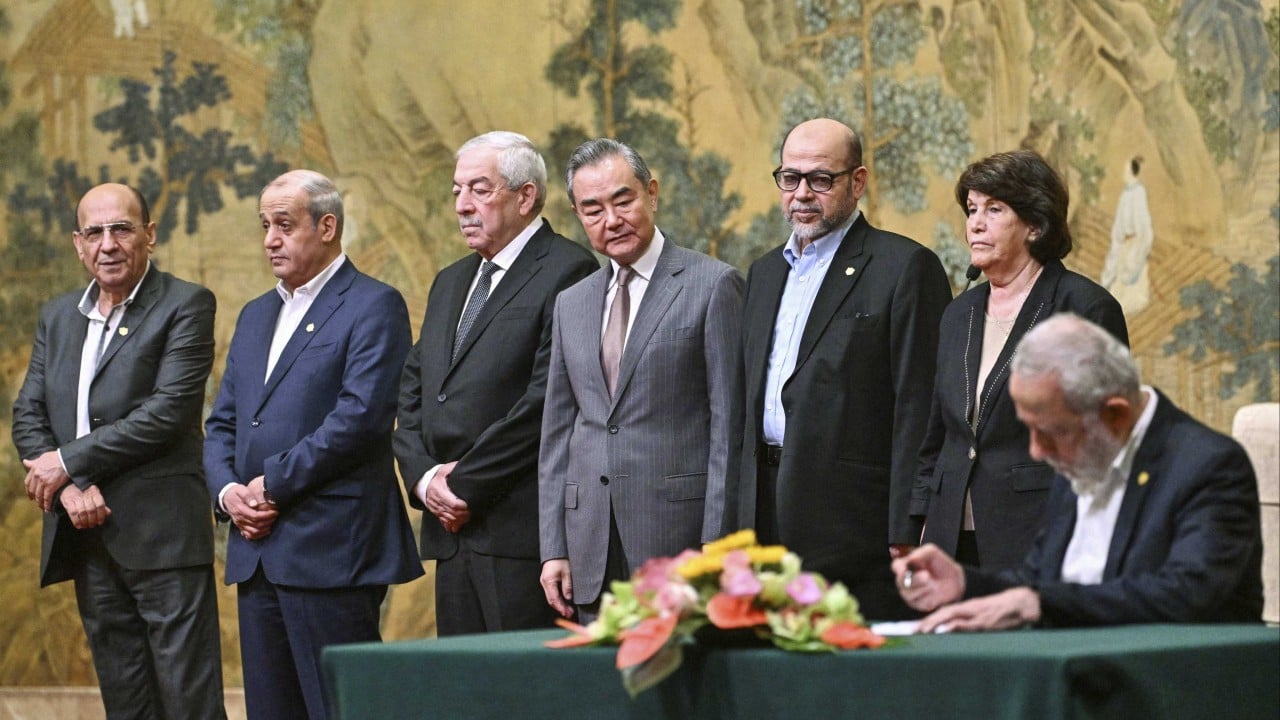
The recent "Beijing Declaration" involving Hamas and Fatah is the purest example of this hollow diplomacy. Western observers wring their hands over China "stepping into the vacuum."
Vacuum? There is no vacuum. There is a brutal, grinding conflict that requires more than a conference room to solve.
China knows Hamas and Fatah won't share power. They know the declaration has the shelf life of an open gallon of milk. But the goal wasn't a unified Palestinian government. The goal was to signal to the Global South that China is the "reasonable" alternative to an America that is tied to Israel.
It is a performance. By hosting these groups, China positions itself as the champion of the "oppressed" without having to spend a single cent on actual aid or security. While the U.S. burns political capital and billions in taxpayer dollars trying to manage the unmanageable, Beijing collects "moral" points on the cheap.
The Arbitrage Mechanics
In finance, arbitrage is the simultaneous purchase and sale of an asset to profit from a difference in the price.
Beijing is performing a Geopolitical Risk Arbitrage:
- The Buy: China "buys" influence by offering non-interference and trade.
- The Hedge: China relies on the U.S. military to maintain the status quo (the very status quo they claim to oppose).
- The Profit: They secure energy contracts and infrastructure deals (Belt and Road) while the U.S. bears the "security tax."
If the U.S. actually left the Middle East tomorrow, China would be in a state of absolute panic. Their entire economic engine depends on a maritime safety that they cannot provide for themselves.
Why "Success Without Peace" is a Losing Metric
The competitor’s argument—that China wins even if peace doesn't happen—is a dangerous misunderstanding of what "winning" looks like in the Middle East.
If you are a regional power, you don't care about Beijing’s "prestige." You care about who stops the drones from hitting your refineries. You care about who guarantees the value of your currency.
China’s "success" is purely rhetorical. It works in the short term because it feels good for regional leaders to have a second option. It allows them to play Washington and Beijing against each other for better deals. But when the bullets fly, nobody calls Beijing.
I’ve spent years watching how state-owned enterprises (SOEs) operate in high-risk zones. They are the first to evacuate when things get messy. They don't stay to "mediate." They wait for the smoke to clear and then bid on the reconstruction. This isn't diplomacy; it's disaster capitalism with a "community of common destiny" sticker on the crate.
The Intellectual Failure of "Non-Interference"
The core of Chinese diplomacy is the principle of "Non-Interference." It sounds respectful. In practice, it is an abdication of responsibility.
Real diplomacy is messy. It requires taking sides, enforcing red lines, and occasionally being hated. By refusing to take a side, China ensures it can never be the definitive broker. You cannot mediate a divorce if you refuse to acknowledge who hit whom.
The People Also Ask: Dismantling the Premise
Is China replacing the US in the Middle East?
No. Replacing the U.S. would require China to assume the costs. Beijing wants the influence of a superpower with the responsibilities of a mid-sized trading hub. They are not moving into the house; they are just renting the guest room and complaining about the landlord.
Does China have more leverage over Iran than the US?
On paper, yes, because they buy the oil. In reality, no. Iran knows China is a fair-weather friend. If a full-scale conflict erupts, China will prioritize its relationship with the global financial system and its energy security over Tehran’s survival. Leverage is only real if you’re willing to use it. China’s leverage is a decorative sword—it looks great on the wall but has no edge.
Is the Yuan going to replace the Dollar in oil trades?
This is the ultimate "fear-porn" for Western analysts. While "Petroyuan" trades happen, they are a rounding error in global liquidity. Until the Yuan is fully convertible and China stops manipulating its capital account, it cannot be a reserve currency. Most Middle Eastern sovereigns keep their wealth in Dollars for a reason: they don't trust Beijing any more than the rest of us do.
Stop Falling for the PR
We need to stop treating every Chinese diplomatic meeting as a "pivot."
Beijing is currently facing a massive domestic economic slowdown, a demographic collapse, and a real estate market that is essentially a giant Ponzi scheme. They don't have the stomach or the budget to become the Middle East’s policeman.
Their current strategy is a low-cost, high-visibility distraction. It’s meant to make the U.S. look incompetent and China look like the wise elder. And it works—only because Western analysts are so eager to declare the "end of the American century" that they'll believe any press release coming out of the Ministry of Foreign Affairs.
The reality is much more cynical. China is waiting. They are waiting for the U.S. to exhaust itself, for the region to settle into a stalemate, and for the price of entry to drop. They aren't bringing peace. They are waiting for the peace that American blood and treasure provides, so they can swoop in and sign the mining rights.
The Strategy for the West
The U.S. and its allies should stop trying to "compete" with Chinese diplomacy in the Middle East. You can't compete with a ghost. Instead, the U.S. should call the bluff.
Start asking Beijing to contribute to maritime security task forces. Ask them to co-sign the security guarantees they claim to support. Force them to put skin in the game.
When you force a free rider to pay the fare, they usually get off at the next stop.
China isn't winning the Middle East. They are just the only ones in the room who haven't realized that the "prize" is a liability they can't afford. Stop praising the "success" of a player who refuses to actually play the game.
The ballroom is empty. The ink is dry. And the Middle East is exactly as volatile as it was before the cameras started rolling. Beijing got the headline; the rest of us still have the headache.