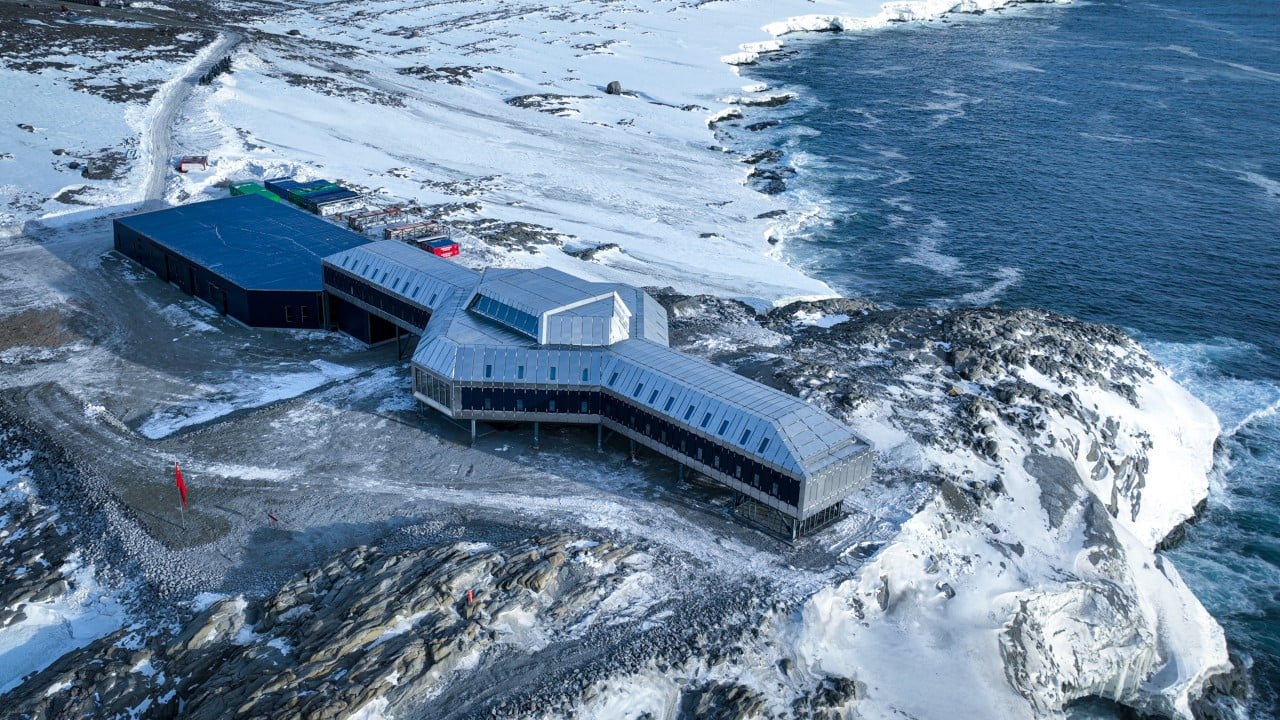
The headlines sound noble. China pledges to push its Antarctic research stations toward one hundred percent renewable power by 2035. Wind turbines spinning in the howling polar winds, solar panels drinking in the midnight sun, and sleek battery banks humming quietly beneath the ice. Environmentalists cheer. Geopolitical analysts nod sagely about long-term sustainability and green leadership at the bottom of the earth.
It is a fairy tale for people who have never spent a single night in a polar whiteout. Also making news in this space: The Night the Weights Broke Free.
I have spent years watching energy infrastructure projects get greenlit by bureaucrats who measure success in press releases rather than fuel efficiency. When you announce a zero-carbon mandate for a continent where temperatures routinely plunge below minus fifty degrees Celsius and winds tear steel rigging to ribbons, you are not engaging in engineering. You are engaging in theater.
Let us dismantle the lazy consensus. The common narrative claims that transitioning Antarctic outposts to wind and solar is simply a matter of engineering willpower, better battery chemistry, and proper financing. The reality is far more brutal. Antarctica does not care about your carbon offset goals. It eats machinery for breakfast. Further insights on this are covered by TechCrunch.
The Physics Problem Nobody Wants to Talk About
To understand why a 100 percent renewable Antarctic base is a logistical delusion, you have to look at energy density and reliability under extreme thermal stress.
Lithium-ion batteries hate the cold. Drop them below freezing without massive, energy-draining thermal management enclosures, and their capacity plummets while internal resistance spikes. Worse, if a battery management system fails during a multi-week polar blizzard—when solar input is zero and wind turbines are feathered to prevent self-destruction—the entire station freezes solid. People die.
The advocates of the all-renewable polar base point to technological progress. They assume that by 2035, energy storage will be weightless, infinite, and maintenance-free. That is wishful thinking disguised as strategy.
Let us look at the actual physics of polar microgrids. A standard Antarctic research station requires baseline power for life support, water generation through ice melting, scientific instrumentation, and communications. This load does not fluctuate based on whether the wind is blowing. It is a non-negotiable constant.
Wind power in Antarctica comes with a fatal design flaw: katabatic winds. These are gravity-driven torrents of dense, cold air rushing down from the polar plateau toward the coast. They do not blow as a steady breeze; they arrive as violent, supersonic tempests that exceed two hundred kilometers per hour. To survive them, turbines must be massively over-engineered, heavy, and anchored into bedrock that is often miles of shifting glacial ice.
Solar power is even more absurd. For months out of the year, the sun disappears completely. During the summer months, low-angle light hits panels covered in drifting rime ice and blowing snow. Cleaning solar arrays in an Antarctic gale is not a routine maintenance task; it is an extreme mountaineering expedition with a high mortality rate.
The Diesel Reality Check
Why do current stations—Chinese, American, British, and otherwise—rely heavily on specialized diesel generators? Because diesel fuel is dense, pumpable, storable for decades in fuel bladders, and capable of generating immediate, high-grade heat as a byproduct.
Co-generation is the dirty secret of polar survival. When you burn diesel to make electricity, you capture the waste heat to warm the habitat modules. If you eliminate diesel entirely and rely on wind and solar, where does your thermal energy come from? You have to burn electricity to make heat, which multiplies your energy demand exponentially. Suddenly, the footprint of your renewable installation has to triple just to keep the pipes from bursting.
China's ambition to green its Antarctic footprint is not entirely meaningless. Integrating wind and solar to offset peak diesel consumption during the milder shoulder seasons makes practical sense. It saves fuel flights, reduces local emissions near pristine rookeries, and stretches logistics chains. But claiming a path to 100 percent renewable autonomy by 2035 ignores the iron laws of thermodynamics.
When people ask how Beijing plans to maintain a permanent scientific presence during a solar minimum without backup fossil fuels, they are asking the wrong question. The right question is why observers continue to accept polished corporate ESG rhetoric from a continent governed by an international treaty that was designed to prioritize science over PR stunts.
The Geopolitical Smoke Screen
There is another layer here that the green transition cheerleaders miss. Antarctica is governed by the Antarctic Treaty System, which explicitly freezes territorial claims and bans military activity. However, it does not ban operational footprint expansion.
Establishing massive renewable energy arrays requires heavy machinery, permanent civil engineering works, and extensive logistics networks. By framing these expansions as green initiatives, nations can quietly build out dual-use infrastructure—deep-water berths, extended airfields, and high-capacity satellite communication nodes—under the bulletproof shield of environmental stewardship.
Who is going to object to wind turbines? Criticizing a renewable energy project in Antarctica is a PR nightmare. It makes you look like a fossil fuel apologist. Beijing understands this dynamic masterfully. The green label acts as diplomatic armor, neutralizing international scrutiny over infrastructure that expands long-term operational reach in a contested strategic zone.
What Actually Works
If you want to reduce emissions in the most hostile environment on Earth without risking human lives or wasting billions of dollars on impossible hardware, you abandon the ideological purity of the 100 percent renewable dream.
You do what smart industrial operators do. You optimize the hybrid mix. You use advanced microgrid controllers to dynamically balance diesel generators, high-efficiency energy storage, and localized wind harvesting. You accept that diesel is a necessary evil for baseline survival, and you focus on efficiency gains rather than zero-carbon fantasies.
Stop pretending that physics can be negotiated with a political declaration. Antarctica does not negotiate. It simply waits for you to make a mistake.