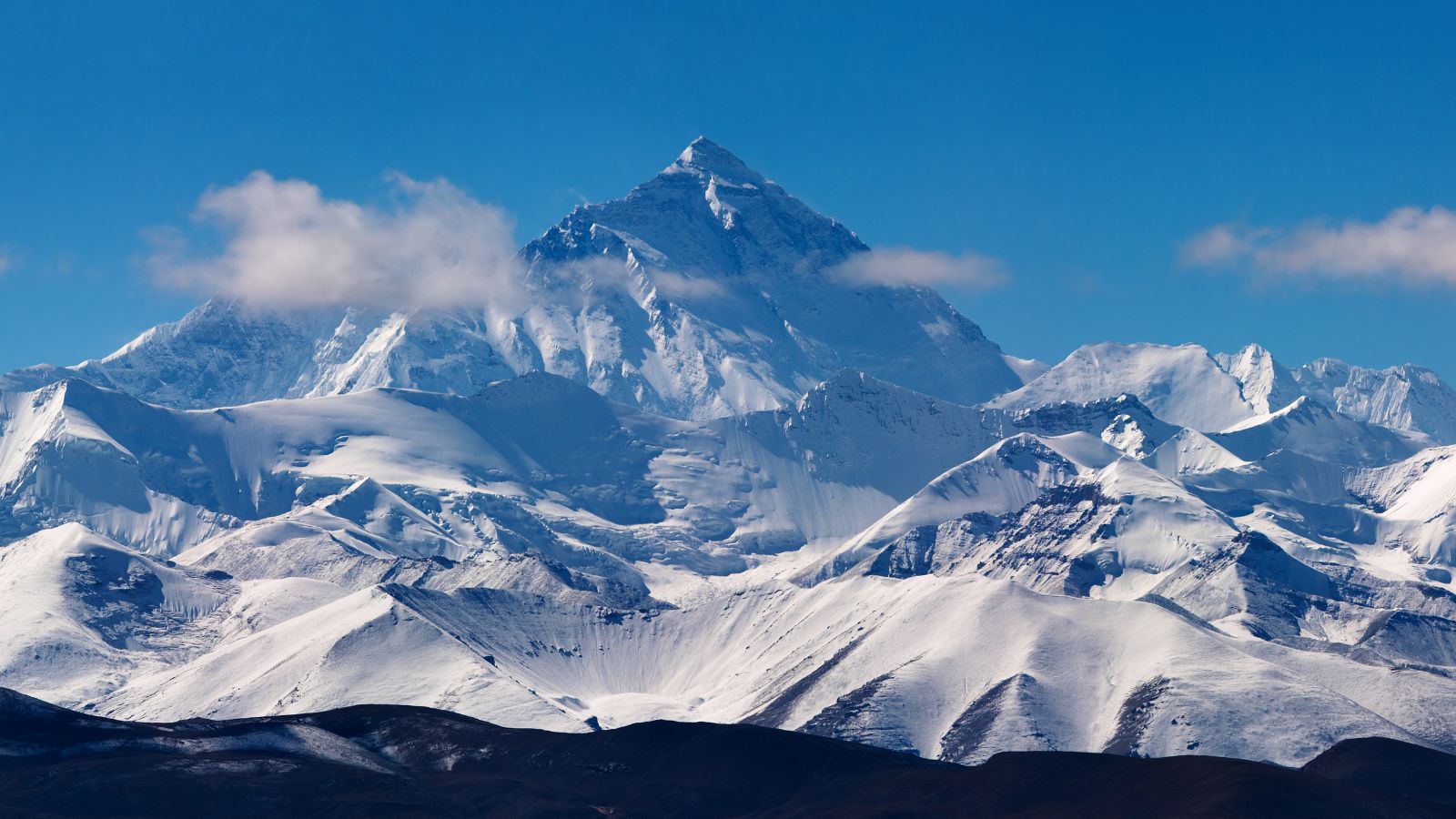
Every defense pundit with a Wi-Fi connection and a subscription to satellite imagery is currently losing their minds over Beijing breaking ground on a high-altitude drone research facility in Tibet, right near Mount Everest. The lazy consensus dominating the security feeds is predictable: it is a border surveillance play, a direct intimidation tactic against India, and a tactical response to the harsh topography of the Himalayas.
They are wrong. They are looking at a weather station and calling it an ICBM silo.
I have spent the better part of two decades watching aerospace contractors throw billions of dollars at thin air—literally. I have seen programs get scrapped because engineers back in comfort-controlled labs at sea level forgot that thermodynamics does not care about national security.
China is not building this Tibetan installation to peer across a ridge at Ladakh. They are building it because low-altitude atmospheric physics at extreme elevations is the single hardest engineering wall in modern aerospace, and whoever scales it first owns the future of autonomous flight.
The Physics Problem Everyone Ignores
Let us clear up a foundational misunderstanding right out of the gate. Air density at five thousand meters above sea level is roughly half of what it is at sea level.
Most people think this means a drone just needs a slightly bigger battery or a longer propeller blade. That is amateur hour. When air density drops by fifty percent, lift generation plummets, internal combustion engines suffocate from lack of oxygen, electric motor windings overheat because the thinner air provides less thermal dissipation, and GPS signals bounce off mountain faces like pinballs.
If you design a reconnaissance drone in Chengdu or Beijing, tune it to perfection, and then ship it up to the Tibetan Plateau, it will drop out of the sky like a wet brick.
"High-altitude aerodynamics is not an extension of standard aerospace engineering. It is a completely different discipline governed by brutal, unforgiving mathematical realities."
This is why the Everest-adjacent R&D center exists. You cannot simulate fifty percent atmospheric thinning reliably in a wind tunnel while simultaneously accounting for katabatic wind shear, sub-zero thermal cycling, and cosmic radiation density. You have to test where the problem lives.
The Border Panic is a Distraction
Let us address the geopolitical hand-wringing. The standard narrative claims this site is about projecting power along the Line of Actual Control.
Think about that for a second. If your primary goal is border surveillance or tactical strike operations against a neighboring military, you do not build your primary research and development hub on an exposed, environmentally punishing mountain shelf that is notoriously difficult to supply, prone to seismic activity, and visible to every overhead asset in the Northern Hemisphere.
You build production lines near logistics hubs. You test in manageable sectors.
Putting an R&D facility in Tibet for border control is the engineering equivalent of building a Formula One engine testing facility on the side of an active volcano just because you want to drive to the local grocery store. It is massive overkill for a tactical problem that could be solved with conventional medium-altitude platforms launched from lower terrain.
What is actually happening is a fundamental race for stratospheric persistence.
The Real Prize is Near-Space Dominance
The boundary between airspace and outer space—known to aerospace engineers as the Armstrong limit and the operational zone for pseudo-satellites—is where the real military and commercial money will be made over the next thirty years.
Traditional satellites in Low Earth Orbit are too expensive to launch, impossible to repair, and follow predictable orbital mechanics that make them sitting ducks for anti-satellite weapons. Ground-based fiber optics and cellular towers can be jammed, bombed, or severed.
The sweet spot is the stratosphere—between twenty and thirty kilometers high. But getting there, keeping an autonomous vehicle loitering there for months at a time, and making sure its payloads can survive the thermal shock requires mastery of extreme-altitude physics.
Tibet acts as an ideal physical stepping stone. It is a natural high-altitude proving ground that cuts down the initial climb requirement. If you can launch, recover, and iterate on high-altitude long-endurance airframes from a plateau that already sits at high elevation, you save immense amounts of energy and structural stress during the testing phase.
This facility is a materials science laboratory disguised as a military installation. They are testing composite degradation under intense ultraviolet radiation, battery chemistry behavior at negative forty degrees Celsius, and autonomous flight control algorithms that can compensate for GPS-denied environments where aerodynamic feedback is nearly nonexistent.
The Cost of Getting Altitude Wrong
I have seen companies blow millions on altitude simulation software that promised the world and delivered a pile of smoldering carbon fiber on the first real test flight.
Theory fails when it meets the mountains.
When you operate at extreme elevations, standard lubricants freeze solid. Plastics become brittle enough to shatter from minor acoustic vibrations. Lithium-ion batteries experience catastrophic capacity drops just when the onboard avionics need maximum current to fight a sudden gust of wind funneling through a mountain pass.
China understands that the next generation of autonomous logistics, communications relay, and persistent surveillance will not be won by who has the biggest payload bay. It will be won by who can build an airframe that refuses to break when the atmosphere stops cooperating.
By planting a dedicated R&D hub in the highest region on Earth, they are forcing their engineers to confront these physical failures early, brutally, and repeatedly on the drawing board rather than on the battlefield.
Dismantling the Competitor's Playbook
When mainstream outlets look at this development, they suffer from a severe lack of domain expertise. They translate every concrete pour in a disputed region into a direct act of war.
It is lazy journalism that appeals to fear rather than logic.
If you want to understand where Chinese aerospace capabilities are heading, stop looking at the troop movements and start looking at the thermal conductivity of the materials they are testing in those labs. Look at the solar-electric propulsion efficiency curves. Look at the micro-actuator durability tests conducted in sub-zero pressure chambers.
The Everest drone center is not a weapon aimed at a neighbor. It is a crucible for a completely new class of aviation that will operate where traditional aircraft suffocate and satellites are too expensive to justify.
Ignore the border pundits. Watch the materials science.
The country that masters the thin air of the roof of the world controls the skies above the rest of us.