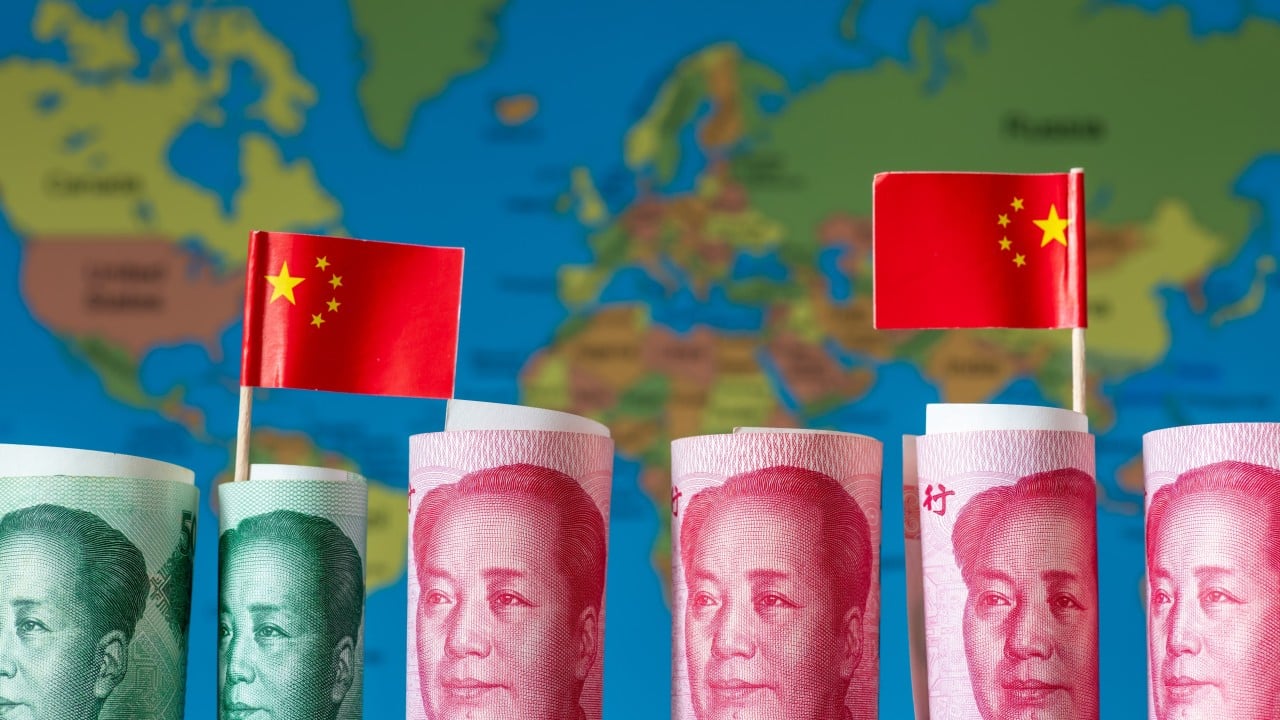
China just posted a record $213.58 billion (roughly $214 billion) in outbound direct investment flows for 2025, yet money flowing into the United States feels closer to a trickle than a tide. That headline gap confuses a lot of people. How can a country push a record wave of capital outside its borders while practically locking the door on the world's largest consumer market?
Here's the short answer. That $214 billion figure doesn't mean Chinese factories are popping up across American suburbs. Much of that money stays inside financial hubs like Hong Kong, heads toward Belt and Road partners or supply-chain bases in Asia and Latin America, and runs straight into a brick wall of American national security reviews, tariffs, and industrial policy.
If you look closely at the numbers, the story isn't that China stopped investing globally. It's that Chinese capital is sorting itself into safer or friendlier lanes, and the US isn't one of them.
What the $214 Billion Record Actually Means
Numbers from China's Ministry of Commerce, alongside the National Bureau of Statistics and the State Administration of Foreign Exchange, show outbound direct investment flows rose 11.1% in 2025 to $213.58 billion, lifting total overseas investment stock to about $3.4 trillion. New equity investment jumped 68% to $122.74 billion. On paper, Beijing's companies look more outward-bound than ever.
Take that headline with a grain of salt.
Official outbound statistics count capital leaving the mainland, and a huge share of those flows passes through or stays in Hong Kong rather than landing in greenfield factories across foreign towns. Analysts at institutions like the American Enterprise Institute have pointed out that headline ministry figures can overstate how much genuine, ground-level foreign direct investment is hitting outside economies. Still, even after stripping out accounting quirks, Chinese firms really are spending billions abroad, especially across Belt and Road partner nations—which took $46.05 billion, or 21.6% of total flows, in 2025.
There's also a timing catch you shouldn't miss. Clean energy and electric vehicle spending in China surged in late 2025 ahead of policy shifts—such as Beijing moving toward market-based pricing for new renewable power and phasing out consumer EV purchase-tax exemptions starting in January 2026—before pulling back sharply in early 2026, according to Rhodium Group's Clean Investment Monitor. Record annual numbers can hide sharp quarterly swings.
Why US-Bound Flows Keep Stalling
When you zoom in on the United States, the picture flips. Research from Rhodium Group shows that while Chinese outbound investment broadly moved across global markets, the drop-off in the US has been steeper than in many other developed economies, and canceled, paused, or delayed projects have weighed heavily on actual deal totals.
National Security Reviews and Tariffs
Washington has spent years tightening the screws on inbound Chinese capital. Under the Foreign Investment Risk Review Modernization Act (FIRRMA) of 2018, the Committee on Foreign Investment in the United States (CFIUS) gained broader authority to scrutinize sensitive technology, critical infrastructure, and certain real estate deals. For a board of directors at a Chinese firm, spending years and millions of dollars lobbying or restructuring a deal only to have it blocked—or forced to divest later—is a terrible return on time.
Tariffs make the math even trickier. Higher duties on Chinese goods and stricter trade rules raise costs and create whiplash for cross-border supply chains. Even when a company wants to build locally, political pushback and shifting rules keep executives cautious.
Slim Job Gains and Local Skepticism
Honestly, it's easy to see why US lawmakers stay skeptical. Rhodium Group's research notes that China has long stood out as a major exporter of goods to the US while generating relatively modest local job creation from direct investment compared with its trade footprint. When voters don't see local paychecks tied to a big foreign project, politicians have very little incentive to defend it.
Where That Overseas Money Goes Instead
If Chinese companies aren't piling into American deals, where is the cash going?
A lot of it follows the "China+1" playbook. Manufacturers facing tariffs, trade friction, and rising domestic costs at home have pushed production and assembly toward Southeast Asia, Latin America, and other partner markets. Setting up a plant in Vietnam, Mexico, or a Belt and Road partner country lets firms stay closer to export routes while dodging some of the sharpest bilateral friction.
Clean technology is another major piece of the puzzle, though it's no blank check. Rhodium Group's work on China's global clean tech investment highlights that while Chinese companies have invested across EV, solar, and wind supply chains abroad, host countries increasingly impose investment screenings, local-content rules, and supply-chain conditions. Expansion tends to happen project by project rather than as an unchecked wave.
Common Mistakes People Make Reading This Trend
People routinely trip over three assumptions when they read about record outbound Chinese investment alongside weak US inflows:
- Assuming "record outbound" equals "booming US factories." Aggregate outflow totals mix financial center routing, Belt and Road deals, and non-US markets. They don't measure American plant openings.
- Treating policy as a one-way street. Investment rules shift on both sides. Beijing has tightened and loosened capital controls over the years, and Washington continues to update trade and investment restrictions.
- Ignoring project cancellations. Announced deals sound big in press releases. Canceled, paused, or scaled-back projects tell you what actually survived regulatory and commercial reality.
What You Can Do With This Insight Right Now
Whether you run a business, manage risk, or follow global markets, don't rely on top-line outbound headlines to judge cross-border opportunity.
- Separate announcements from completed deals: Check deal trackers like Rhodium Group's China Cross-Border Monitor or Clean Investment Monitor to see which projects actually move forward versus stall out.
- Map supply chains by country and sector: If you source components or compete with Chinese manufacturers, look at where assembly and processing are shifting in Southeast Asia, Latin America, and Belt and Road markets rather than focusing solely on mainland China or the US.
- Watch regulatory triggers early: Track CFIUS reviews, tariff adjustments, and host-country localization rules before committing capital or signing long-term supply contracts.
Global Bond Selloff Deepens; US, China Extend Trade Truce
This video offers timely market commentary on US-China trade dynamics and broader global capital pressures that help put cross-border investment shifts in context.