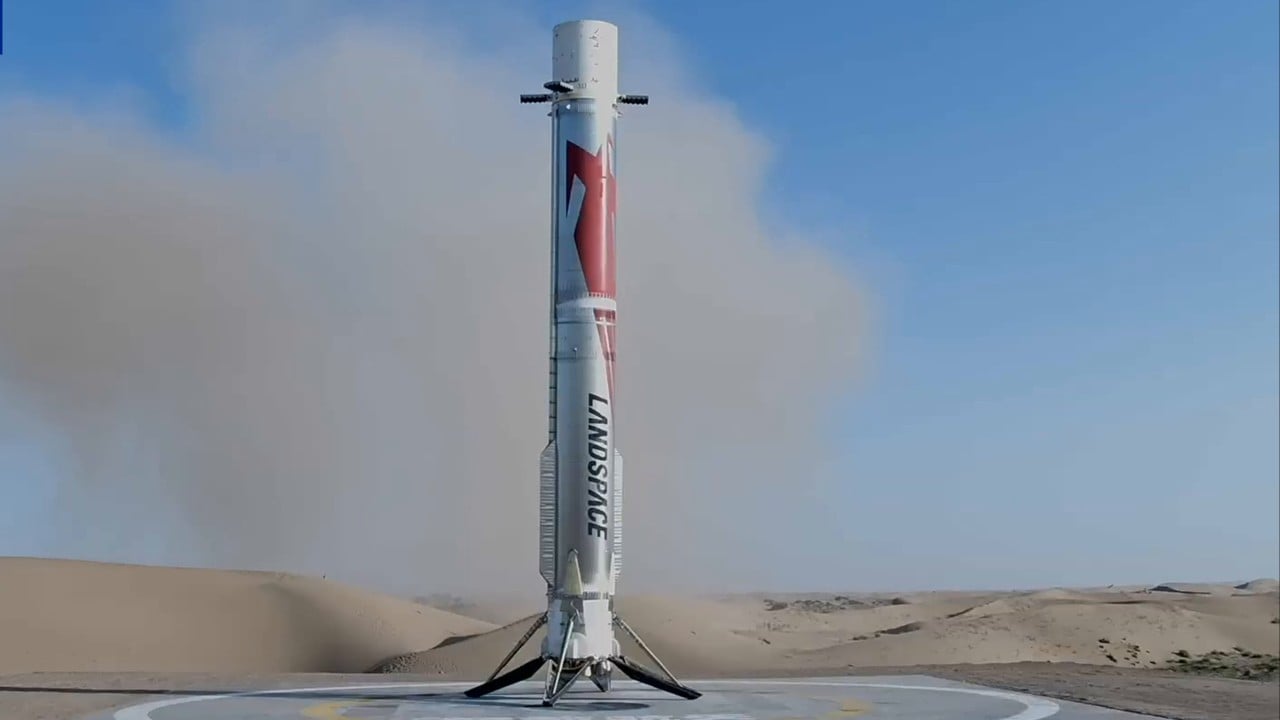
Everybody in the aerospace business missed the bigger picture. When SpaceX normalized vertical landing with autonomous drone ships, the rest of the world scrambled to copy the exact same playbook. They spent years trying to reverse-engineer grid fins, retro-propulsion burns, and propulsive landing legs. They assumed there was only one correct path to reusability.
China just proved them wrong.
Space agencies and private aerospace startups around the globe are realizing that orbital launch rocket recovery isn't a one-trick pony. While western analysts spent years arguing about whether grid fins or parachute designs were superior, China quietly developed and flew two completely distinct recovery mechanisms in parallel. They didn't just catch up. They branched the evolutionary tree of rocket engineering.
If you want to understand where the global space race is heading, you have to look past the smoke of the launchpad. You have to look at how these dual architectures work, why traditional rocket companies are sweating, and what this means for payload economics over the next decade.
The Fallacy of a Single Path in Rocket Reuse
For a long time, the dogma of orbital reusability was simple. You fly the booster back down, reignite the heavy main engines, bleed off hypersonic velocity, and slam onto a landing pad or a bobbing barge at sea. It works. Elon Musk proved that beyond a shadow of a doubt. But building a propulsive landing system requires carrying extra fuel all the way to space and back, which inherently eats into your payload mass fraction.
Physics doesn't care about your favorite design. Carrying unburned propellants just to brake your descent means your rocket has to be bigger, heavier, and more expensive to manufacture in the first place.
China's approach bypassed this dogmatic thinking. Instead of forcing every single rocket into a vertical propulsive landing mold, engineers split their bets. They pursued vertical propulsive landing for specific heavy-lift architectures, while simultaneously funding grid-fin and parachute-assisted mid-air retrieval systems or specialized downrange grid nets for smaller, more agile workhorses.
You end up with two entirely different engineering philosophies operating under one national space apparatus. One looks like a Falcon 9 clone. The other looks like an entirely new category of aerospace vehicle that treats the atmosphere as a giant braking system rather than a hostile obstacle.
Breaking Down Method Number One
Let's look at the first path. This is the vertical takeoff, vertical landing methodology. It uses liquid oxygen and kerosene or methane engines that can reignite multiple times with extreme precision.
When a booster separates on these missions, it performs a boost-back burn. This reverses its horizontal vector. It coasts up past the apex of its trajectory and starts screaming back toward the surface. Grid fins pop out of the interstage structure. They bite into the thin upper atmosphere, steering the massive aluminum-lithium cylinder with brutal aerodynamic authority.
Just seconds before impact, the center engine roars back to life. This is the landing burn. The legs deploy hydraulically, locking into place as the vehicle touches down on a concrete pad or a dedicated recovery ship.
It sounds simple on paper. It is brutally difficult in execution. The software required to manage supersonic retro-propulsion while compensating for wind shear, engine transients, and fuel slosh is among the most complex code ever written. China's state-backed institutes and private commercial entities like LandSpace and Galactic Energy have mastered this control loop. They've stopped treating the rocket like a disposable firework and started treating it like an aircraft.
The Second Path Changes the Economics Completely
Here is where things get genuinely fascinating. The second recovery path abandons the heavy landing legs and extra propellants entirely.
Why burn precious fuel to stop a rocket when you have a 100-mile-thick atmosphere to do the job for you?
Instead of carrying landing propellants all the way to orbit, this second pathway relies on aerodynamic deceleration combined with modular recovery systems. After stage separation, the booster relies on grid fins and atmospheric drag to slow its descent down to subsonic speeds. From there, massive deployment chutes blossom out of the top section, bleeding off the remaining kinetic energy.
In some configurations, recovery teams use specialized catching mechanisms or reinforced ground landing zones designed to absorb the final low-speed impact without needing heavy landing legs or heavy engines firing at zero altitude. By eliminating landing legs, pneumatic deployment systems, and restart fuel reserves, you save massive amounts of structural mass.
That saved mass goes straight into commercial payload capacity. You get a cheaper rocket, a simpler engine cycle, and a higher payload margin. It is an engineering tradeoff that traditional vertical-landing advocates dismissed for years, right up until the flight data showed it working in the field.
Why This Architecture Split Matters for the Commercial Market
Most people look at rocket launches and see fire and noise. Industry insiders look at spreadsheets. Cost per kilogram to orbit dictates everything.
If you have two distinct ways to recover orbital boosters, you aren't tied to a single point of failure in your supply chain or your vehicle design philosophy. If a particular class of payload requires heavy structural margins, you route it through the propulsive landing vehicle. If you are launching constellations where manufacturing volume and low baseline cost matter more than pinpoint pad landings, you use the simplified atmospheric recovery path.
This diversification gives Chinese commercial launch providers an unfair advantage in market positioning. They aren't locked into one architectural religion.
Let's be honest about the broader implications. Western launch providers have invested billions into perfecting a single recovery method. That single-minded focus created incredible breakthroughs, but it also created blind spots. When you bet your entire company's future on vertical propulsive landings, you accept every single mass penalty, thermal protection challenge, and guidance limitation that comes with it.
China's parallel development strategy proves that reusability is a spectrum, not a binary choice.
What Happens Next in the Global Race
The gap between launching rockets and economically reusing them is shrinking fast. We are moving past the era where a successful vertical landing is treated as a miraculous scientific achievement. It is now a baseline business requirement for anyone wanting to compete in the commercial launch market.
Keep your eyes on the downrange infrastructure over the next twenty-four months. Watch how fast these commercial entities scale their flight rates. Pay attention to the turnaround times between flights, because that is the real metric that breaks or makes a launch provider.
Stop looking for a silver bullet in aerospace engineering. There isn't one. The future belongs to the engineers who can build flexible systems that adapt to the physics of flight without locking themselves into a single, expensive dogma. China just showed the world how to play a multi-layered game. It is time for everyone else to catch up.