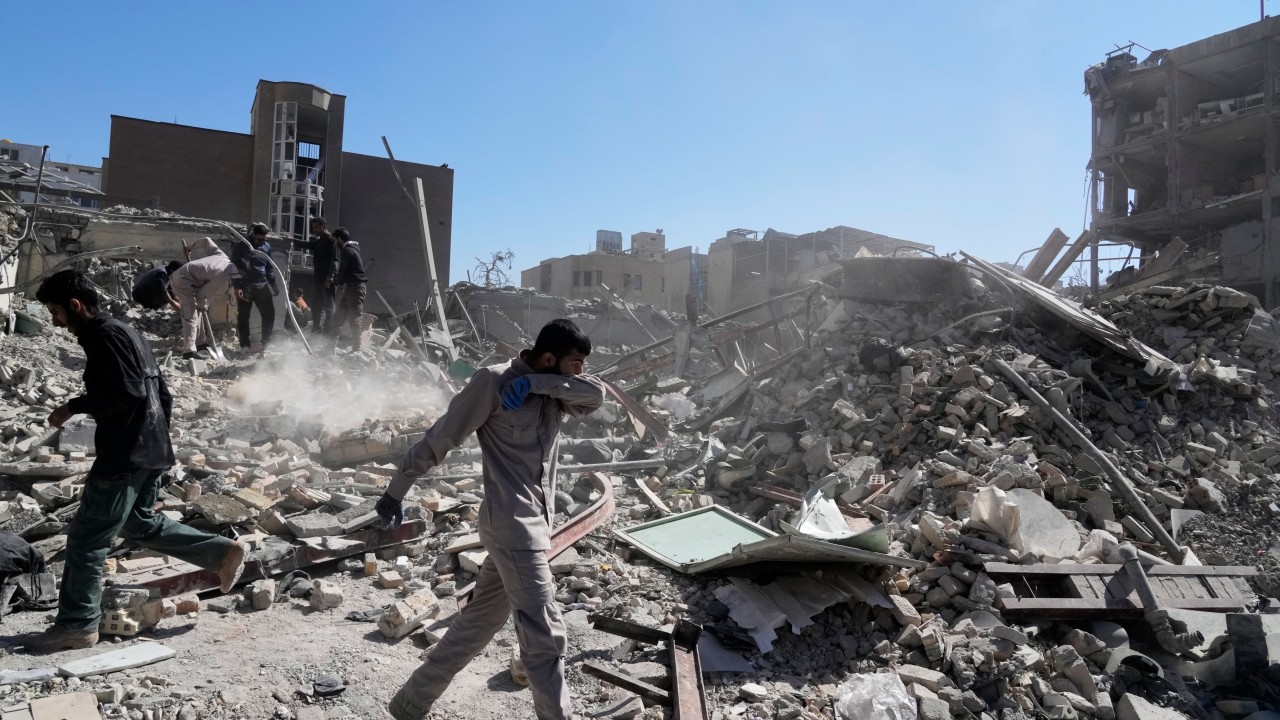
The standard foreign policy "expert" loves a good binary. They look at the Middle East and see a zero-sum game: either China sides with the "Resistance Axis" to spite Washington, or it maintains its high-tech bromance with Israel. Most analysts currently argue that U.S.-led strikes on Iran will force Beijing into a corner, making them choose between their energy security and their diplomatic posture.
They are wrong. They are misreading the map because they are looking at the wrong borders.
China isn't "balancing" its ties with Israel. It is actively de-prioritizing them. The assumption that Beijing views Israel as a "pivotal" partner in the region is a relic of 2015. In 2026, Israel is no longer an asset for China; it is a liability that Beijing is using to buy credibility with the only people who actually matter to its long-term survival: the Gulf monarchs.
The Myth of Chinese-Israeli Tech Synergy
For a decade, the narrative was simple: China provides the capital and the infrastructure (Haifa Port, Tel Aviv Light Rail), and Israel provides the "Start-up Nation" IP. This was a convenient marriage until the U.S. Committee on Foreign Investment (CFIUS) and the Israeli defense establishment finally woke up.
I have spent years watching trade delegations move between Beijing and Tel Aviv. The shift is palpable. The high-end semiconductor and AI collaborations that China actually wants are now strictly off-limits due to intense pressure from Washington. What is left? Food tech. Desalination. Low-level medical devices. These are nice-to-haves, but they aren't worth the diplomatic headache of defending Israel in the middle of a regional conflagration.
When the U.S. strikes Iranian proxies or Iranian soil, the consensus says China must "adjust" its ties to protect its investments. This assumes China cares about the investments more than the narrative. It doesn't. Beijing’s goal isn’t to save its port deal in Haifa; it’s to use the destruction of regional stability as proof that American hegemony is a failed experiment.
Energy Security is the Only Metric
If you want to understand why China won't lift a finger to help Israel—and why it will continue to rhetorically back Iran—follow the oil.
China imports roughly 10 million barrels of crude oil per day. Over half of that comes from the Persian Gulf. Israel produces zero oil. While Israel offers a Mediterranean foothold, it offers nothing to keep the lights on in Shenzhen.
The "lazy consensus" suggests that China is terrified of a regional war because it would spike oil prices. While true in the short term, Beijing plays a longer game. A Middle East in chaos, where the U.S. is forced to burn trillions on "policing" strikes, is a Middle East where China can walk in as the "rational actor." By condemning U.S.-led strikes on Iran, China secures its status as the preferred customer for Saudi Arabia, the UAE, and Qatar.
Beijing has realized that it cannot protect the Strait of Hormuz militarily. It doesn't have the blue-water navy for it yet. So, it protects its energy interests through diplomatic immunity. It stays on the "right" side of the Arab street and the "right" side of the Tehran-Riyadh rapprochement it helped broker. Israel is simply the price of admission for that trust.
The "Middle Power" Trap
Everyone asks: "How will China adjust to Israel?"
The real question is: "Why would China bother?"
Israel is a "Middle Power" that has overplayed its hand by assuming it remains an essential bridge for China into the West. It isn't. China has already built its own bridges, or it’s busy burning the ones it doesn't need.
Consider the "Belt and Road" infrastructure. The Port of Haifa was supposed to be a crown jewel. Now, it’s a security lightning rod. If the U.S. ramps up its kinetic involvement in the region, China won't double down on its Israeli assets. It will write them off as a sunk cost. To Beijing, a few billion dollars in construction contracts is a rounding error compared to the strategic value of being the only major power that hasn't dropped a bomb on a Muslim country in the last thirty years.
Dismantling the "Mediator" Delusion
The "People Also Ask" section of any search engine is filled with queries about whether China can broker peace between Israel and Iran.
The answer is a brutal "No," and Beijing knows it.
China has zero interest in solving the Israel-Palestine conflict or the Iran-Israel shadow war. Solving these problems would require China to take on the "Security Provider" role—a role that is expensive, thankless, and militarily draining. Beijing wants the prestige of the mediator without the burden of the guarantor.
By offering vague peace plans and hosting symbolic talks, China wins points with the Global South. It highlights American "warmongering" every time a Tomahawk missile leaves a U.S. destroyer. If the Middle East stays messy, the U.S. stays distracted. If the U.S. stays distracted, the South China Sea stays open for Chinese expansion.
The Brutal Reality for Israel
Israelis often brag about their "pivot to Asia." They believe their technology makes them indispensable. They are wrong.
- The Component Replacement: China is aggressively domesticating the very tech it used to buy from Israel.
- The Diplomatic Blockade: China's voting record at the UN is not a fluke or a temporary protest; it is a permanent realignment.
- The Strategic Abandonment: In any scenario where China has to choose between an Israeli tech firm and a Saudi oil contract, the tech firm loses every single time.
This isn't about "adjusting" ties. This is about managed decline. China is keeping the lights on in its Tel Aviv embassy, but the power is being diverted to Riyadh and Tehran.
The Scenario: What Happens When the Strikes Peak?
Imagine a scenario where U.S. strikes on Iran lead to a sustained blockade of the Strait of Hormuz. The "experts" say China will plead with Israel to use its influence in Washington to de-escalate.
In reality, China will do the opposite. It will use the crisis to demand "security guarantees" from the Gulf states that exclude the U.S. It will offer to buy oil in Renminbi, further eroding the petrodollar. It will let Israel sit in its own isolation, using the Jewish state as a convenient "Western outpost" to rail against in every diplomatic forum from Jakarta to Johannesburg.
The "nuance" missed by the competitor's article is that China doesn't want a stable Middle East under American terms. It wants a controlled instability that makes the American "protection" look like arson.
Stop Asking the Wrong Question
Stop asking how China will "adjust" its ties to Israel. Start asking how quickly China will discard them to cement its grip on the world's energy heartland.
Israel is a tactical tool for China, not a strategic partner. It’s a tool that is currently being used to demonstrate to the rest of the world what happens when you rely on a declining superpower for your security.
Beijing isn't worried about the U.S. reshaping the Middle East. Beijing is waiting for the U.S. to finish breaking it so they can buy the pieces for cents on the dollar.
Don't look for a "rebound" in China-Israel relations. The divorce is already finalized; they’re just waiting for the house to burn down before they stop sharing the driveway.
Would you like me to analyze the specific trade volume shifts in dual-use technology between China and the Levant over the last eighteen months?