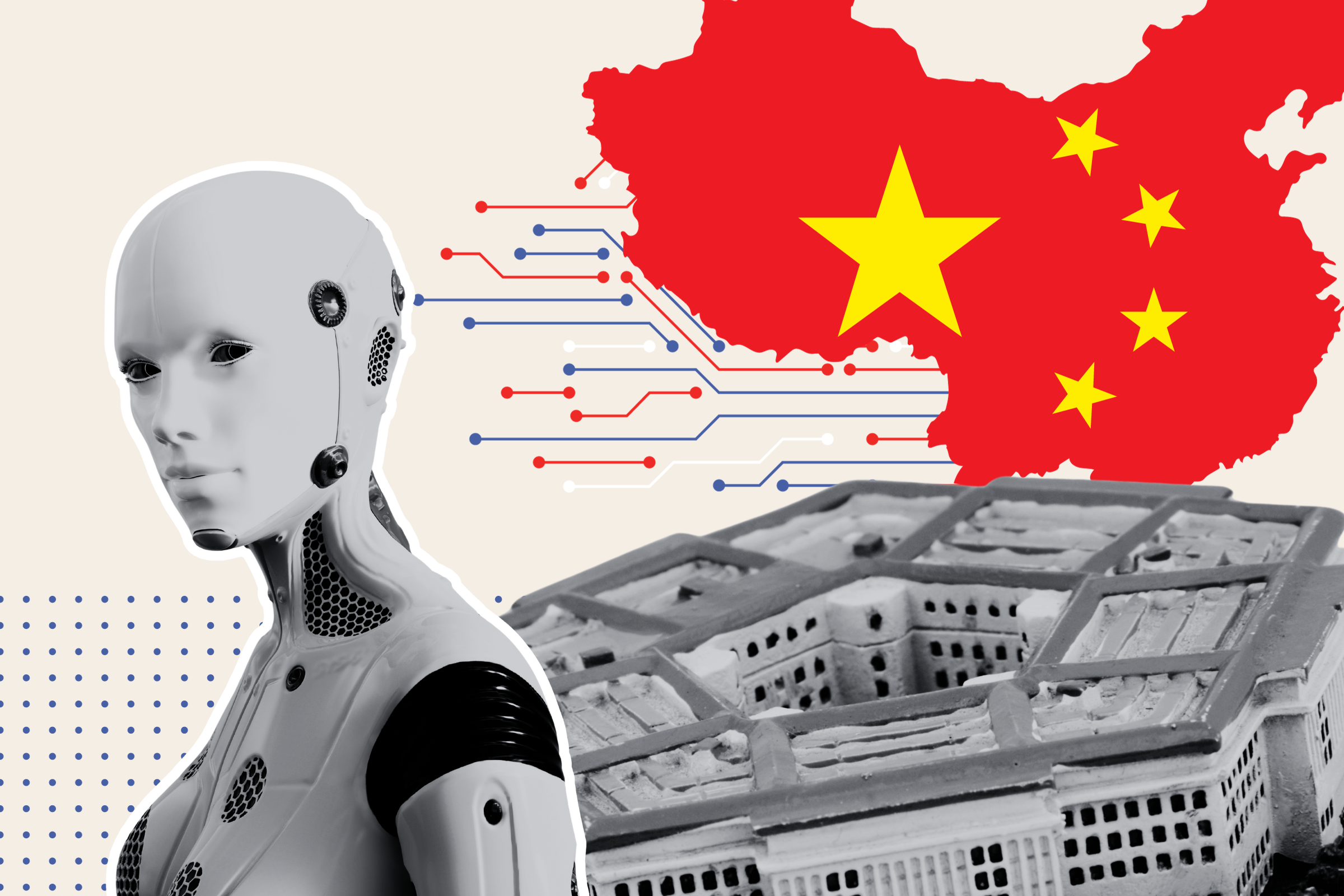
The White House is panicking about "industrial-scale theft." Reuters is printing the headlines. The national security establishment is hyperventilating over stolen weights and pilfered code. They want you to believe that if Beijing manages to exfiltrate a few terabytes of proprietary data from a Silicon Valley server, the American lead in artificial intelligence vanishes overnight.
They are wrong. They are fundamentally, embarrassingly wrong about how technology actually scales.
The prevailing narrative—that China is "winning" by stealing—rests on a prehistoric understanding of software. It treats an AI model like a secret recipe for Coca-Cola or a blueprint for a stealth bomber. In those legacy industries, a stolen schematic is a finished product. But in the world of large language models and neural networks, a stolen model is nothing more than a high-maintenance digital paperweight.
By obsessing over "theft," the U.S. government is actually protecting a dying business model while ignoring the real competitive advantage: the ability to iterate, discard, and deploy at a velocity that theft cannot replicate.
The Mirage of the Stolen Model
If a spy steals the weights for a state-of-the-art model today, they are stealing a snapshot of the past.
In the AI sector, the half-life of a "cutting-edge" breakthrough is currently measured in months, sometimes weeks. By the time an adversary exfiltrates the data, sets up the massive compute clusters required to run it, and figures out the specific fine-tuning triggers that make the model useful, the original creators have already moved two generations ahead.
Theft is a lagging indicator. It is the strategy of the desperate.
When we scream about intellectual property theft in AI, we are essentially complaining that someone is stealing our old newspapers. Sure, the information had value when it was fresh. But the infrastructure required to make that information actionable is the real moat. China’s biggest hurdle isn't a lack of access to American code; it's a lack of access to the high-end H100 and B200 chips required to run that code at a scale that matters.
We are fighting over the "what" when the only thing that matters is the "how."
Why Open Source Just Made Theft Irrelevant
The most hilarious part of the White House’s alarmism is that while they are busy guarding the front door, the industry already opened the windows.
Meta’s release of Llama 3 and the subsequent explosion of high-performing open-weight models from Mistral and others have created a floor of capability that is accessible to anyone with an internet connection. If China can download a model that performs at 95% of the capacity of a proprietary closed-source system, why would they bother risking a high-stakes cyber-espionage operation to steal the other 5%?
The "theft" narrative assumes there is a massive gap between what is "stolen" and what is "available." That gap is shrinking to the point of insignificance.
I have watched companies burn $50 million trying to build "moats" around their data, only to have a group of hobbyists on Hugging Face release a superior, open-source version of the same tool three weeks later. The value isn't in the weights. The value is in the talent density and the ecosystem. You cannot steal a culture of innovation. You cannot download the collective intuition of five hundred world-class engineers who know exactly why a specific training run failed.
The Burden of the Copycat
Copying is a tax on the copier.
When you steal technology, you inherit all the technical debt, all the biases, and all the architectural flaws of the original, without any of the context required to fix them. You become a derivative power.
Imagine a scenario where a competitor steals the source code for a complex, microservices-based platform. They spend a year trying to get it to run in their own environment. During that year, the original team—who understands the "why" behind every line of code—has refactored the entire system for a new hardware architecture. The thief is now stuck maintaining a bloated, obsolete system they don't fully understand, while the innovator is lean and fast.
This is the "Copycat Trap." By facilitating the "theft" of our current models, we are effectively tricking our competitors into investing their limited compute resources into yesterday's architectures. We should be handing them the disks.
The Compute Gap is the Only Real Wall
The White House should stop worrying about "theft" and start worrying about power plants.
The bottleneck for AI dominance isn't "AI technology" as some abstract concept. It is a very physical, very expensive trifecta:
- Silicon: The physical chips that do the math.
- Energy: The gigawatts required to keep the chips cool and running.
- Data Quality: The increasingly scarce pool of high-quality human reasoning data.
China is struggling with the first. They are trying to bridge the gap with the third. But "theft" doesn't solve the energy problem or the hardware problem. You can steal a Ferrari's blueprints all you want; if you can't manufacture the engine or find the high-octane fuel, you're still walking.
The current export controls on high-end semiconductors are doing more to maintain the U.S. lead than any "anti-theft" initiative ever could. By focusing the conversation on "espionage," the government is shifting the blame away from their own inability to modernize the electrical grid or streamline the construction of data centers. It’s a political distraction from the real industrial failure.
People Also Ask (And They’re Wrong)
"Won't China use stolen AI to create better cyberweapons?"
They don't need stolen AI for that. The vulnerabilities they exploit in Western infrastructure are usually the result of poor security hygiene and 40-year-old legacy code in our power grids and water systems. An AI model "stolen" from OpenAI doesn't magically find zero-days that a dedicated team of human hackers couldn't find.
"Doesn't intellectual property theft cost the U.S. billions?"
In the physical goods sector? Maybe. In AI? It’s debatable. If a Chinese firm uses a stolen model to optimize their local logistics, does that actually take a dollar out of the pocket of a U.S. company? Only if that U.S. company was planning to sell to them—which, given the current sanctions, they aren't.
"What if they steal the 'Safety Guardrails' and learn how to bypass them?"
This is the most "Beltway" concern imaginable. "Safety guardrails" are just layers of fine-tuning and system prompts. Any semi-competent researcher knows how to jailbreak a model. You don't need to "steal" the secret to making an AI say something offensive or dangerous. The idea that there is a "secret key" to AI safety that must be guarded like the nuclear codes is a fantasy.
The Strategy of the Superior
If we actually want to "win," we need to stop acting like a besieged fortress and start acting like a laboratory.
The moment you focus on "protecting" what you have, you have admitted that you don't think you can build something better tomorrow. Protectionism is for the stagnant.
We should be encouraging the most aggressive, open, and rapid development possible. We should be making our models so ubiquitous and so frequently updated that the very concept of "stealing" them becomes a punchline.
The real threat isn't that China steals our AI. The real threat is that we become so obsessed with "security" that we regulate our own innovators into the ground, creating a permission-based landscape where only the largest, slowest corporations can afford to play.
We are currently building a regulatory moat that protects Google and Microsoft from startups, under the guise of protecting America from China. That is the real industrial-scale theft happening right now: the theft of the American startup's ability to compete.
Stop whining about the spies. Build faster. If the hardware is ours and the talent stays here, the "stolen" code is just a souvenir.
Let them steal the past. We’re busy building the version that makes it irrelevant.