Call it a revolution if you want. Just don’t expect it to stay standing once the venture money dries up.
Every lazy commentary piece on China’s coffee boom repeats the exact same story. A tea-drinking nation woke up. Young urbanites fell in love with oat lattes. Homegrown chains exploded across tier-one, tier-two, and tier-three cities. Starbucks got blindsided. Case closed.
That narrative is comforting. It is tidy. And it misses almost everything that actually drives unit economics inside a Chinese coffee cup.
I have spent years watching smart operators misread consumer shifts in Asia because they confuse trial velocity with habitual demand. I have seen companies blow millions on flagship stores in booming districts only to discover their customers were there for a 9.9-yuan promotional voucher, not because they crave bitter roasted seeds at 8:30 AM. A discount-driven surge in store counts is not a cultural conversion. It is customer acquisition via cash burn.
To understand what is really happening in China’s coffee market, we have to stop asking “Why is China drinking so much coffee now?” and start asking a much sharper question: “Who is actually paying full price for it, and what happens to the business model when nobody does?”
The Lazy Consensus Around China’s Coffee Boom
The conventional wisdom treats China’s coffee surge like a sudden religious awakening. Look at the store counts. Look at the app downloads. Look at the sleek minimalist branding plastered across Shanghai, Chengdu, and Shenzhen. Observers point to rapid urbanization, rising disposable income, and westernized office culture as proof that a permanent shift has occurred.
Part of that is real. Urban white-collar workers do buy iced Americanos and flavored milk drinks at a pace unthinkable fifteen years ago. Domestic players have moved with blistering speed, pairing mobile ordering with aggressive store expansion and localized flavor profiles like osmanthus, coconut, and cheese foam.
Where the lazy consensus falls apart is the leap from consumption growth to structural profitability.
In mature coffee markets like the United States or parts of Northern Europe, coffee functions as a daily ritual anchored by high repeat frequency and healthy gross margins per ticket. In much of China, coffee has scaled largely as an affordable, convenient, often heavily promoted liquid snack or functional caffeine hit inside an ultra-crowded beverage aisle.
When a category expands primarily through aggressive price competition, app-based coupons, and dense store clustering, top-line volume looks electric. Bottom-line durability looks fragile. Counting cups sold without examining the margin per cup is like judging a marathon runner by how fast they sprint the first fifty yards.
Why "Tea vs. Coffee" Is the Wrong Framing
Ask almost anyone outside the industry about China’s coffee trajectory and the first question out of their mouth is some version of “How could a five-thousand-year-old tea culture switch to coffee?”
That question rests on a flawed premise. China did not abandon tea for coffee. Most consumers who buy a flavored iced latte or a fruit-infused coffee drink are not replacing gongfu tea ceremonies at home. They are choosing among dozens of modern ready-to-drink and freshly made beverages—milk tea, fruit tea, bottled teas, sparkling drinks, and coffee—competing on convenience, sweetness, novelty, and price.
Precision matters here. Caffeine delivery is not the same thing as specialty coffee culture. A sweetened coconut latte or a heavily flavored milk drink behaves much closer to a bubble tea or iced tea in the consumer’s mind than to a single-origin pour-over. Treating every cup sold by a coffee chain as evidence of deep coffee connoisseurship is a category error.
Consider the "People Also Ask" style questions that flood search results around this topic:
- Is coffee replacing tea in China? No. Tea remains massive across traditional and modern formats, while coffee competes inside a broader modern beverage habit where sweetness, milk, and price often matter more than bean origin.
- Did local chains beat Starbucks? They beat Starbucks on speed, app convenience, and promotional pricing in many segments. Whether they have built superior long-term store-level economics across thousands of locations is a separate, tougher test.
- Will per-capita consumption catch up to the West? Raw averages can be misleading. Massive populations, regional income gaps, and different daily routines mean national per-capita numbers will not simply march in a straight line toward European or North American norms.
Imagine a scenario where a domestic chain opens three hundred stores in a year by offering steep discounts on every drink while squeezing suppliers and franchisees. Foot traffic spikes. Headlines celebrate a historic takeover. Then six quarters later, promotional budgets tighten and customer churn rises because rival apps offer cheaper drinks two blocks away. Was that a cultural revolution, or was it a land grab funded by cheap capital and razor-thin margins?
The Mechanics of Scale vs. The Trap of Thin Margins
China’s retail engine is unmatched when it comes to supply chain speed, digital ordering, and operational execution. When Chinese operators decide to scale a physical format, they do not move cautiously. They compress timelines that would take western chains a decade.
That speed creates real advantages. Centralized procurement, standardized equipment, tight real estate negotiation, and mobile-first loyalty loops allow brands to test menus quickly and saturate dense neighborhoods. Anyone who dismisses local execution as "just copying western cafes" is behind the curve. Modern Chinese beverage operators have pioneered high-throughput formats built around pickup windows, delivery riders, and mobile queues rather than lingering on plush sofas.
Yet hyper-scale carries a brutal catch: density without differentiation turns into margin compression.
When ten chains sell similar milk-based coffee drinks within a short walk of the same office tower, switching costs approach zero. Loyalty belongs to the discount coupon, not the logo on the cup. A single price war can pull an entire category downward, forcing even well-run operators to chase volume just to keep stores busy and fixed costs covered.
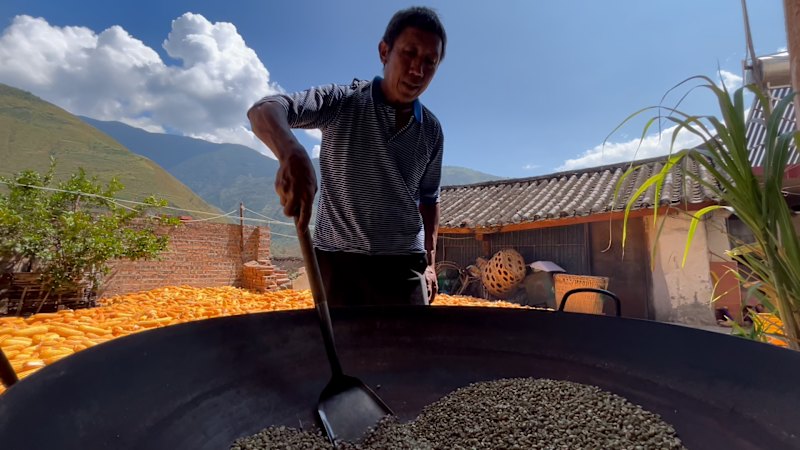
Even agricultural sourcing has its own reality check. Yes, domestic coffee production—especially in regions like Yunnan—has gained attention and improved quality in pockets. Still, global coffee remains a commodity-exposed agricultural business shaped by weather, yields, currency swings, and international trade dynamics. Localizing retail branding is far easier than insulating cup economics from raw input costs and fierce domestic price wars.
What Experienced Operators Miss (And Where the Real Risk Lies)
I have seen ambitious brands treat rapid expansion in China like an automatic compounding machine, assuming scale alone solves unit economics. Sometimes scale lowers cost of goods sold. Just as often, rapid saturation cannibalizes nearby stores, inflates delivery and labor friction, and trains customers never to pay full price again.
Heavy hitters in global retail and consumer strategy—from long-time China retail analysts to veteran foodservice executives—have pointed out for years that winning market share in a hyper-competitive Chinese category is rarely the hard part. Sustaining return on invested capital once the novelty and subsidy waves fade is where real discipline shows up.
Let’s be honest about the downside of taking a skeptical view here. If you assume China’s coffee market is a passing fad or a mirage, you will underestimate how deeply modern beverage habits have embedded themselves in daily urban life. Millions of consumers now treat iced coffee as completely normal. Pretending nothing changed is just as blind as calling every discounted cup a permanent cultural triumph.
The real mistake is binary thinking: either "China is becoming a coffee superpower overnight" or "it’s all hype." The truth sits in the tension between massive consumer adoption and brutal commercial economics.
A Smarter Playbook for Anyone Competing in the Space
If you are an operator, brand leader, or investor looking at China’s coffee market right now, stop chasing vanity metrics like raw store count or viral launch days. Those numbers flatter ego; they do not guarantee cash flow.
Do this instead:
- Audit unsubsidized repeat rate. Strip out promotional vouchers, new-user discounts, and opening-week hype. Measure what happens when a customer pays a sustainable price on a rainy Tuesday. If demand falls off a cliff without a coupon, you do not have brand equity—you have rented traffic.
- Protect store-level payback over footprint. Ten profitable locations with healthy payback periods beat fifty crowded storefronts surviving on thin scraps and overlapping catchments. Watch rent-to-sales ratios, labor efficiency, and delivery commission drag like a hawk.
- Own a distinct occasion or flavor architecture. Me-too milk coffees are a race to the bottom. Either engineer genuinely superior speed and cost efficiency at scale, or carve out a clear sensory and functional niche that cannot be matched by a five-yuan price cut.
- Plan for margin volatility from day one. Build balance-sheet discipline and flexible menu engineering before competitors force a price war. Companies that rely on endless cheap capital to subsidize cups eventually run out of room to maneuver.
A real revolution changes how people value a product even when it stops being cheap. Right now, too much of China’s coffee boom still looks like a bargain hunt wearing trendy packaging.