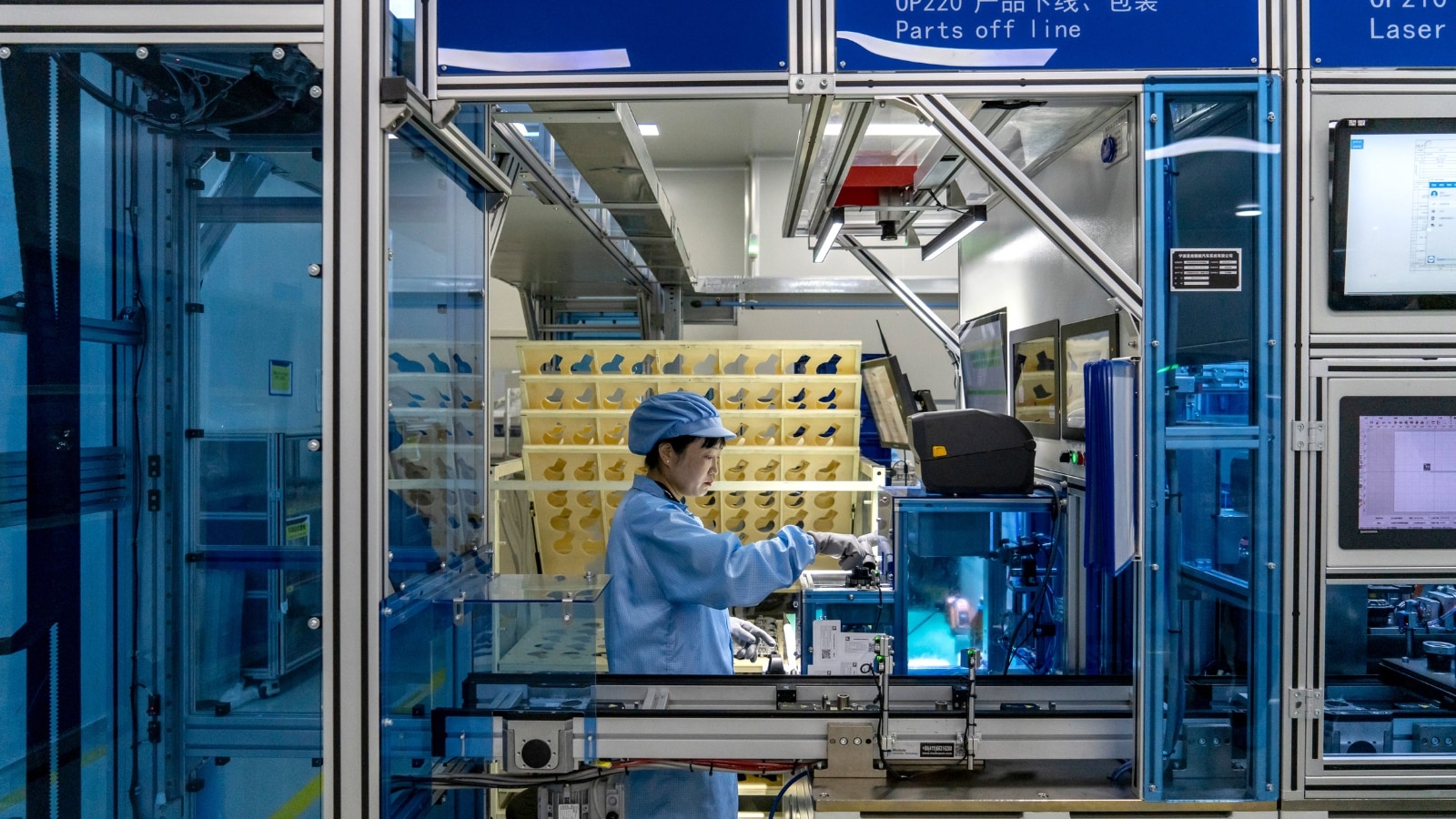
The financial press is celebrating again. Headline after headline trumpets the glorious return of Chinese factory activity, pointing to surging export volumes as definitive proof of a roaring economic comeback. They look at a spike in shipping containers leaving Shanghai and declare a victory for global demand.
They are reading the chart completely backward.
What the mainstream financial media calls an export boom is actually an industrial distress signal. China is not exporting out of strength; it is dumping excess inventory out of desperation. The domestic engine is sputtering, local consumer confidence is on life support, and factories are running out of places to put their goods. This is not growth. It is a desperate liquidity fire sale masked as a manufacturing resurgence.
The Margin-Crushing Myth of Factory Growth
The lazy consensus relies entirely on top-line purchasing managers' index (PMI) data and raw export volumes. It treats every manufactured widget as a sign of economic health. But if you talk to the supply chain managers actually executing these orders on the ground, a grim picture emerges.
I have spent years analyzing supply chain cost structures, and there is a fundamental truth that generalist journalists miss: volume means nothing if you are selling at or below cost.
Chinese factories are caught in a brutal domestic price war. Because local property markets have stalled and internal consumption remains sluggish, Beijing has doubled down on supply-side incentives. The state keeps funneling cheap credit into manufacturing capacity. The result is massive oversupply.
To keep the lights on and satisfy state-directed employment targets, factory owners are forced to slash prices and ship their surplus abroad.
- The Competitor Narrative: Rising exports prove global demand for Chinese goods is stronger than ever.
- The Reality: Global buyers are simply picking over the carcass of a domestic oversupply crisis, snapping up deeply discounted inventory that Chinese consumers cannot or will not buy.
This strategy is completely unsustainable. When you cut prices to the bone to maintain output, your margins evaporate. You are not building a resilient business; you are burning your furniture to keep the room warm.
The Flawed Premise of the Global Demand Recovery
Financial analysts love to ask: "When will global demand fully recover to absorb Chinese capacity?"
This is the entirely wrong question. The real question is: "Why do we assume Western markets can absorb this deflationary tsunami without a massive protectionist backlash?"
When a nation tries to export its way out of a domestic demand shortfall, it triggers an immediate geopolitical allergy. The US and Europe are not going to sit idly by while subsidized steel, electric vehicles, and solar panels flood their markets and decimate local industries. We are already seeing the early stages of this retaliation through targeted tariffs and anti-dumping investigations.
Consider the mechanics of the current export surge.
[Domestic Underconsumption] -> [Massive Factory Oversupply] -> [Deep Price Slashing] -> [Slight Export Volume Spike] -> [Immediate Western Tariff Walls]
The moment these goods hit foreign shores in volumes high enough to move macroeconomic indicators, tariff walls go up. The temporary "boom" creates its own structural dead end. Relying on an export spike that guarantees political retaliation is an operational failure, not an economic triumph.
Why Profitless Volume is a Deadly Trap
Let us look closely at the underlying financial reality. True economic expansion requires a healthy velocity of money and expanding corporate profits that can be reinvested into research and development.
Instead, the current metrics show producer prices falling even as output ticks upward. When the Producer Price Index (PPI) stays in negative territory while export volumes rise, it means factories are producing more but earning less per unit.
Imagine a scenario where a factory increases its daily output from 10,000 units to 15,000 units, but its net margin per unit drops by 50%. The headline data shows a 50% increase in production activity—triggering bullish articles in the financial press. Meanwhile, the factory's actual cash flow is cratering, leaving it incapable of servicing its debts without further state bailouts.
This is profitless volume. It distorts the macroeconomic data, making the system look productive when it is actually bleeding capital.
The Self-Deception of Purchasing Managers' Indexes
Investors treat the PMI like Holy Writ. If it rises above 50, they buy; if it drops below 50, they sell. But the PMI is a sentiment index based on changes relative to the previous month, not an absolute measure of economic health or profitability.
If a factory was operating at a disastrous 40% capacity last month and inches up to 42% capacity this month, the PMI reflects that as an expansionary signal. It tells you absolutely nothing about the mountain of unsold inventory sitting in warehouses or the massive debt load required to finance that idle capacity.
The current bounce is a dead cat bounce fueled by state-directed bank lending, not a organic market recovery driven by eager consumers.
How to Navigate the Realities of the New Supply Chain
If you are running a business or managing an investment portfolio based on the assumption that China’s manufacturing sector has stabilized, you are exposed to extreme risk. Stop looking at the top-line volume metrics and start looking at real operational indicators.
1. Track Unit Value, Not Tonnage
Ignore the headlines boasting about record-breaking export volumes. Look at the export value per metric ton or per unit. If volume is going up while total dollar value stays flat or declines, you are witnessing a margin collapse. That tells you the supplier ecosystem is unstable and prone to sudden bankruptcies.
2. Prepare for the Tariff Cliff
Any supply chain strategy that relies on cheap Chinese components to maintain a competitive advantage is sitting on a time bomb. The current export surge is accelerating the timeline for severe Western trade barriers. Diversify into secondary manufacturing hubs now, even if the upfront capital expenditure seems high. The cost of a sudden 50% tariff overnight will be far higher.
3. Factor in Supplier Destabilization
When factories operate at near-zero margins for prolonged periods, they cut corners on quality control, stall equipment maintenance, and delay payments to their own sub-contractors. The initial phase of this deflationary cycle feels great for Western buyers because goods are incredibly cheap. The secondary phase is catastrophic, characterized by sudden supply chain disruptions, unannounced factory closures, and plummeting product reliability.
The consensus wants you to believe that the global manufacturing engine has found its footing and that the old playbook of relying on endless, cheap industrial capacity still works perfectly. It does not. The factory floor is vibrating violently, not because the engine is running smoothly, but because it is redlining under a load it was never designed to sustain.
Stop celebrating the mirage of growth. Protect your capital, diversify your sourcing, and recognize a fire sale for what it actually is.