The Silence is a Living Thing
In the basement of a partially collapsed apartment block in southern Lebanon, the silence does not feel like peace. It feels like a breath held until the lungs burn. For the families huddled there, the news that the truce has been extended is not a victory or a diplomatic breakthrough. It is simply another hour. Another sixty minutes where the sky doesn't scream.
We often talk about geopolitics as if it were a chess match played with cold, wooden pieces on a lacquered board. We analyze the "theater" of war from ten thousand feet. But on the ground, war is the smell of pulverized concrete and the way a mother’s hand shakes when she tries to pour water into a plastic cup. The extension of a ceasefire is a bureaucratic phrase that, in reality, translates to a child being allowed to sleep for three more hours without waking up to the sound of thunder. If you liked this article, you should look at: this related article.
The wires hum with the same updates. Diplomats in expensive suits sit in climate-controlled rooms in Doha or Paris, checking their watches. They speak of "frameworks" and "de-escalation." Meanwhile, a father in a border village looks at the charred remains of his olive grove—trees that took three generations to grow, vanished in three seconds of heat—and wonders if the truce will last long enough for him to find his shovel.
The Weight of the Word From Washington
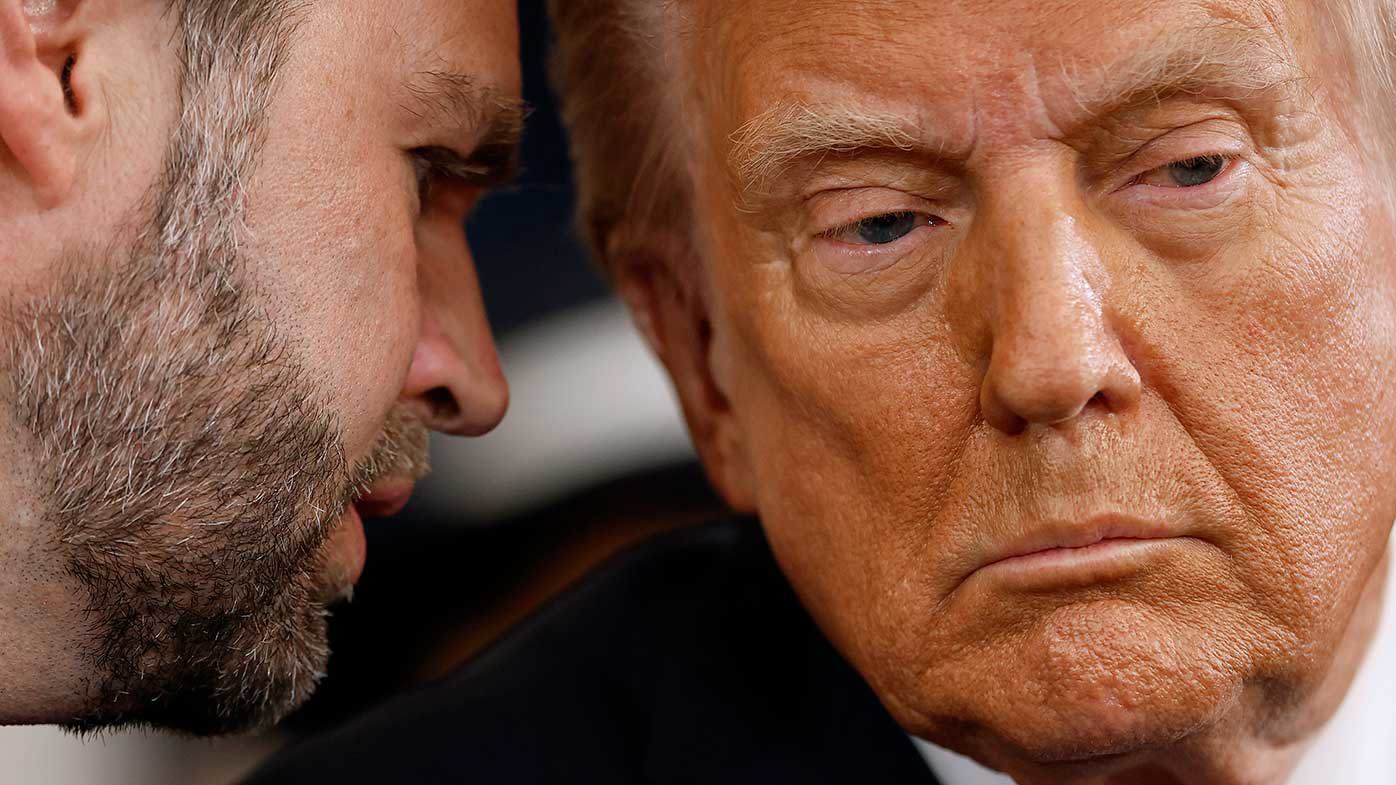
Across the ocean, the rhetoric is sharpening. Donald Trump has signaled a stance that feels like a closing vice: time is not on Tehran’s side. For another look on this event, refer to the recent update from The New York Times.
This isn't just campaign bluster. It represents a fundamental shift in the psychic weight of the conflict. To the people living in the shadow of the Iranian-Israeli proxy war, these words are a countdown. If time is running out for the leadership in Tehran, it is also running out for the shopkeeper in Beirut and the student in Tel Aviv.
Think of a pressure cooker. The truce acts as a temporary release valve, letting out a thin, whistling stream of steam. But the heat underneath remains. The "Maximum Pressure" philosophy isn't a metaphor for the person watching their currency lose half its value in a week. It is the literal pressure of wondering if the bank will open, if the power will stay on, or if the next shipment of medicine will be blocked by a new round of sanctions.
Tehran finds itself in a strategic corner. For years, the "Axis of Resistance" was a projection of strength, a way to keep the fight far from its own borders. Now, that buffer is eroding. The infrastructure of their influence is being dismantled piece by piece. The leadership is realizing that the old rules—the ones where they could shadow-box through proxies without catching a direct blow—are being rewritten by an administration that views nuance as a weakness.
The Invisible Stakes of a Frozen War
When a truce is extended, the world breathes a sigh of relief. We move on to the next headline. But the "truce" is often just a different kind of combat. It is the war of nerves.
Consider the logistical nightmare of a country in limbo. In Lebanon, the economy is a ghost. You cannot rebuild a bridge during a "temporary" truce because you don’t know if the cement will be dry before the next wave of strikes. You cannot plant crops. You cannot sign a lease. Life becomes a series of short-term leases on survival.
The human cost of this uncertainty is a slow-motion erosion of the soul. It is the "invisible stake." We count the dead and the wounded, but we rarely count the millions of people who have simply stopped planning for the future. When time is "not on your side," you stop looking at next year. You stop looking at next month. You live in the next ten minutes.
The Arithmetic of Escalation
The math of this conflict is brutal and unforgiving.
On one side, you have the Israeli military objective: the total neutralization of a threat that has lived on their doorstep for decades. On the other, you have the Iranian necessity to maintain a deterrent. In the middle is Lebanon—a country that has become the world’s most tragic firing range.
The truce extension is a gift of time, but time is only valuable if it is used to build something. If it is used merely to re-arm, to reposition launchers, or to dig deeper tunnels, then the "peace" is a lie. It is just a strategic pause, a heavy inhalation before the next scream.
The tragedy is that the people who pay the highest price have the least say in the negotiations. The mother in the basement doesn't care about the nuances of the regional power balance. She doesn't care about the leverage of the Islamic Revolutionary Guard Corps or the political survival of a prime minister. She cares about whether the pharmacy has asthma inhalers.
The Shadow of the Return
The specter of a changing American administration looms over every negotiation table. The return of a hardline stance from the United States changes the chemistry of the room. It makes the Iranian leadership more desperate, and a desperate actor is an unpredictable one.
We are moving away from an era of managed conflict into an era of forced conclusions. The phrase "time is not on your side" is a declaration that the status quo is no longer acceptable. It is an ultimatum delivered via social media and press releases, but it lands like a physical blow in the markets of Tehran and the cafes of Beirut.
The leverage being applied is not just military; it is psychological. It is the intent to make the cost of defiance higher than the cost of surrender. But in the Middle East, surrender is a word that doesn't translate well. It is often mistaken for a temporary retreat, a gathering of strength for a conflict that our grandchildren will eventually inherit.
The Dust That Never Settles
Walking through a neighborhood after a strike—even during a truce—is a sensory assault. The dust is everywhere. It’s in your teeth, your hair, the folds of your clothes. It is the dust of lives interrupted. A single shoe lying in the street. A shattered television. A child’s notebook with a half-finished math problem.
These are the facts that the bulleted lists of news sites fail to capture. They tell you the number of sorties flown or the percentage of "targets neutralized." They don't tell you about the silence of a house that used to be full of laughter.
The truce extension allows the dust to settle for a moment. It allows people to walk out into the sunlight and see what is left of their world. They squint against the brightness, looking up at a sky that is temporarily empty of drones. It is a fragile, beautiful, terrifying moment of clarity.
But even in that sunlight, they can feel the clock ticking. They know that somewhere, in a bunker or a high-rise office, someone is looking at a map and deciding that the "pause" has served its purpose.
The tragedy of the modern age is that we have become efficient at pausing the killing, but we have forgotten how to start the living. We extend truces like we extend credit—adding more debt to a pile that can never be paid back, hoping that the final reckoning happens on someone else's watch.
The sun sets over the Mediterranean, casting long, golden shadows over a coastline that has seen empires rise and fall with monotonous regularity. The people in the basement come up for air. They look at the stars, wondering which ones are planets and which ones are the cold, blinking lights of a machine waiting for the truce to expire.
They don't need a master strategist to tell them that time is not on their side. They can feel it in the cooling air. They can see it in the way the horizon waits, patient and hungry, for the silence to break.