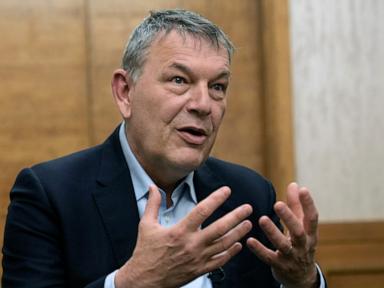
Diplomacy rarely happens under the glare of television studio lights. The most consequential shifts in international conflict resolution usually occur in windowless conference rooms, behind unmarked doors, and away from the microphones of press secretaries. A striking disclosure from a former agency chief reveals that the secretive Board of Peace quietly engaged in direct, unpublicized talks with the United Nations Relief and Works Agency for Palestine Refugees in the Near East.
This clandestine diplomatic channel shatters the rigid public postures maintained by international stakeholders. For months, public rhetoric surrounding UNRWA has been defined by fierce polarization, funding freezes, and existential political battles. Yet, beneath the noise of public posturing, pragmatic actors appear to be exploring backchannel accommodations. This development forces a hard re-evaluation of how humanitarian operations intersect with high-level geopolitical mediation in the Middle East.
To understand why this meeting matters, one must examine the mechanics of contemporary conflict management. The Board of Peace operates as an influential multilateral platform designed to broker stability in fractured regions, often utilizing non-traditional diplomatic leverage. UNRWA, meanwhile, remains the administrative backbone of basic service delivery for millions of refugees, functioning as both an indispensable lifeline and a lightning rod for political controversy. When these two entities meet out of view, it signals an acknowledgment that the status quo is entirely unsustainable.
The Architecture of Backchannel Diplomacy
Official mandates rarely capture the messy reality of crisis management. Publicly, international bodies take absolute stances. They draw red lines, issue condemnations, and demand total structural overhauls. Privately, however, the calculus shifts entirely toward risk mitigation and operational survival.
The rationale driving these secret engagements centers on basic institutional continuity. Without a functional administrative apparatus to distribute aid, maintain schools, and provide primary healthcare across volatile territories, governance vacuums inevitably form. These vacuums invite chaos, radicalization, and regional destabilization. The Board of Peace recognized a fundamental truth that diplomats often struggle to articulate in public forums. Dismantling a critical humanitarian framework without an immediate, viable replacement is a geopolitical catastrophe.
The Divergence Between Public Rhetoric and Private Pragmatism
Publicly, political leaders must answer to domestic constituencies and polarized donor bases. Every statement is measured for ideological purity. Every policy shift is spun for maximum political advantage.
Behind closed doors, the conversation changes. The dialogue pivots from ideology to logistics.
- How do you secure supply chains in active conflict zones?
- How do you verify administrative neutrality without collapsing institutional capacity?
- How do you bridge the gap between donor demands and ground-level realities?
The former agency chief's revelation underscores this deep structural hypocrisy. While Western capitals debated punitive funding cuts and structural restructuring in front of the cameras, diplomatic intermediaries were quietly negotiating terms of coexistence. This duality is not a sign of deceit; it is the fundamental nature of statecraft. Realpolitik dictates that officials must manage the ideological fight while simultaneously keeping the lights on.
The Financial and Operational Bottlenecks
Money dictates leverage in international affairs. UNRWA has faced severe budgetary constraints exacerbated by donor suspensions and shifting geopolitical priorities. The Board of Peace stepped into this financial void not necessarily out of sudden philanthropic zeal, but out of strategic self-interest.
When funding dries up, basic services collapse. When services collapse, displacement accelerates. When displacement accelerates, regional borders destabilize. European and Middle Eastern security architectures are acutely sensitive to mass refugee movements. Therefore, keeping the humanitarian machinery functional is viewed by security analysts as a containment strategy rather than a charitable endeavor.
However, financial rescue comes with strings attached. The clandestine meetings likely focused on rigorous monitoring mechanisms, transparency demands, and institutional oversight. Donors refuse to write blank checks, especially under intense scrutiny regarding neutrality concerns. Negotiating these oversight frameworks requires a high degree of trust and confidentiality—elements that are impossible to achieve in public negotiations where every concession is weaponized by political opponents.
Navigating the Minefield of Institutional Reform
Critics of UNRWA argue that the agency perpetuates the very crisis it seeks to alleviate, locking generations of refugees into permanent dependency while failing to enforce strict political neutrality among its tens of thousands of local employees. Defenders counter that no alternative organization possesses the logistical footprint or institutional memory required to replace it overnight.
The Board of Peace finds itself caught directly in the middle of this ideological war. By engaging quietly, the board's representatives attempted to navigate a middle path. They sought to extract concessions on administrative reform and operational integrity without triggering a catastrophic collapse of the agency's infrastructure.
This approach highlights the core dilemma of modern humanitarian intervention. How do you reform an entrenched bureaucracy while it is actively operating inside a war zone? Attempting radical surgery on an active lifeline usually kills the patient. Consequently, backchannel diplomacy relies on incremental pressure, quiet ultimatums, and gradual adjustments rather than sweeping public ultimatums that invite institutional defiance.
The Broader Geopolitical Ripple Effects
The revelation of these quiet talks will inevitably send shockwaves through regional capitals. Governments that have staked their foreign policies on absolute support for or total opposition to UNRWA now find themselves forced to recalibrate.
If multilateral boards are quietly cutting deals and establishing working relationships with the agency, it signals to regional actors that UNRWA is not going away anytime soon. This realization changes the strategic calculations of local authorities, donor nations, and rival political factions alike. It proves that institutional resilience, however battered, often outlasts the transient political campaigns launched against it.
As international pressure mounts and humanitarian crises deepen across the region, the lessons of these secret meetings will shape future diplomatic interventions. Pragmatism, forged in private rooms, will continue to quietly override the rigid dogma broadcasted to the public.
The systemic vulnerabilities exposed by this episode will not vanish with a single press release. The underlying tensions between political accountability and humanitarian necessity remain entirely unresolved. The next chapter of this crisis will depend on whether these quiet conversations translate into sustainable structural reforms, or if they simply represent another temporary patch on a failing global architecture.