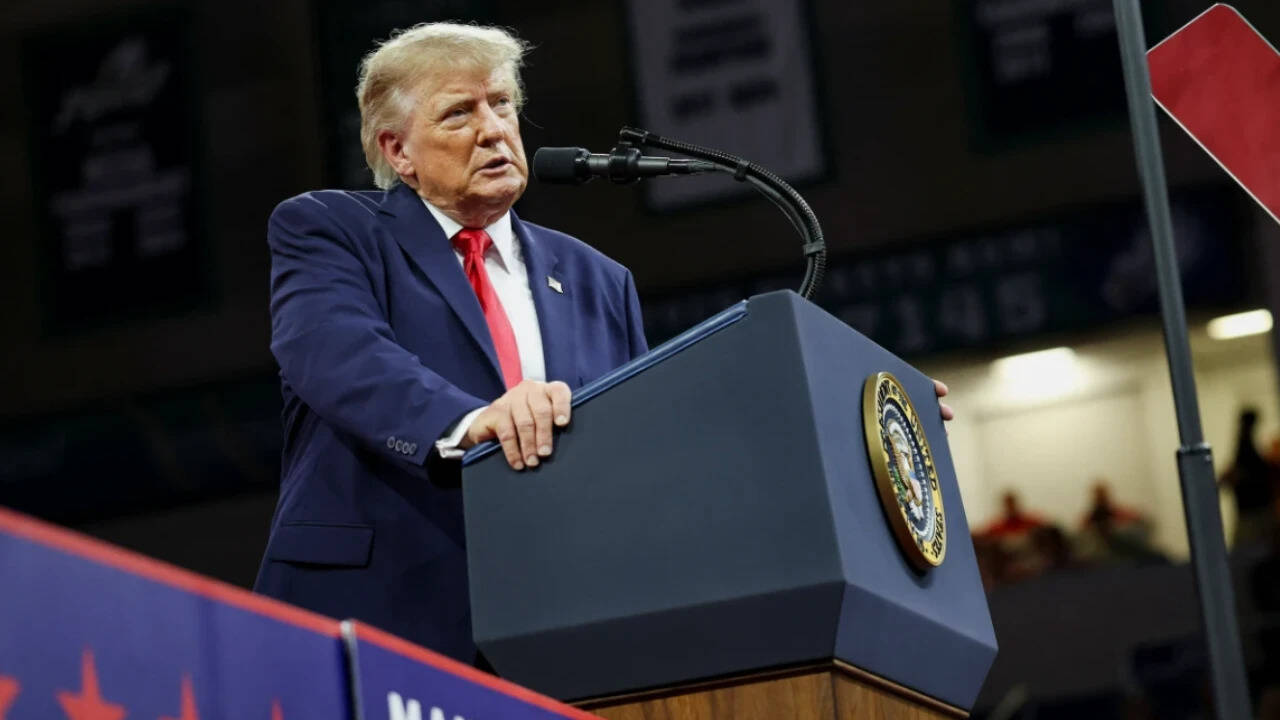
Standard media coverage of the 2026 confrontation between Washington and Tehran treats public rhetoric—"another little Epic Fury" versus "don't play with fire"—as theatrical brinkmanship rather than a structured bargaining sequence. That framing misses the operational logic connecting domestic political calendars, military attrition, and maritime chokepoints in the Persian Gulf.
A rigorous strategic assessment requires separating verifiable facts from educated hypotheses, mapping the bargaining incentives of both capitals, and evaluating where coercive threats succeed or fail. Rather than treating statements at face value, decision-makers must analyze how each side uses force, diplomatic signaling, and economic pressure to alter the other's reservation price. Meanwhile, you can read related developments here: The $51 Million San Bernardino County Verdict and the Economics of Law Enforcement Liability.
Deconstructing the Competitor Narrative
Conventional wire-style reporting around the "another little Epic Fury" exchange typically compresses complex military and political dynamics into a duel of soundbites. When articles rely on rally quotes and retaliatory slogans as the primary engine of the story, they obscure three structural layers:
- Domestic timing constraints: Threatening renewed strikes ahead of domestic elections operates differently from executing them after votes are cast. Political calendars shape credibility because leaders weigh voter sensitivity to energy prices, troop exposure, and prolonged entanglement.
- Asymmetric cost structures: A high-intensity air or missile campaign imposes immediate physical and infrastructure costs on the targeted state, while retaliatory actions around shipping lanes or regional bases impose diffuse economic and operational costs on global commerce and allied states.
- Negotiation leverage mechanics: Threats of "another little" operation are designed to signal bounded, repeatable coercion rather than an all-out ground invasion—an attempt to extract concessions on nuclear limits or regional behavior without triggering an open-ended quagmire.
The first limitation of headline-driven coverage is that it treats threats as standalone events rather than moves inside an iterative game. A warning issued during stalled talks functions simultaneously as a bargaining chip, a domestic signaling tool, and a contingency hedge if diplomacy collapses. To understand the full picture, check out the detailed analysis by The Guardian.
Known Facts Versus Educated Hypotheses
Clear analytical hygiene separates established public facts from plausible strategic deductions. Mixing the two produces overconfident forecasts and blind spots when events diverge from expectations.
Established Facts
Several core parameters of the conflict are publicly documented:
- Prior kinetic escalation: Earlier in 2026, U.S. and Israeli military operations—including campaigns referenced as Operation Midnight Hammer and Operation Epic Fury—targeted Iranian nuclear-related, military, and leadership infrastructure, triggering Iranian retaliatory missile and drone operations and severe maritime disruption around the Strait of Hormuz.
- Coercive conditional rhetoric: Public warnings linking potential new strikes to Tehran's willingness to accept a negotiated settlement frame force as a compliance mechanism rather than an end in itself.
- Counter-deterrence messaging: Iranian warnings against "playing with fire" signal readiness to impose retaliatory costs across regional vectors rather than passively absorbing renewed strikes.
- Infrastructure and transit sensitivity: Maritime chokepoints such as the Strait of Hormuz remain high-leverage nodes for physical shipping and energy flows, even where non-energy infrastructure—such as international subsea communications cables—carries a small share of global bandwidth through that specific corridor.
Educated Hypotheses
Beyond verified events, analysts infer several mechanisms that cannot be confirmed directly from public remarks:
- Bounded escalation calibration: Referencing "another little" campaign likely reflects an effort to signal surgical or time-bound strikes aimed at degrading remaining capabilities or enforcing compliance without committing to full-scale regime overhaul or ground forces.
- Domestic audience signaling: Sharp rhetoric at political rallies serves dual purposes: projecting strength to domestic supporters and testing whether Tehran perceives Washington's threat as credible enough to soften negotiating positions.
- Retaliatory dispersion: When a state faces superior conventional air and strike power, its rational counter-strategy often involves dispersing risk across asymmetric channels—missiles, drones, regional proxies, or maritime harassment—to raise the political and economic cost of continued pressure.
The Bargaining Framework of Coercive Threats
In classical deterrence and bargaining theory—associated with scholars such as Thomas Schelling—coercion depends on credibility, resolve, and clear red lines. A threat fails when the target believes the sender will not pay the political or military cost of execution, or when the sender's demands exceed what the target believes it can concede while remaining in power.
In the U.S.–Iran dynamic, coercive signaling operates across four interacting variables:
- The credibility of execution: Past strikes establish capability, yet statements expressing uncertainty or distance from operational planning can dilute immediate urgency unless paired with posture shifts.
- The perceived scope of demands: Demands framed around verifiable limits on sensitive programs are far easier to bargain over than existential threats that convince leadership survival is on the line regardless of compliance.
- The cost of non-compliance: Coercion works only if the expected damage of holding out exceeds the domestic and international cost of conceding.
- The cost of retaliation: Every threatened strike carries a counter-cost function—air-defense expenditure, allied exposure, oil price spikes, and escalation risk—that constrains the coercer's menu of options.
This creates a classic strategic bottleneck: escalating rhetoric to force a deal can harden nationalist resistance inside Tehran, making public concession look like capitulation under duress. Conversely, holding back to preserve diplomatic space can convince the adversary that threats are bluffing.
Consider how two negotiators in a high-stakes commercial dispute behave when one threatens a brief, targeted supply cutoff unless terms are signed by Friday. If the buyer believes the supplier cannot afford lost revenue or customer defection, the buyer holds firm; if the buyer sees warehouse inventories thinning and alternative suppliers booked out, the buyer may concede late—or retaliate by sourcing elsewhere and locking the supplier out permanently. Geopolitical coercion follows the same logic, except the stakes involve sovereign security and kinetic force.
Asymmetric Cost Functions and Escalation Traps
A disciplined strategy consultant evaluates adversaries through their cost functions—how costs rise as conflict intensity increases. Washington and Tehran face sharply asymmetric curves.
Washington's Cost Function
The United States holds decisive advantages in long-range strike, intelligence, surveillance, reconnaissance, and power projection. Its primary constraints are opportunity cost, coalition and regional exposure, and domestic political endurance. Protracted or repeated strikes risk drawing U.S. forces and regional partners into costly air- and missile-defense exchanges while pressuring energy markets and complicating other global priorities.
Tehran's Cost Function
Iran faces severe vulnerability to high-precision aerial and missile strikes against military, industrial, and leadership targets, alongside economic strain from sanctions and conflict damage. Its counter-leverage rests on asymmetric imposition of costs—using drones, ballistic or cruise missiles, maritime interdiction or disruption near the Strait of Hormuz, and regional networks to raise prices, threaten regional infrastructure, and test adversary patience.
This asymmetry produces two recurring escalation traps:
- The spiral of face-saving: Public taunts and counter-warnings raise political sunk costs on both sides, narrowing face-saving exits during indirect negotiations.
- The miscalculation of thresholds: A strike intended as a calibrated "little" warning can be interpreted by the recipient as the opening salvo of a wider campaign, triggering disproportionate retaliation that forces further escalation.
Even where physical chokepoints attract intense media focus, analysts must distinguish real systemic bottlenecks from overhyped vulnerabilities. For example, while disruptions around the Strait of Hormuz heavily affect physical maritime trade and oil transit, global telecommunications rerouting means a tiny fraction of international internet bandwidth passes through that corridor—a reminder to verify actual physical dependencies rather than assuming every chokepoint affects every sector equally.
Tactical Decision Framework for Monitoring the Standoff
For analysts, executives, and policymakers tracking whether rhetoric translates into kinetic action or a diplomatic breakthrough, intuition is unreliable. A four-step operational sequence provides a clearer signal-to-noise filter:
- Audit force posture and diplomatic advisories ahead of rhetoric: Track changes in regional force disposition, air- and missile-defense readiness, and embassy or personnel posture rather than relying on rally remarks alone.
- Map stated demands against regime survival thresholds: Distinguish negotiable technical or behavioral concessions from existential demands that leave the target with no perceived safe off-ramp.
- Price the second-order economic and maritime shock: Evaluate how shipping insurance, transit delays in the Persian Gulf, and regional energy flows respond to localized incidents before assuming broad systemic collapse.
- Separate signaling noise from backchannel movement: Watch for quiet mediation channels, phased confidence-building proposals, or narrow humanitarian/maritime understandings that can coexist with harsh public posturing.
No analytical framework eliminates surprise or guarantees peaceful resolution. Intelligence gaps, leadership misperceptions, and sudden tactical incidents can overturn rational calculations overnight. Moreover, public statements are deliberately ambiguous instruments designed to keep adversaries off balance, which limits precision when relying on open-source remarks alone.
Strategic Play
Anchor decision-making and risk models around observable posture shifts and concrete bargaining terms rather than rhetorical escalation, maintaining hedged contingencies for both a narrow, time-bound strike-and-retaliation cycle and an abrupt, face-saving diplomatic settlement.
This video provides live news coverage of the 2026 U.S.–Iran conflict and the threat of renewed strikes if a deal is not reached.