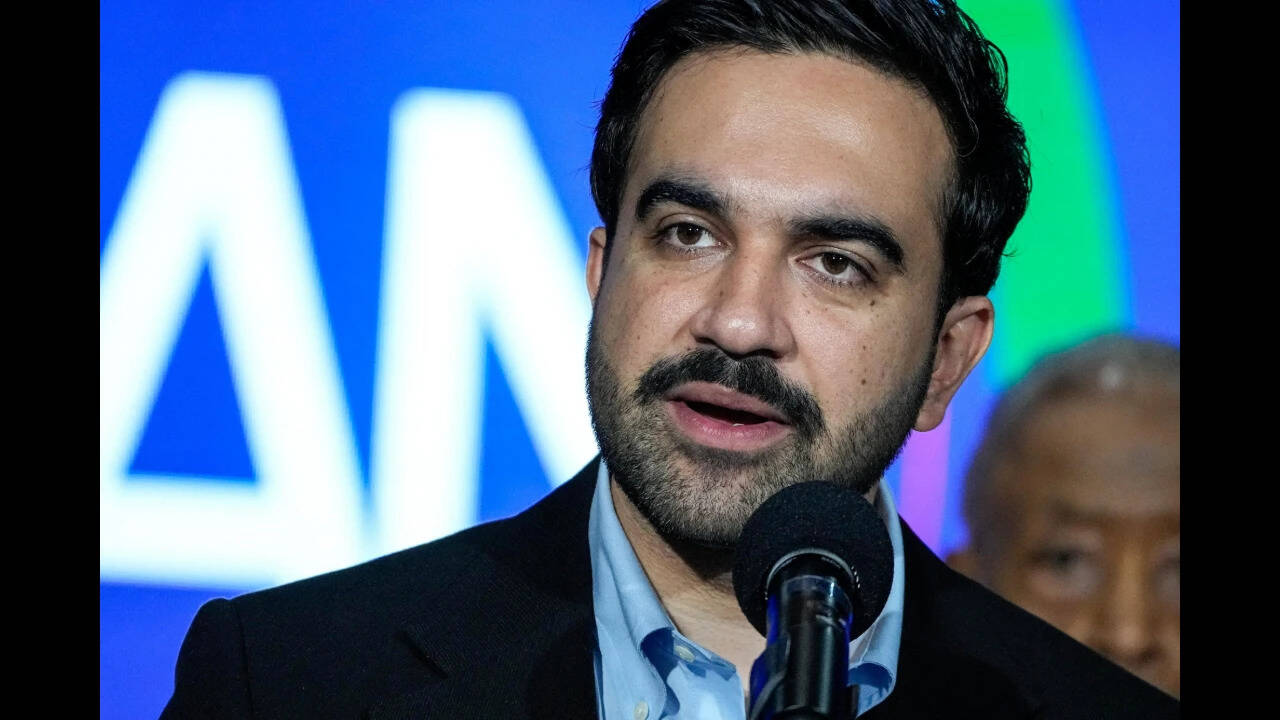
When New York City Mayor Zohran Mamdani issued a public statement on the third anniversary of the October 7 attacks, the ensuing political earthquake was entirely predictable. By acknowledging the horrific atrocities committed by Hamas while simultaneously framing Israel's military campaign in Gaza as an "ongoing genocide", Mamdani crossed a line that separates conventional municipal governance from international ideological warfare. Within hours, condemnation poured in from federal lawmakers, prominent religious leaders, and international diplomats, transforming a local administrative anniversary message into a national flashpoint about how the Middle East conflict is weaponized in American domestic politics.
The immediate backlash highlights a structural shift in urban leadership. Mayors of major cosmopolitan centers historically tread carefully on foreign policy, recognizing that their primary constituency consists of local taxpayers with deeply divergent ethnic and religious loyalties. New York City is home to the largest Jewish diaspora population outside of Israel, alongside substantial Arab and Muslim communities. When a sitting mayor uses a solemn day of mourning for victims of terrorism to pivot directly into an indictment of a foreign state's military strategy, the political calculus moves past mere rhetoric. It signals a deliberate choice to prioritize ideological alignment over civic cohesion.
Critics from across the political spectrum argued that combining a commemoration of murdered and kidnapped Israelis with charges of genocide effectively dilutes the grief of the victims and inflames local tensions. Federal representatives pointed out that choosing the anniversary itself for such pointed geopolitical broadsides serves to reopen raw wounds rather than foster unity. Conversely, defenders of the statement argued that the interconnected nature of modern global crises leaves no room for compartmentalized diplomacy, asserting that municipal leaders have a moral obligation to address large-scale humanitarian suffering wherever it occurs.
This friction exposes a deeper institutional vulnerability. Local executives increasingly find themselves pressed to take public stances on intractable global conflicts to satisfy vocal activist bases. Yet, doing so alienates equally significant blocs of citizens who look to city hall for essential services, public safety, and community protection rather than foreign policy declarations. When a mayor becomes a polarizing figure on the international stage, the day-to-day governance of the city inevitably absorbs the shockwaves, complicating police-community relations, local security planning, and interfaith dialogue.
Ultimately, the controversy surrounding Mamdani's remarks underscores a permanent transformation in civic discourse. Foreign policy is no longer confined to Washington state departments and international summits; it is fought out on local social media feeds, city council chambers, and neighborhood vigils. As municipal leaders continue to wade into these perilous waters, the cost of symbolic posturing is paid by the very communities they were elected to unite.
Mamdani responds to backlash after attending an Oct. 7 commemoration
This video provides an overview of the events surrounding Mayor Zohran Mamdani's appearance at an October 7 commemoration and his subsequent response to widespread public criticism.