Ten lanes of asphalt roar below, a churning river of three hundred thousand steel beasts a day that slices Southern California clean in two. For the mountain lions, bobcats, and gray foxes of the Santa Monica Mountains, this ribbon of the 101 Freeway is more than a commute. It is a Berlin Wall of the natural world. On one side lies a shrinking sanctuary of chaparral; on the other, an isolated genetic island.
Trapped by concrete and culverts, the cougars of the local range face a ticking clock. Without fresh bloodlines from the northern wilderness of the Simi Hills, inbreeding tightens its quiet knot. Kinks in tails appear. Immune systems falter. A magnificent apex predator faces a slow, evolutionary fade into oblivion, not from a lack of grit, but from a lack of room.
Then came a radical proposition. What if a highway could be un-severed?
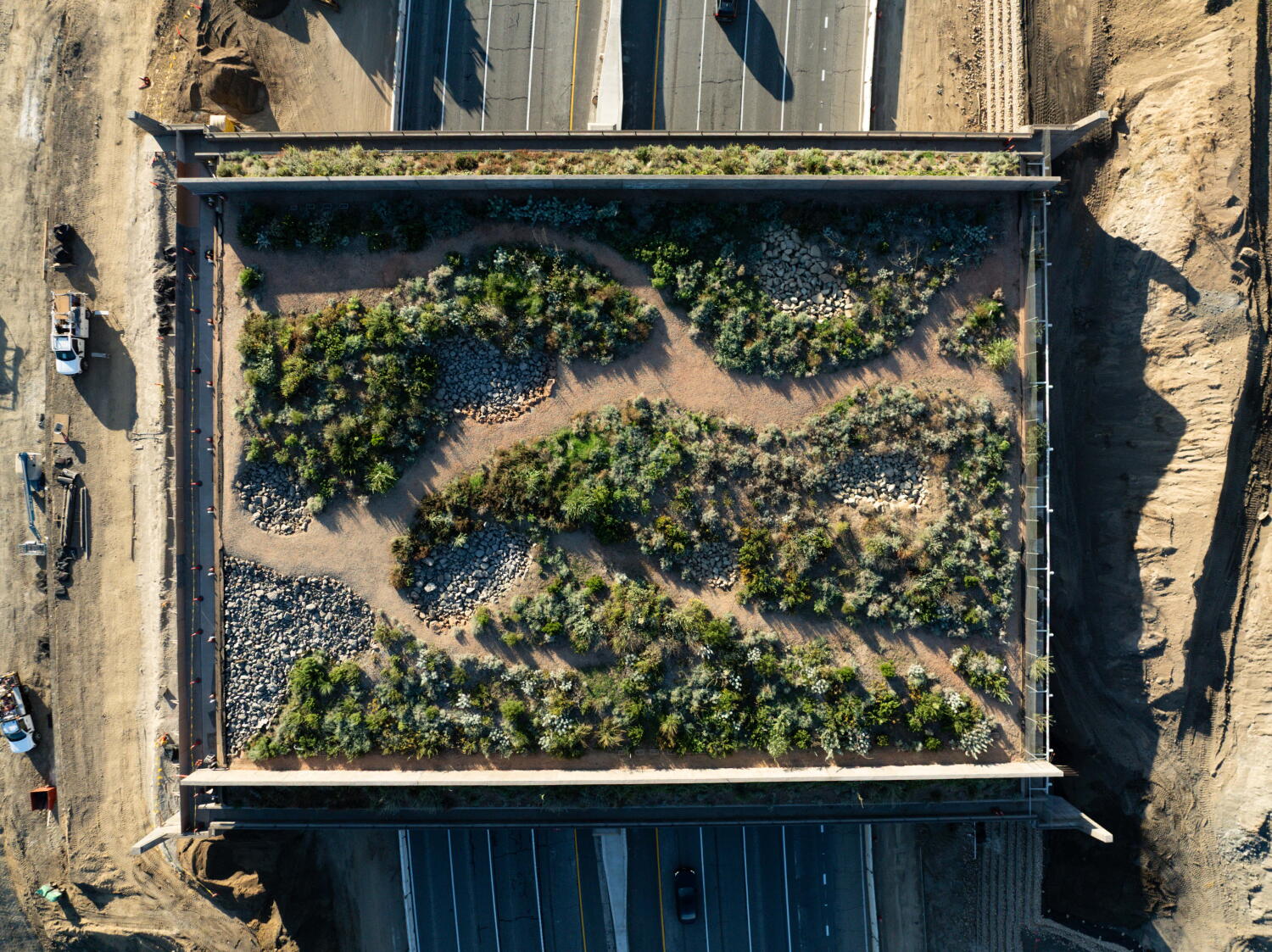
Rising over the roaring traffic in Agoura Hills, the Wallis Annenberg Wildlife Crossing is an engineering marvel wrapped in native soil. Stretching two hundred and ten feet long and one hundred and seventy-four feet wide, it is destined to become the largest wildlife bridge on Earth. It is not a painted metal pedestrian overpass. It is a living, breathing extension of the mountain ecosystem, blanketed in six thousand native plants, dusted with local earth, and engineered to mimic the wild chaparral terrain so completely that a deer or a cougar will step onto it and feel, simply, that the earth continues.
The finish line is in sight. Crews are rushing toward a December 2 completion date, bolting down the final pieces of an ambition that cost one hundred and fourteen million dollars, funded through a rare marriage of public dollars and private philanthropy. Already, long before the ceremonial ribbon can be cut, remote trail cameras have captured an audacious early visitor: a solitary coyote, padding cautiously through the night air, crossing the asphalt highway below without a single tire hiss or blinding headlight to disturb its journey.
Word travels fast through the brush.
Yet, as construction crews race against the calendar, a familiar California specter looms at the horizon. It is not political backlash or funding shortfalls. It is the sky.
Meteorologists whisper of a brewing El Niño.
If the Pacific ocean unleashes its torrential winter storms ahead of schedule, the freshly graded slopes, the delicate root systems of thousands of young plants, and the sprawling earthworks could face severe flooding. Mudslides on a pristine eco-bridge can turn a triumphant environmental milestone into a muddy quagmire, stalling the final phase of construction just feet from the finish line.
Consider what is hanging in the balance. This bridge is a test case for a crowded planet. If Los Angeles—the quintessential temple of the automobile—can carve a green sanctuary over ten lanes of roaring interstate, then perhaps humanity can learn to stitch back together the ecological wounds it has opened.
Biologists are holding their breath. Conservationists look up at darkening rain clouds with a mixture of hope and defiance. Mother Nature is being asked to cooperate with an attempt to fix her own fragmented creation.
The concrete arch stands waiting in the winter wind. Below it, the cars rush on, unaware that above them, a quiet bridge is preparing to heal a broken world.