The iron gate of the old checkpoint groaned in the damp predawn air. For years, that sound was the soundtrack of separation. Thousands of footsteps would shuffle across the concrete, heels clicking against the gray flags, passports thrust through narrow glass windows under harsh fluorescent bulbs. Millions of lives stretched thin across a narrow river.
Time moves differently at a border. Every second shaved off a commute is a minute returned to a sleeping child. Every bottleneck removed is a breath of relief for a merchant hauling goods before the market opens.
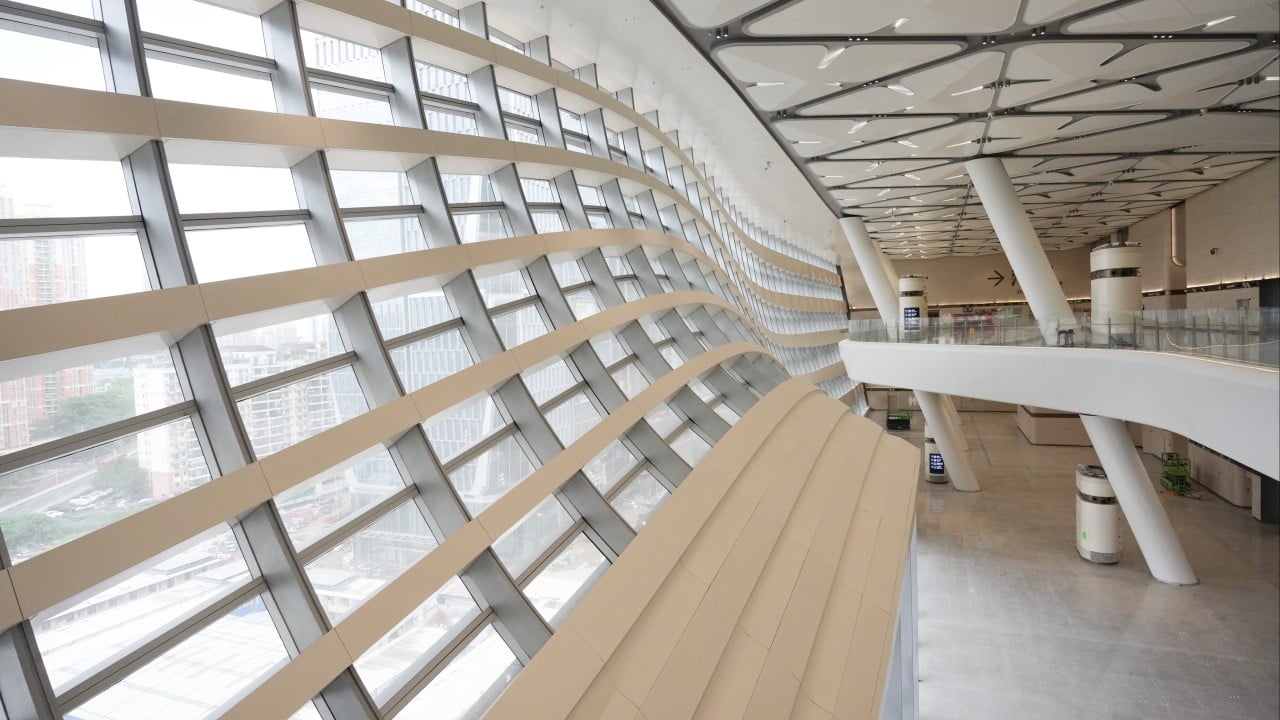
Now, a new concrete giant rises along the boundary. The rebuilt Huanggang checkpoint stands ready, vast and gleaming, designed to dissolve the friction of modern movement. But steel and glass do not make a crossing efficient. People do.
Ten thousand souls are about to find out if the future actually works.
Consider the sheer scale of modern transit infrastructure. We build cathedrals of logistics, pouring billions into subterranean tunnels, automated gates, and facial recognition terminals that can scan a face in the blink of an eye. Yet, an architectural marvel is just an empty sculpture until real bodies test its limits.
On a Tuesday morning that will determine the rhythm of cross-border life for the next generation, ten thousand volunteer participants are stepping into the throat of the new Huanggang facility. They are not tourists. They are commuters, actors in a massive, choreographed stress test designed to break the system before the system breaks them.
I remember standing in the old queues years ago, the air thick with the collective anxiety of people who had places to be and lives waiting on the other side. A single delayed scanner could back up thousands into a dense, stifling gridlock. The frustration was physical. It sat heavy in your shoulders.
Engineers know this pain. They call it friction.
To eliminate friction, the new facility relies on a radical restructuring of pedestrian and vehicular flow. Traditional border posts force travelers through sequential checkpoints, stopping at exit customs, walking across a buffer zone, and repeating the cycle for entry customs. The new Huanggang approach leans into a cooperative inspection model. Stop once. Clear both sides. Walk through.
Simple on paper. Terrifying in practice.
What happens when ten thousand people try to execute that transition simultaneously? What happens when a grandfather carrying too many bags jams the automated turnstile, or when the biometric database experiences a micro-second hiccup under peak load?
That is why the volunteers are here. They walk, they rush, they stall, they question. They simulate the chaotic reality of a Monday morning rush hour multiplied by ten.
Behind the glass control rooms, analysts watch the monitors. Streams of green and red data pulse across massive screens. Every hesitation is logged. Every bottleneck is measured down to the millisecond. This is not a ribbon-cutting ceremony. It is an stress test of human patience and digital architecture.
Borders are strange paradoxes. They are lines drawn on maps to divide nations, yet they are also magnetic points that draw millions together every single day. The heartbeat of the Greater Bay Area depends entirely on how quickly these iron arteries can pump people back and forth. When a region operates as a single megacity in economic terms, a thirty-minute delay at the boundary is not a minor inconvenience. It is economic friction that bleeds into family dinners, missed school recitals, and exhausted workers.
Technology promises to save us from this exhaustion. We are told that algorithms can streamline everything. But algorithms do not account for the person who forgets their passport in their coat pocket, or the toddler who drops a toy right in the middle of the smart-gate scanner.
The ten thousand participants are introducing human chaos into a pristine digital machine.
As the morning simulation peaks, the noise level inside the vast departure hall rises. Footsteps echo against the high ceilings. The low hum of servers blends with the chatter of anxious commuters testing the new lanes. For a few hours, this concrete shell breathes. It inhales humanity, processes it, and exhales it onto the other side.
The test results will not be read as dry statistics by the engineers alone. They will be felt by every traveler who crosses this threshold in the years to come. Every second saved here is an extra moment at a breakfast table. Every smoothed-out queue is a fraction of stress lifted from a working parent's mind.
The gate swings shut on the simulation as the afternoon light cuts long shadows across the floor. The data has been captured. The system has bent, flexed, and held.
Out on the pavement, the dust settles on the newly paved asphalt. The giant terminal stands silent now, waiting for the real tide to roll in.