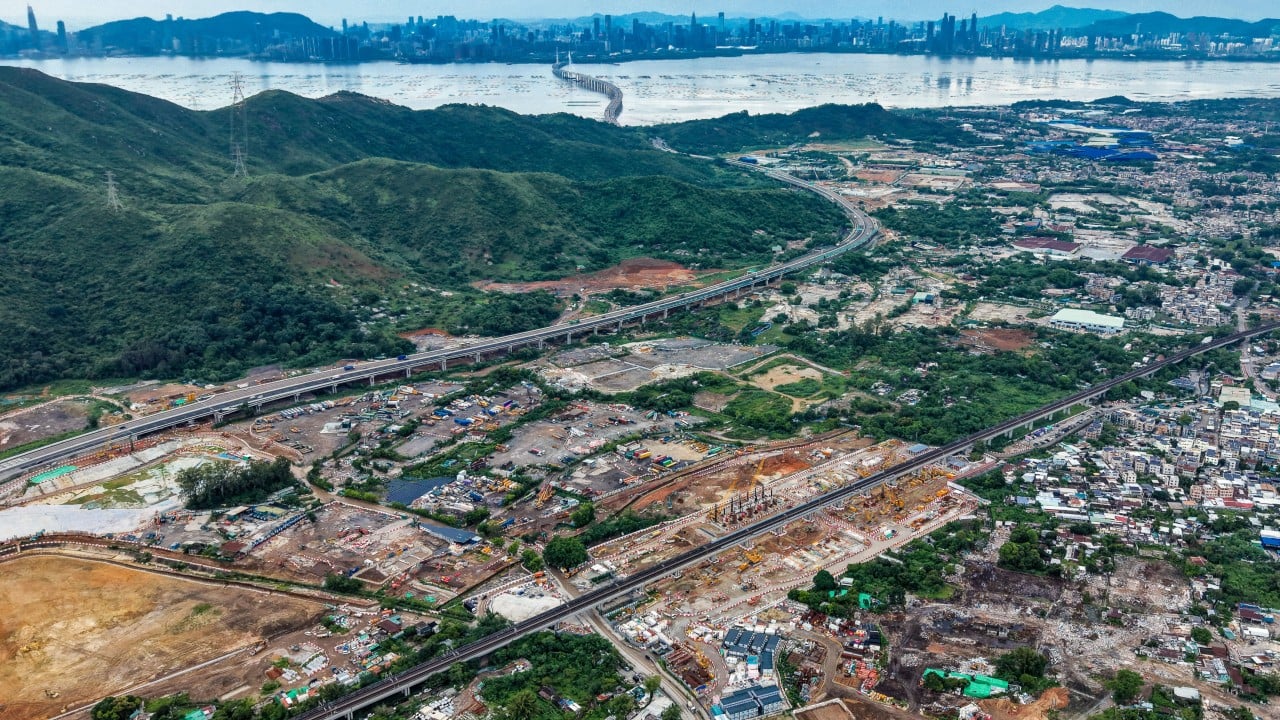
The morning shift at the border checkpoint starts before the sun clears the crags of Shenzhen. You can smell the diesel long before you see the trucks. Hundreds of heavy haulers idling in grey dawn, their drivers nursing paper cups of bitter tea, waiting for a green light that dictates the rhythm of millions of lives. Behind that windshield sits a simple truth: goods do not move themselves. Steel, microchips, fresh produce, and winter coats require muscle, grease, and sweat to cross an invisible line.
Right now, that line is shifting.
In the corridors of corporate strategy, JD.com has cast a massive bet on the Northern Metropolis. This is not merely an investment in concrete and steel warehouses. It is a calculated gamble on geography, speed, and the sheer human desperation for things to arrive now. Yet, as the blueprints roll out across the desk, a quiet anxiety hums beneath the optimism. Logistics is an unforgiving mistress. You can pour billions of dollars into automated sorters and electric fleets, but you cannot easily manufacture land where none exists, nor can you wish away the friction of bureaucracy.
Consider what happens when a single supply chain hiccup cascades down an entire metro area.
The Weight of an Empty Warehouse
To understand the scale of this push, picture a distribution center the size of four football fields. This is a hypothetical interior, scaled from current regional blueprints to illustrate the operational reality. Inside, yellow automated guided vehicles zip across the floor like cautious beetles, carrying stacks of cardboard. There is no shouting here. Only the hum of lithium-ion batteries and the occasional pneumatic hiss of a robotic arm sorting parcels with ruthless efficiency.
Efficiency looks clean from a drone's perspective. Down on the ground, however, human hands still touch every single box at least twice.
Industry analysts point to the Northern Metropolis initiative as a grand reconciliation between two different economic worlds. Hong Kong needs land, jobs, and a revitalized industrial engine that stretches beyond high-end finance and luxury retail. Mainland giants like JD.com possess the logistical wizardry to turn raw square footage into a living, breathing circulatory system. But hurdles loom. Experts watching the rollout note that regulatory fragmentation, high land costs, and a stubborn shortage of specialized warehousing talent create a steep hill to climb.
It is easy to sketch a modern distribution hub on a whiteboard. It is entirely another thing to build one where real estate is scarcer than water in a drought.
The Human Cost of Speed
We have built a civilization that demands instant gratification, yet we rarely look at the human cogs turning inside the machine. Meet Uncle Chen. He is a fictionalized composite based on interviews with veteran cross-border logistics operators, representing the generation currently steering these fleets. For thirty years, Chen has driven trucks through the winding mountain passes connecting Guangdong to the territory down south. His lower back aches when the humidity drops. His phone buzzes every four minutes with dispatch orders, route updates, and automated warnings about fuel efficiency.
Chen does not care about corporate quarterly earnings reports. He cares about traffic bottlenecks at the border crossings, the frustrating discrepancies in customs paperwork, and whether he will make it home in time to eat dinner with his granddaughter.
When a corporate titan like JD.com moves into a new territory, the initial narrative focuses on job creation and technological modernization. The deeper story is about displacement and adaptation. Traditional handlers must learn to operate complex inventory software. Small transport firms must either merge with the giants or get crushed under the weight of hyper-optimized pricing models. The Northern Metropolis project promises to streamline everything, but streamlining often means removing the human margin for error—and with it, the livelihoods of those who operate outside the digital grid.
Navigating the Concrete Maze
Why does this specific initiative matter so much right now?
Because the logistics map of East Asia is being redrawn in real-time. Supply chains are no longer just about getting a product from point A to point B. They are about resilience. When geopolitical tremors shake international trade, local hubs become the ultimate shock absorbers. By planting heavy logistics flags closer to the border, giants are trying to shorten the distance between consumer desire and warehouse fulfillment to a matter of hours.
Yet, ambition frequently outpaces infrastructure.
The physical terrain of the designated development zone is notoriously complex. Hills must be leveled. Roads must be widened. Power grids must be upgraded to handle the monstrous electrical draw of automated sorting facilities running twenty-four hours a day. During site visits, engineers often shake their heads at the sheer logistical gymnastics required just to lay the foundation stones.
And then there is the talent gap. You can import all the conveyor belts money can buy, but you cannot instantly train a workforce to maintain high-density robotic storage systems overnight. This creates a strange paradox: a high-tech facility sitting half-empty because the local labor market is caught halfway between traditional trucking and advanced supply chain engineering.
The Unfinished Equation
History suggests that massive infrastructure plays rarely go according to plan. There are always delays, cost overruns, and political friction points that no spreadsheet can anticipate.
When you stand at the edge of the development zone at dusk, the scale of the undertaking hits you with physical force. Cranes slice the darkening sky like iron fingers. Dust blows across unfinished asphalt. Somewhere down the line, a customer clicks a button on a smartphone screen, triggering a silent chain reaction across thousands of miles of wire and fiber.
The trucks will keep rolling. The algorithms will keep optimizing. But the real test of this massive cross-border bet will not be measured in speed or quarterly revenue alone. It will be measured in how well the machine absorbs the messy, unpredictable reality of human life at the margins.
The sun dips below the horizon, painting the concrete skeletons in shades of violet and rust. A single truck pulls away from the gate, its headlights cutting a sharp beam through the gathering dark, carrying tomorrow's freight into an unwritten future.