Hui Ka Yan once stood under the blinding lights of peak prosperity, his silhouette framed by a fortune that touched forty-five billion dollars. Photographers chased him down hotel corridors. Reporters hung on his every syllable. He wore a heavy gold belt, owned a professional football club, and managed a sprawling empire built on the most fundamental human desire: a place to call home. He was the undisputed king of China Evergrande, the architect of a dizzying real estate boom that transformed skylines across the world's second-largest economy.
Then the music stopped. For a deeper dive into similar topics, we recommend: this related article.
Consider what happens when a towering corporate skyscraper is built not on solid bedrock, but on empty air and stacked promises. For years, the mechanics of modern development ran on a frantic momentum. Developers collected cash for apartments that existed only in glossy brochures and architectural renderings, using that capital to buy more land, dig more foundations, and fuel an endless upward spiral.
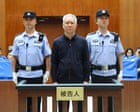
Behind closed doors at the Shenzhen Intermediate People's Court, the man who once sat at the absolute apex of wealth wore a plain, navy blue collared shirt. His hair was stark white. Two uniformed officers stood firmly at his flanks. The court handed down a definitive sentence: life in prison. His personal property was seized, his corporate behemoth was dismantled under staggering liabilities topping three hundred billion dollars, and an era of unbridled credit came to a crashing, definitive halt. For further background on this development, detailed reporting can be read at Forbes.
Guilty. On eight separate charges.
The legal charges read like a masterclass in financial engineering gone rogue. Between 2016 and 2021, the company engineered a continuous, massive deception. Assets were inflated by roughly eighty billion dollars across just two years by booking revenues from uncompleted apartments prematurely. Liabilities were quietly hidden away in the shadows of corporate ledgers. Public deposits were absorbed illegally, securities were fraudulently issued, and officials were bribed to keep the gears turning.
But numbers on a balance sheet never tell the true story of human fallout.
Imagine standing in a half-built concrete shell on the outskirts of a major Chinese city, staring out at empty rebar where a window should be. Imagine pouring your life savings, scraped together from decades of grueling factory work or small business sweat, into a down payment for an apartment that will now never materialize.
When Evergrande defaulted, it did not merely cause a corporate restructuring. It triggered a profound crisis of confidence. Ordinary families who trusted the system found their futures vaporized. Street protests flared. Trust eroded. The fallout rippled outward, depressing housing markets and freezing liquidity across an entire sector that had long served as the engine of domestic growth.
The court's judgment was severe because the social harm was staggering. Fifty-six individuals linked to the upper echelons of the empire received prison terms, ranging from short sentences to eighteen years for top executives. Billions in corporate fines were levied against the core group and its real estate arms. Overseas, liquidators continue a grinding, multi-year battle to claw back assets and dividends from offshore accounts, tracing money across borders in a desperate attempt to salvage pennies on the dollar for abandoned creditors.
Yet no amount of asset recovery can restore the lost years or mend the fractured trust of everyday buyers.
The man who rose from a humble steel technician raised by his grandmother in rural Henan province ultimately built a cage out of the very ambition that propelled him to the stars. His journey exposes the dangerous illusion that growth can be manufactured infinitely out of debt, and that reality can be indefinitely postponed by creative accounting.
The courtroom lights are off now. The flashbulbs are gone. What remains is a stark reminder etched into the concrete monuments of an unfinished horizon: every fabricated brick eventually demands a reckoning.