Deep beneath the jagged peaks of the Zagros range, the earth vibrates with a sound no human ear was ever meant to hear. It is not thunder. Thunder clears the air and leaves the crisp scent of ozone in its wake. This is a low, structural groan—the sound of bedrock resisting millions of foot-pounds of kinetic pressure.
Inside the Fordow fuel enrichment plant, embedded under hundreds of feet of solid mountain granite, engineers work in cleanrooms that feel like submarine hulls. They check pressure gauges on cascades of IR-6 centrifuges spinning in near silence. Above them lie layers of reinforced concrete, heavy soil, and sheer rock. They have long operated under the assumption that this mountain was an absolute shield.
They were wrong.
To understand why Washington’s foreign policy apparatus circles back to a single weapon in times of extreme tension, you have to look past the geopolitical grandstanding. Forget the talking points delivered in air-conditioned press briefing rooms. The real story isn't about political posturing; it is about physical force meeting static defense in a deadly game of engineering chess.
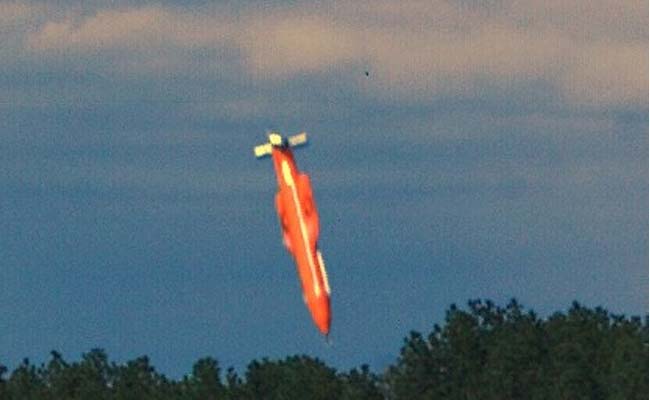
The weapon in question is the GBU-57A/B Massive Ordnance Penetrator, a precision-guided, 30,000-pound beast of steel and high explosives. The press calls it the Mother of All Bombs' bigger cousin, but that moniker gets the mechanics backwards. The MOAB—the GBU-43/B—is designed for surface blast, detonating above ground to wipe out infantry and soft targets across a wide area. The Massive Ordnance Penetrator does the exact opposite. It does not waste its energy on the sky. It burrows.
Picture dropping a high-carbon steel pillar from the edge of the lower atmosphere.
The bomb casing is forged from a dense, specialized nickel-cobalt steel alloy designed to withstand collision forces that would pancake standard artillery shells. When a B-2 Spirit stealth bomber releases one from 40,000 feet, the weapon accelerates under gravity until it punches through the earth like a nail driven into soft pine. It doesn't explode on contact. It waits. A delayed-action fuze measures the deceleration, counting the feet of stone and concrete passed through, holding the blast until the casing comes to rest deep inside the subterranean cavity.
Only then does the core detonate.
The result is not a dramatic fireball reaching into the clouds. It is an internal implosion. The shockwave shatters structural support columns, collapses air filtration networks, and pulverizes centrifuges through sheer overpressure. The mountain itself becomes the hammer that crushes everything inside.
For years, military analysts debated whether even a 30,000-pound conventional weapon could reliably neutralize a facility like Fordow, which sits under an estimated 200 to 300 feet of rock. The physics present a brutal equation. A single strike might only degrade the outer protective layer. But military planners do not design operations around single strikes. They map out sequential impacts—dropping one penetrator into the crater left by the first, drilling progressively deeper through the mountain's crust.
Yet, focusing purely on the structural damage misses the true weight of the calculation.
Think about the human beings stationed inside those underground complexes. Modern military facilities are complex ecosystems. They require continuous electrical feeds, massive cooling systems to dissipate the heat of tens of thousands of spinning machines, and fresh air pumped down from the surface. You do not need to vaporize an underground hall to destroy its function. Severing the ventilation shafts, collapsing the access tunnels, and crushing the power grids turns a state-of-the-art enrichment laboratory into an airtight tomb within minutes.
Consider what happens next on the geopolitical chessboard.
When a nation signals the potential use of its ultimate non-nuclear option, it is not merely preparing for a strike. It is attempting to alter the psychological math of its adversary. The threat of the Massive Ordnance Penetrator is designed to force a recalculation: is the strategic value of an underground program worth the certainty of its physical burial?
For decades, hardened defense architecture was the ultimate security policy for regional powers. If you dug deep enough, you bought immunity. The development of super-heavy bunker busters stripped that immunity away, shifting the balance from defensive fortification back to offensive reach.
The air inside a deep underground facility is strangely still. The technicians monitoring the control consoles know every hum of the machinery, every flicker of the fluorescent lights overhead. Outside, across thousands of miles of desert and ocean, long-range bombers sit on active runways, their bays engineered to carry the heavy steel cylinders that can turn solid granite into dust.
Security, in the end, is rarely a matter of how much concrete you can pour above your head. It is a fragile equilibrium maintained only as long as the mountain holds its ground.