Concrete is supposed to be final. That is the implicit social contract we make with our cities. We pour the foundations, we string the steel, we pave the asphalt, and we whisper a quiet bargain to the earth: stay still. We build shopping malls with sweeping glass atriums. We erect bright neon signs over coastal strips. We populate these spaces with the hum of espresso machines, the shuffle of shopping bags, and the soft chatter of teenagers comparing sneakers.
Then the earth remembers it is alive.
To understand what happened when the latest tremor tore through Japan, you have to look past the trembling camera angles broadcast on cable news. You have to look at a specific shopping center. Not just any structure, but one that carries a heavy, haunted pedigree. This particular mall was built, destroyed, rebuilt, and baptized anew following the cataclysmic scars of the 2011 Tohoku disaster. Fourteen years. An entire generation of children grew up riding those escalators, eating soft-serve ice cream beneath the skylights, watching rain streak across panes that had once rattled in a terrifying gale.
It was proof. That was the point of it. The rebuild wasn't just commercial architecture; it was a psychological monument. It stood as a middle finger to entropy, a testament to human engineering and stubborn resilience.
Until the ground heaved again.
The Sound Before the Shaking
Ask anyone who has lived through a major subduction zone earthquake, and they will tell you the same thing. It is never just the shaking. It is the sound.
It starts as a deep, subterranean groan, a frequency so low it vibrates in the molars before it ever reaches the ears. It sounds like a freight train barreling through a subway tunnel directly beneath your living room floor. Then comes the violent, jerky lateral snap. Books jump off shelves. Coffee mugs shatter against linoleum. In the span of a single heartbeat, the world transforms from a predictable, solid matrix into a violently rolling deck at sea.
Consider a hypothetical shopkeeper inside that rebuilt mall—let us call him Kenji, a man whose family has sold dry goods near the coast for three decades. In 2011, Kenji watched the black wall of the tsunami swallow his storefront whole. He spent months shoveling gray silt from his floorboards, tasting salt and despair in equal measure. When the new commercial complex rose from the rubble years later, equipped with base isolators, deep concrete piles, and high-tech shock absorbers, Kenji moved back in. He trusted the science. He trusted the modern Japanese building code, arguably the strictest on planet earth.
When the recent tremors hit, Kenji didn't panic immediately. The building did its job. The dampeners groaned, the joints flexed, and the structure absorbed the blow.
But architecture cannot protect the human nervous system from memory.
The Architecture of Trauma
When you design for disaster, you engineer for physics. You calculate shear stress, tensile strength, and soil liquefaction. But you cannot calculate the precise weight of collective trauma.
When the ceiling tiles began to rain down in the shopping center's atrium, tourists screamed. Teenagers dropped their phones. But the older residents—the ones with white hair and gray eyes who had lived through the double nightmare of 2011—did something far quieter. They froze. Their muscles locked. Their breathing shallowed.
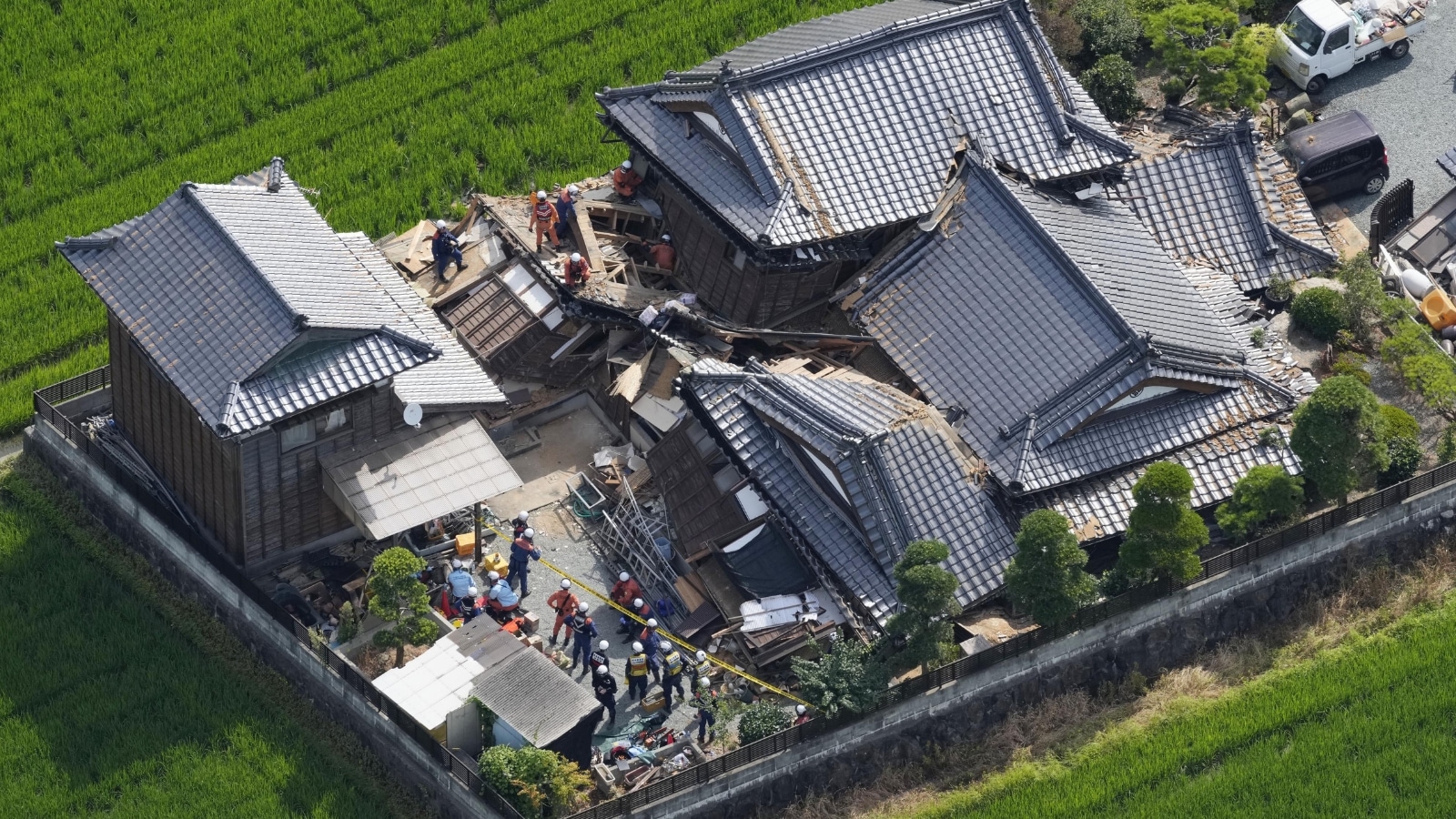
The physical damage of this latest earthquake was scattered, erratic, and cruel. Aerial photographs revealed jagged fissures splitting highways, coastal embankments slumped into gray harbors, and roofs stripped of ceramic tiles like plucked feathers. Yet, the deeper injury is invisible. It lives in the hesitation of a mother checking evacuation routes on her phone while her toddler asks for a toy. It lives in the sudden silence that falls over a crowded train carriage when the emergency broadcast alert chimes.
We talk about infrastructure resilience as if it were a finished product. We check boxes on engineering reports. We issue press releases about modern seismic retrofitting. But resilience is not a static state. It is an exhausting, perpetual performance.
The Long Shadow of the Coastline
Japan sits atop the Pacific Ring of Fire like a rider on a runaway bull. The islands are constantly squeezed, warped, and fractured by the relentless convergence of tectonic plates. Every resident knows this intellectually. It is printed in school textbooks handed out in April. It is rehearsed during national disaster prevention drills every September, where millions drop beneath their desks in synchronized silence.
Yet, knowing a thing intellectually and living through its repetition are entirely different categories of human experience.
When a mall that was rebuilt from the ashes of a historic catastrophe gets rattled once more, the psychological toll echoes far beyond the prefecture lines. It shatters the illusion of safety that time is supposed to provide. We rely on the narrative arc of progress: bad thing happens, we mourn, we rebuild, we heal, we move forward. We expect a neat conclusion.
History refuses to offer neat conclusions.
Instead, history loops. It circles back to test the foundations we poured with such hopeful optimism a decade prior. It asks us: Are you strong enough to do it all over again?
The Quiet Aftermath
Look closely at the streets now. The emergency sirens have faded. The dust has settled over cracked sidewalks and buckled asphalt. Construction crews in high-visibility vests and white hardhats are already measuring, hammering, and clearing the debris.
There is a profound, almost heartbreaking beauty in that labor.
It is easy to look at recurring disasters and see only futility—to wonder why anyone would bother paving a road or stocking a shelf in a place so perpetually vulnerable. But that misses the entire point of human habitation. We do not build because the earth is safe. We build precisely because it is not.
Kenji’s shop is closed today. The glass storefront is cracked in a delicate, spiderweb pattern, waiting for the glaziers. Inside, the boxes of dry goods sit undisturbed on metal shelves that held firm through the violence. He stands outside on the pavement, looking up at the scarred facade of the mall, wiping a speck of dust from his sleeve. He does not smile, but he does not pack his bags, either. He simply waits for the contractors to arrive, picking up the thread where the earth snapped it, tying the knot once more.