The air in Mong Kok did not flow. It pressed. It had the weight of wet wool and the temperature of a fresh cup of tea, clinging to the skin the moment you stepped out of the MTR station.
On a typical Sunday, this square mile of Hong Kong vibrates with a chaotic, beautiful energy. Street food vendors flip octopus balls in a blur of motion. Shoppers dodge buses. But on this specific weekend, as the outer bands of Typhoon Bavi slid away toward the north, the city did not breathe a sigh of relief. It suffocated. Recently making headlines recently: The Indo Pacific Triad by the Numbers What Most People Miss.
Typhoons are supposed to bring drama. They bring howling winds, torrential rain, and the thrilling, terrifying spectacle of nature flexing its muscles. Bavi did none of that for Hong Kong. Instead, it played a much crueler trick. As the storm churned out in the South China Sea, its massive atmospheric skirts dragged all the moisture and heat of the tropics straight into the high-rise canyons of Kowloon, then trapped it there. The wind died completely. The clouds vanished, leaving a naked, blistering sun to cook seven million people alive.
Consider Mrs. Wong. She is seventy-four, lives in a subdivided flat in Sham Shui Po, and represents the hidden underbelly of a Hong Kong summer. Her home is roughly the size of a standard parking space. It has one window that looks out onto a concrete air shaft. When the Hong Kong Observatory clocked the mercury hitting nearly 38 degrees Celsius in the shade, Mrs. Wong’s room became an oven. Additional information on this are explored by BBC News.
For her, the departure of the typhoon was not good news. It was a crisis.
The relationship between a tropical cyclone and the heat wave that follows is an exercise in atmospheric irony. Think of a massive storm like a giant pump. As it draws air upward into its core hundreds of miles away, it forces the air on its periphery downward. When air sinks, it compresses. When it compresses, it heats up. Meteorologists call this subsidence. To the people on the ground, it feels like living under a giant, invisible hair dryer set to high.
The concrete of Hong Kong makes this worse. Every skyscraper, every paved alleyway, every flyover acts as a giant thermal battery. During the day, they absorb the unrelenting solar radiation. At night, when the city should be cooling down, the concrete radiates that heat back into the streets. It is a phenomenon known as the Urban Heat Island effect, and during a subsidence event, it turns lethal.
Walk down Nathan Road during one of these snaps and the sensory assault is overwhelming. The heat doesn't just come from above. It blasts out of shop doorways where industrial air conditioning units fight a losing battle against the atmosphere, dumping their exhaust directly onto the sidewalks. It rises from the tarmac. It radiates from the metal hulls of double-decker buses.
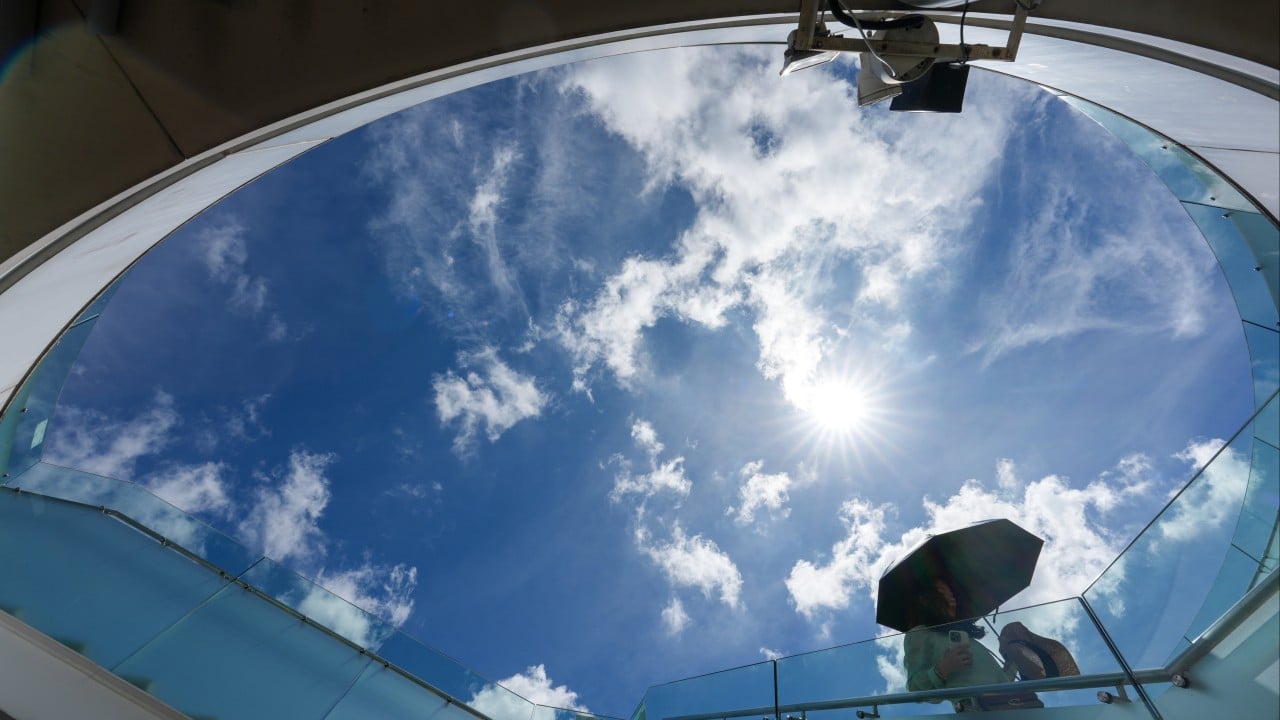
On this particular Sunday afternoon, the city felt strangely muted. The usual bustling energy was replaced by a slow-motion struggle. People moved with a deliberate, heavy gait, seeking out any patch of shade offered by a building canopy or a lone banyan tree. Umbrellas weren't shielding anyone from rain; they were deployed as shields against a blinding sky.
The numbers provided by the government tell a sterile story of maximum temperatures, relative humidity percentages, and air quality health indexes. They don't mention the sweat stinging the eyes of the construction workers on the bamboo scaffolding in Wan Chai. They don't capture the financial anxiety of a family deciding whether to run their old, power-hungry window AC unit for twenty-four hours straight, knowing the electricity bill will eat into their grocery budget.
We often view weather through the lens of convenience or disruption. A typhoon means a day off work if the Number 8 signal is raised. A sunny weekend means a trip to the beaches of Shek O or Sai Kung. But this kind of extreme heat is different. It is an invisible predator. It doesn't rip roofs off buildings or flood subway stations, but it strains the human body to its absolute limits, particularly for the elderly and the vulnerable living in the city's poorest districts.
By 4:00 PM, the breeze that usually rolls off Victoria Harbour was nonexistent. The water looked like plate glass, reflecting a hazy, pollution-choked sky. In the crowded markets, the ice keeping the fish fresh melted into gray puddles within minutes. Vendors wiped their brows with damp towels that never seemed to dry.
There is a specific vulnerability in realizing that your environment has turned hostile. Hong Kong is a marvel of human engineering, a vertical metropolis built against the odds on steep hillsides and reclaimed land. Yet, when the atmosphere stalls, all that brilliant engineering turns inward. The very skyscrapers that define the iconic skyline block the sea breezes, trapping the heat in the narrow grids below.
As evening approached, there was no respite. The sun dipped behind Lantau Island, but the temperature barely budged. The concrete battery was fully charged, and it was beginning to discharge.
In her tiny room, Mrs. Wong soaked a small towel in cold water and placed it over her neck. She turned on her small plastic fan, which did little more than move the hot air around the room. She looked out her single window at the neon signs beginning to buzz to life across the street. The typhoon had gone, taking the wind with it, leaving behind a city trapped in a fever dream of its own making.