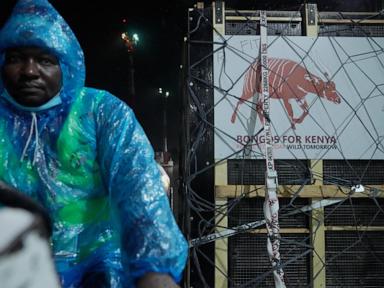
The headlines are bleeding heart gold. Five Mountain Bongos—stunning, spiral-horned antelopes—flew from the Dvur Kralove Zoo in the Czech Republic to Mount Kenya. The media is calling it a "homecoming." They are framing it as a triumph of international cooperation.
They are lying to you. You might also find this similar article interesting: The Cold Price of a Broken Silence.
This isn't a homecoming. It's an expensive, high-altitude publicity stunt that ignores the fundamental biology of extinction. We are shipping captive-bred animals into a burning house and asking the neighbors to applaud the interior decorating. If we actually cared about the Mountain Bongo, we wouldn't be focusing on crates and cargo planes. We would be talking about the fact that we have already lost the ground they stand on.
The Genetic Dead End of the Zoo-to-Wild Pipeline
The "lazy consensus" in conservation circles is that zoos act as a Noah's Ark. The logic goes: keep them alive in Europe, breed them, and eventually, the species returns to Africa. As discussed in recent articles by Reuters, the implications are significant.
It sounds noble. In practice, it’s a biological disaster.
When you breed a species in a controlled, temperate environment like the Czech Republic for generations, you aren't just preserving the animal. You are unintentionally selecting for traits that work in a zoo but fail in the Aberdare Mountains or on the slopes of Mount Kenya. Captivity strips away the "wildness" that isn't just a vibe—it’s a set of epigenetic markers and learned behaviors.
- Parasite Resistance: A zoo animal lives in a sanitized environment. The wild is a microbial war zone.
- Predator Awareness: You cannot teach a Bongo born in a paddock how to spot a leopard in the bamboo thickets of Kenya.
- Foraging Intel: Knowing which plants are toxic at different elevations is a passed-down maternal trait. That chain is broken.
I’ve seen conservation projects burn through millions of dollars attempting "rewilding" only to watch the subjects die of simple infections or starvation within six months because they lacked the ancestral software to survive. We are essentially dropping city kids into the middle of the Amazon with a map from 1950 and wondering why they aren't thriving.
The Math of Vanity vs. The Reality of Range
Let’s look at the numbers the press releases skip. There are fewer than 100 Mountain Bongos left in the wild. Some estimates put the number closer to 70.
Airlifting five animals represents a massive expenditure of carbon, cash, and man-hours. For what? A negligible bump in a gene pool that is already suffering from a massive bottleneck.
The real problem isn't a lack of antelopes. It’s a lack of habitat.
Kenya’s mountain forests are being squeezed by illegal logging, charcoal production, and the relentless creep of human settlement. You can fly in a thousand Bongos, but if their forest is a patchwork of stumps and potato patches, they will end up as bushmeat or casualties of habitat fragmentation.
We are obsessed with the "charismatic megafauna"—the pretty face of the antelope—because it’s easy to sell to donors. It’s much harder to sell a 20-year plan for reforestation and the aggressive policing of illegal grazing. But without the latter, the former is just a very expensive funeral procession.
The Colonial Echo in Modern Conservation
There is an uncomfortable, patronizing undertone to these stories that the industry refuses to acknowledge. The narrative is always: "Western Expertise Saves African Species."
It’s a leftover from a Victorian mindset. We treat Africa like a giant, broken zoo that needs European management to function. By focusing on the "gift" of these animals from a Czech zoo, we diminish the local Kenyan rangers and communities who are actually doing the work.
Worse, these high-profile translocations often divert funds from indigenous-led conservation efforts. I’ve spoken with local field officers who are trying to secure a single motorbike for patrols while a six-figure sum is dropped on a customized crate and a private charter for five antelopes.
If we wanted to be radical, we would stop the airlifts and start the checks. Put that money into the hands of the people living on the edge of the forest. If the local community benefits more from a living Bongo than a dead one, the Bongo survives. It’s that simple. But "Economic Incentives for Local Communities" doesn't make for a sexy Instagram post like a picture of a wide-eyed antelope stepping onto African soil.
The Genetic Bottleneck Myth
People often ask: "But surely any new blood is good blood?"
Not necessarily.
When you introduce captive-bred genetics into a tiny, fragile wild population, you risk outbreeding depression. You are introducing genes adapted for a stable, food-rich, predator-free environment into a population that has spent the last century surviving the most brutal selection pressure imaginable.
You might actually be weakening the very survival traits that have kept the last 70 Bongos alive. Imagine a scenario where the captive genes dilute the natural resistance to local tick-borne fever. You haven't "saved" the population; you've poisoned the well with "weak" DNA.
Stop Treating Extinction Like a Logistics Problem
The Mountain Bongo is a forest ghost. It is shy, elusive, and perfectly adapted to the deep, wet shadows of the high-altitude canopy. It is not a commodity to be shipped around the globe like a luxury car.
If we want to save them, we have to stop looking at the animals and start looking at the map.
- Strict Protection of the High-Altitude Corridors: Forget the airlifts. If the corridors between Mount Kenya, the Aberdares, and the Mau Forest aren't protected, the species is doomed.
- Radical Transparency in Funding: We need to see the "cost per animal" of these translocations compared to the cost of hiring 50 new rangers.
- De-Commercializing Conservation: Stop the "hero narrative." Saving a species is boring, grueling, and involves a lot of paperwork and law enforcement, not just photogenic releases.
The hard truth is that some species might not make it in the wild as we have currently shaped the world. If that’s the case, we should have the courage to admit that a Bongo in a zoo is a museum piece, not a biological reality.
Continuing these airlifts gives the public the false impression that "science" is fixing the problem. It allows us to keep destroying the planet because we think we can just fly the animals back later.
We are trading the survival of a species for a feel-good news cycle.
Stop cheering for the crates. Start mourning the forest. If the habitat were ready, the Bongos would be thriving. The fact that they aren't tells you everything you need to know about the success of this mission.
The crates are open. The cameras are rolling. But the forest is still disappearing.
Protect the land or get out of the way. Everything else is just theater.