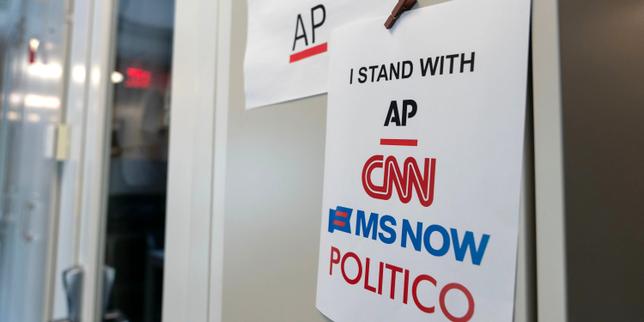
When the executive branch of the United States government formally declares that entering the White House briefing room is a privilege rather than a right, a foundational friction point between power and accountability ruptures into plain sight. Recent federal court filings from the administration of President Donald Trump defending the exclusion of journalists from CNN, MS NOW, and Politico have reignited a high-stakes constitutional confrontation. By framing physical access to the executive mansion as an administrative grace rather than an entitlement protected by the First Amendment, the administration has drawn a sharp line in the sand, forcing legal scholars, media organizations, and federal judges to reexamine the fragile machinery governing information flow in Washington.
Decades of precedent established that while the executive branch holds wide latitude over federal property management, penalizing news organizations purely based on editorial viewpoint crosses a constitutional threshold. Yet, the current standoff goes far beyond standard political friction or routine administrative posturing. It represents a systematic restructuring of how political power interacts with the independent press, replacing traditional norms of engagement with transactional exclusion.
The Mechanics of Exclusion
The immediate catalyst for the ongoing legal battle unfolded when administration officials revoked hard passes and barred reporters from specific outlets following coverage that the White House characterized as false or defamatory. Rather than utilizing standard libel litigation, retraction requests, or public pushback during briefings, the administration opted for physical restriction. Reporters found themselves locked out of the press briefing room, off Air Force One manifests, and excluded from the travel pools that accompany the presidency abroad.
For veterans of the Washington press corps, the maneuver felt jarring yet familiar in its execution. Administrations across both parties have historically bristled at hostile questioning, leak investigations, and unfavorable headlines. Past commanders-in-chief have frozen out specific reporters, complained bitterly about media bias, and attempted to bypass traditional journalism altogether through direct digital communication. However, drawing a bright line between complaining about news coverage and physically barring journalists from public property based on their editorial stance creates an entirely different legal vector.
The administration doubled down on this strategy in legal briefs submitted to federal courts, arguing that executive privilege extends to the management of White House grounds and that no statutory mandate requires the president to host hostile journalistic operations inside the executive residence. This argument hinges on distinguishing between the right to publish and the right of physical access to restricted government workspaces. While nobody disputes that the First Amendment prevents the government from stopping a publisher from printing a story, the administration asserts that the Constitution does not obligate taxpayers to fund or facilitate workspace accommodations for outlets deemed adversarial.
Legal Precedents and Judicial Pushback
The courts have not accepted this argument without skepticism. Federal judges examining emergency injunctions filed by media coalitions pointed directly to prior case law protecting journalists from targeted viewpoint discrimination on public property. The landmark legal battles of the late twentieth century, particularly the decisions affirming that the White House press room functions as a public forum once opened to the press at large, established that government officials cannot arbitrarily withdraw press credentials as a punitive measure against critical reporting.
When a federal district court temporarily restored press credentials for the excluded outlets, the decision underscored a fundamental tenet of American administrative law. Arbitrary power exercised without due process violates basic constitutional safeguards. The court noted that if credentials can be revoked without clear, objective standards or an impartial appeals mechanism, the accreditation process becomes a weaponized loyalty test.
Nevertheless, the legal landscape remains fraught with ambiguity. The administration's defense team has leaned heavily on national security arguments and executive discretion, pointing to reports detailing sensitive defense infrastructure and military logistics as justification for revoking access. By framing the excluded reporting as compromised or damaging to state security, the administration attempts to wrap administrative retaliation in the protective cloak of national defense. Legal experts point out that this rationale collapses under scrutiny when applied broadly across entire news organizations rather than specific security breaches involving classified material, yet it provides enough procedural friction to drag protracted litigation through the appellate system.
Solidarity and Fractures in the Press Corps
The fallout inside the Washington press ecosystem revealed deep divisions and surprising moments of unity. When major television networks faced exclusions, competing outlets confronted a stark ethical dilemma. Should they continue participating in a restricted press pool, or should they pull their crews in solidarity to protest a systemic threat to independent reporting?
In a notable display of collective pushback, members of the television pool briefly disrupted normal operations, forcing the administration to scramble for alternative coverage arrangements. Yet, solidarity among media organizations is historically fragile. Competitive pressures, corporate boardrooms prioritizing access above all else, and the fragmented nature of the modern media economy make sustained united fronts difficult to maintain. Outlets competing for scoops, advertising revenue, and exclusive interviews often find themselves incentivized to fill the void left by sidelined rivals rather than maintain a united blockade.
This fractured response plays directly into the administration's hands. When the press corps is divided, the executive branch dictates the terms of engagement. The rise of alternative media channels, administration-backed digital platforms, and direct-to-consumer executive broadcasting has further diminished the leverage traditional outlets once held. Presidents no longer require the traditional media apparatus to reach the electorate. Social media feeds, direct video streams, and sympathetic digital commentators allow the executive branch to bypass legacy journalists entirely, reducing the economic and political cost of locking hostile reporters out of the room.
The Broader Implications for Democratic Accountability
The core issue extends far beyond the emotional drama of credential revocation or courtroom posturing. At stake is the health of institutional accountability in a democratic republic. When access to the seat of executive power depends on the favor of the administration in office, the watchdog function of journalism is severely compromised.
Reporters assigned to cover the presidency face a chilling effect. Even if they do not self-censor outright, the looming threat of credential loss introduces an invisible tax on aggressive, investigative journalism. Editors and publishers must weigh the financial and operational fallout of a major investigative piece against the risk of losing the daily access required to cover routine executive actions. Over time, this dynamic shifts the baseline of political reporting toward accommodation rather than confrontation.
The American public relies on reporters stationed inside the White House to observe, verify, and question the exercise of raw executive power. These journalists act as proxies for citizens who cannot walk the halls of the West Wing or question administration officials directly. When the administration restricts that access to friendly voices, the information ecosystem degrades into a curated broadcast of executive self-praise.
As the legal battles wind through the federal judiciary, the ultimate resolution will likely establish a critical constitutional boundary for future presidencies. If the executive branch successfully claims the unilateral authority to expel journalists based on viewpoint, subsequent administrations of any political stripe will inherit that weapon. The precedent set today defines whether the free press remains an independent check on government overreach or becomes a licensed privilege granted only to those who please the power structure of the day. The courtroom arguments may focus on badges and briefing room seats, but the future of open government hangs in the balance.