The plastic voting booth in Hong Kong used to feel like a confession booth. It was a cramped, three-sided sanctuary of corrugated plastic where, for a few fleeting moments, a citizen held total sovereignty over a scrap of paper. You marked your cross, folded the sheet, and slipped it into the slot. But in recent years, a new kind of tension has hung over that plastic box. It is the heavy, suffocating weight of an forced choice.
Imagine a voter standing there. Let’s call him Independent. He is not a radical. He is a middle-aged accountant who worries about his mortgage, loves local noodle shops, and used to view voting as a quiet Sunday civic duty. In the current political climate, Independent looks at his ballot and sees only names vetted and approved by a strict screening committee. He doesn't support any of them. In the past, the solution was simple, recognized by democracies worldwide: you leave the ballot blank, or you stay home. If you enjoyed this piece, you might want to look at: this related article.
Now, even whispering that choice to a neighbor can ruin your life.
Under Section 27A of Hong Kong’s Elections Ordinance, inciting another person not to vote, or to cast an invalid vote, is a criminal offense punishable by up to three years in prison. The law does not just target mass protests; it tracks the casual digital trail of ordinary life. A shared social media post, a liked comment, a brief conversation over milk tea—all can be interpreted as an illegal attempt to sabotage an election's legitimacy. For another angle on this event, see the latest coverage from The New York Times.
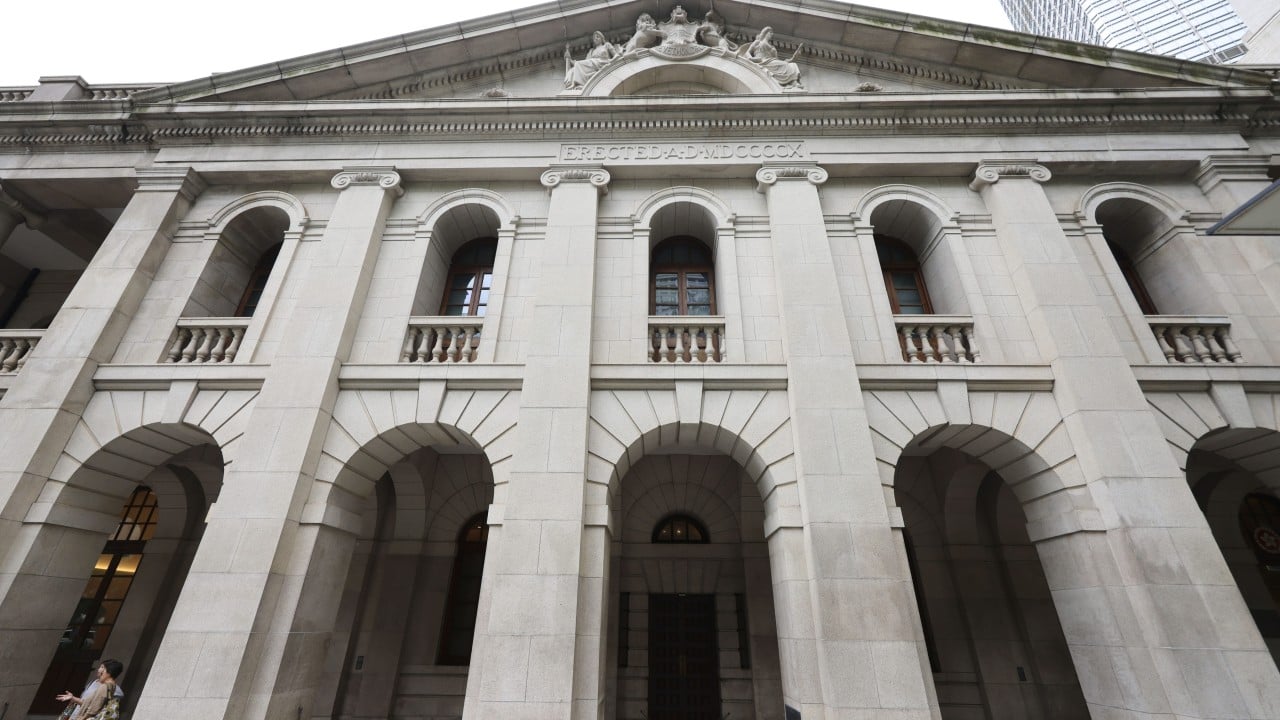
This is the reality currently sitting on the desks of the Court of Final Appeal, Hong Kong’s highest judicial body. The city's top judges are weighing whether this sweeping ban violates the fundamental right to freedom of speech guaranteed by the Basic Law. It is a dry legal battle on the surface, fought with thick briefs and archaic terminology. Underneath, it is a fight for the survival of silence.
The Anatomy of an Enforced Chorus
To understand how Hong Kong arrived at a point where a blank ballot is treated like a weapon, we have to look at how power seeks validation.
Totalitarian authority rarely contents itself with mere compliance. It demands enthusiasm. When the electoral system was overhauled to ensure only "patriots" could run for office, the traditional opposition vanished from the ballot. The outcome of the elections became a mathematical certainty long before the first vote was cast. With competition eliminated, the only variable left to measure was turnout.
Turnout became the ultimate metric of success. A high turnout signals contentment, stability, and endorsement of the new status quo. A low turnout signals something dangerous: a quiet, collective withdrawal of consent.
Consider the mechanics of a typical boycott campaign. In a traditional political arena, calling for a boycott is a standard, peaceful tool of political expression. If you believe the system is rigged, you refuse to play the game. You tell your friends why you are staying home. It is a message written in absence.
But under the current law, that absence is treated as a form of subversion. The government argues that boycotts actively undermine the electoral system and prevent the proper functioning of the constitutional order. By criminalizing the call to stay home, the state effectively attempts to engineer a chorus of approval. If you cannot advocate for a boycott, and you cannot advocate for an invalid vote, the social pressure to conform and participate intensifies.
The legal machinery caught many in its teeth. Activists who fled overseas and posted appeals on Facebook found themselves targeted by arrest warrants. Residents who merely forwarded those posts found police at their doors. The law created a climate where political apathy itself had to be hidden, lest it be mistaken for active resistance.
The Legal Tightrope
Inside the marble-clad courtroom of the Court of Final Appeal, the arguments skip the emotional trauma and focus entirely on the boundaries of constitutional rights. The core of the challenge rests on a fundamental principle: does freedom of speech include the right to tell someone to say nothing?
Lawyers challenging the ordinance argue that the restriction is disproportionate. They contend that while the government has a legitimate interest in preventing voter intimidation or fraud, it cannot completely outlaw peaceful political advocacy, even if that advocacy encourages people to abstain from voting.
The prosecution counters with a collectivist argument. They assert that the stability of Hong Kong depends on the integrity and perceived legitimacy of its institutions. In their view, a coordinated campaign to tank voter turnout is an existential threat to that stability. Therefore, restricting speech is a necessary sacrifice to protect the broader public order.
This creates a bizarre legal paradox. The law does not make the act of staying home illegal for the individual voter. You, as a solitary citizen, can still choose to sleep in on election Sunday. You can still accidentally spoil your ballot. But the moment you share that intention, or encourage another to do the same, you cross a criminal threshold.
It is an attempt to isolate the citizen. If everyone is silent, every disgruntled voter believes they are entirely alone. You look out at a sea of quiet compliance and assume you are the only one who feels the emptiness of the choice before you.
The Weight of the Verdict
The decision facing the top court goes far beyond the text of Section 27A. It is a barometer for the remaining independence of Hong Kong’s judiciary.
For decades, the city’s common law system was its crowning jewel, the shield that separated its business-friendly, legally predictable environment from the opaque legal realities of the mainland. The judges on the highest bench are fully aware that the world is watching. Foreign investors, international human rights bodies, and ordinary citizens are all looking for a sign. They want to know if the law still protects the individual against the totalizing demands of the state.
If the court upholds the law entirely, it cements a dangerous precedent. It signals that speech can be criminalized simply because it makes the government’s preferred narrative harder to maintain. It validates the idea that the appearance of harmony is more important than the reality of freedom.
But if the court narrows the scope of the law—if it rules that peaceful advocacy of a boycott is protected expression—it offers a small, vital pocket of breathing room. It acknowledges that a citizen's relationship with the ballot box is personal, sacred, and cannot be entirely coerced.
The final judgment remains locked away in the minds of the robed figures who sit beneath the crest of the court. Meanwhile, the city waits, and the next election cycle inches closer.
Independent, our hypothetical accountant, will eventually have to walk down his street past the bright, government-sponsored banners urging him to fulfill his civic duty. He will approach the school hall turned polling station. He will feel the eyes of the volunteers, the presence of the police at the gate, and the silent pressure of a community that has learned to keep its head down.
He will walk into that plastic booth, holding a pen. He will look at the names. And he will realize that the most profound statement he can make is not who he chooses, but whether he dares to leave the paper clean.