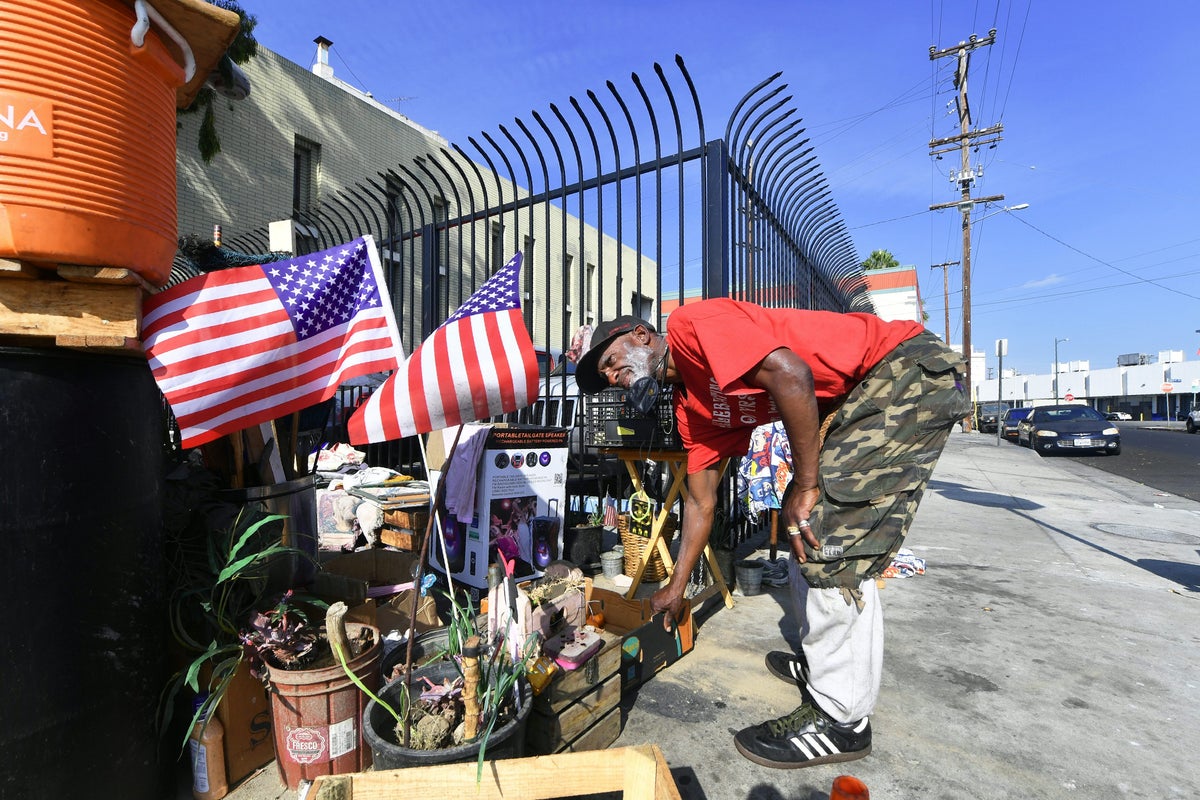
The wind off the Potomac doesn’t care about politics. In the dead of winter, it cuts through wool coats and tactical jackets alike, biting at the skin of the men and women lined up outside the shelter on New York Avenue. Among them is a man we will call Marcus. He is forty-eight, though his joints claim sixty. He wears a faded olive-drab field jacket, missing two buttons, and keeps his hands shoved deep into his pockets to hide the tremors. Marcus spent three tours in the desert ensuring other people could sleep safely in their beds. Tonight, his own bed is a piece of flattened cardboard near a heating grate.
He is not an anomaly. He is one of thousands.
For decades, the plight of America’s unhoused veterans has been a reliable backdrop for campaign trails, a guaranteed applause line at rallies, and a bipartisan talking point that surfaces every November. We hear the grand declarations. We see the sweeping vows to wipe out veteran homelessness once and for all.
But when the lights fade and the cameras are packed away, the math rarely matches the rhetoric.
The Blueprint on Paper
To understand how a promise evaporates, you have to look at the machinery of Washington. A pledge made on a stage is nothing but air until it is codified into a federal budget.
The proposal seemed straightforward. A high-profile commitment was made to establish housing for 6,000 homeless veterans—a significant, measurable dent in a national crisis that has plagued the country for generations. For the men and women sleeping under highway overpasses, it sounded like a lifeline. It sounded like a strategy.
The reality of federal funding, however, is a game of smoke and mirrors.
When the actual budget blueprint was unveiled, a stark disconnect emerged. The line item dedicated to executing this specific 6,000-bed initiative contained a number that defied the previous rhetoric: zero dollars.
It is a common Washington sleight of hand. Announce the initiative to capture the headlines, then rely on existing, already-strained programs to absorb the actual cost, or simply leave the promise unallocated in the final ledger. This isn’t just a bureaucratic oversight. It is a structural choice. When a new mandate is created without dedicated funding, it becomes a ghost initiative—an administrative shell that looks good on a press release but possesses no power to change reality on the ground.
The Logic of the Ledger
Defenders of the budget structure often point to the broader allocations for the Department of Veterans Affairs. The argument is simple: why earmark specific funds when the VA already receives billions for housing assistance and supportive services?
But that argument ignores how bureaucracy actually functions.
Imagine a local fire department. The town builds a brand-new neighborhood and promises it will have its own dedicated fire station and engines. But when the town budget passes, they allocate no new money for the station, telling the citizens that the existing fire trucks in the next town over will just have to drive faster and cover more ground. The overall fire budget technically increased slightly to cover gas, but the new station is never built.
That is what happens when a specific pledge to house 6,000 individuals is left unfunded. The existing infrastructure—already buckling under the weight of backlogs, mental health crises, and skyrocketing urban rents—is expected to magically expand to meet the new demand.
The numbers tell a story of stagnation rather than progress.
- The Baseline Reality: The VA’s existing Supportive Housing program relies on a voucher system tied to local public housing authorities. These vouchers are not infinite; they are carefully rationed.
- The Funding Gap: To house 6,000 additional veterans from scratch requires capital for physical structures, transitional facility grants, and localized caseworkers. Without a specific appropriation, those resources do not exist.
- The Administrative Burden: When new goals are mandated without new funding, local VA offices are forced to triage. They must decide which veterans currently in the system lose attention so that the new priorities can be tracked.
The result is a zero-sum game played with human lives.
Where the Policy Meets the Pavement
Back on the street, the mathematical reality of a zero-dollar budget translates into very specific, very quiet tragedies.
Marcus doesn’t know how to navigate a federal budget ledger. He knows how to navigate the VA intake system, which is a labyrinth of its own. When he heard about a new push to get thousands of veterans off the streets, he felt a rare spark of hope. He walked six miles to a regional office, waited four hours in a plastic chair, and was ultimately handed a stack of paperwork and told that the current waiting list for housing vouchers in his district was fourteen months long.
The caseworkers aren’t the villains here. They are drowning. They are managing caseloads that defy logic, staring at screens filled with names they cannot help because the structural resources simply are not there.
When we look at the statistics of veteran homelessness, we often treat it as an intractable, mysterious problem. It isn't. It is a math problem.
Housing requires capital. It requires brick, mortar, plumbing, and counselors who can help a person transition from the hyper-vigilance of a combat zone or the brutal survivalism of the streets back into civilian stability. You cannot build a roof out of good intentions. You cannot pay a caseworker with a campaign speech.
When a government agency is told to achieve a massive goal with zero dedicated dollars, the policy becomes a ghost. It exists in speeches, it exists in the minds of voters who assume the problem is being solved, but it does not exist on the corner where Marcus stands, watching his breath mist in the freezing air.
The real danger of these empty allocations is the cynicism they breed. They teach the people who risked everything for their country that they are ultimately worth more as a rhetorical device than as a line item in a budget. They tell the public that the problem is being addressed, lowering the urgency for community action and local volunteer initiatives, while the actual crisis remains untouched.
The temperature is dropping now. The shelter door opens, and a worker steps out to count the heads in line. They have forty beds tonight. There are seventy-five people waiting. Marcus shifts his weight, pulls his collar up a little higher, and prepares for another long night under the stars, waiting for a promise that was never actually paid for.

.jpeg?width=1200&auto=webp&trim=0%2C0%2C0%2C0)