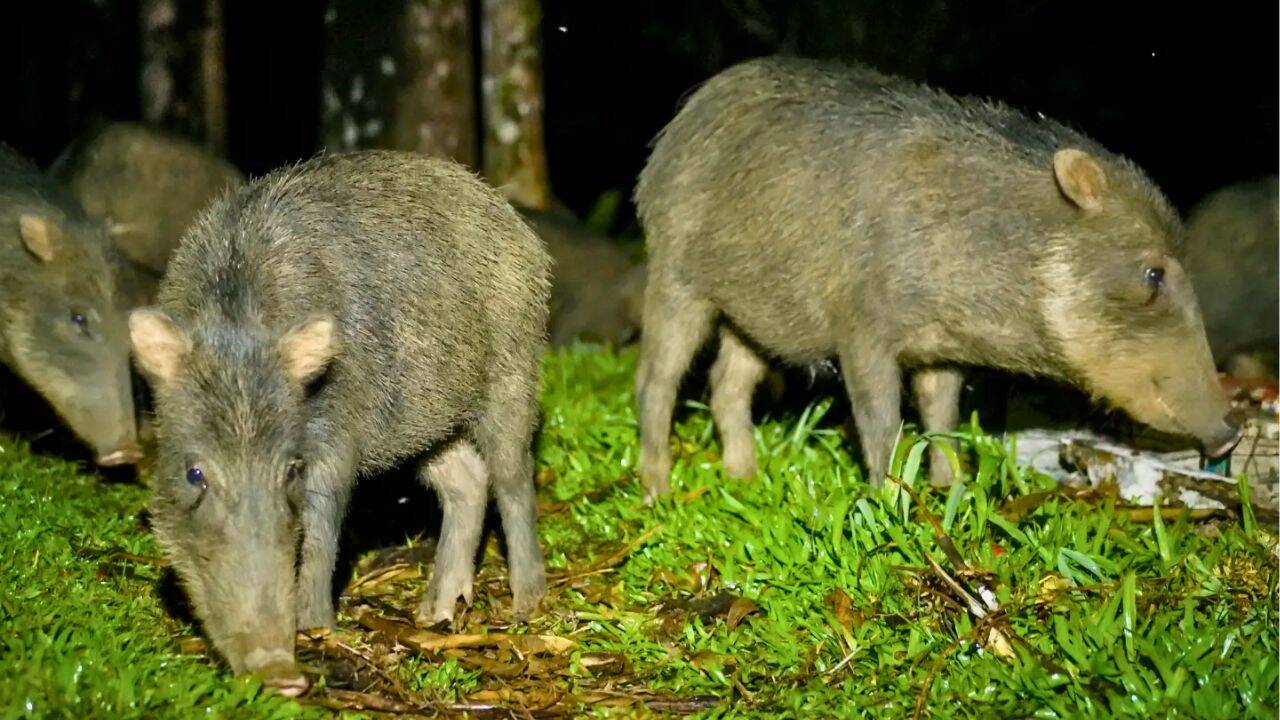
Every environmental headline loves a comeback story. Drop a charismatic, long-absent mammal back into the canopy, queue the violins, and watch the donations roll in. Costa Rica recently crowed about releasing thirteen white-lipped peccaries into a national park after an eighteen-year absence. Environmentalists cheered. Eco-tourists swooped in.
It feels good. It sounds righteous. And it is entirely performative nonsense.
I have spent decades watching governments and NGOs use high-profile reintroductions as expensive smoke screens to mask systemic ecological failure. Releasing thirteen social ungulates into an ecosystem that spent nearly two decades shifting without them is not ecological restoration. It is PR stuntwork disguised as biology.
Let us look past the press release and examine why this headline-grabbing stunt actually highlights the bankruptcy of modern conservation orthodoxy.
The Myth of the Push-Button Ecosystem
The fundamental flaw in the white-lipped peccary celebration is the lazy consensus that ecosystems operate like modular video game assets. Pop out a species for eighteen years, slide it back in, and watch the machinery whir back to its original state.
Nature does not work that way.
An eighteen-year absence in the tropics is not a pause; it is a profound structural realignment. During the nearly two decades white-lipped peccaries were missing from this park, the forest floor adapted. Seed predation changed. Feral populations, plant dynamics, predator-prey ratios, and soil compaction vectors all filled the vacuum. A biological niche does not sit empty waiting for its rightful owner to return like a rented apartment. It reconfigures.
When you drop a herd of thirteen social, range-heavy pigs back into a fragmented, altered landscape, you are not healing the woods. You are throwing a wrench into a newly established equilibrium.
Conservationists love to talk about keystone species as if they possess magical, self-executing restorative powers. White-lipped peccaries are notoriously destructive, root-turning, seed-crushing tanks. In a vast, contiguous, historical wilderness, that rooting creates micro-habitats and boosts biodiversity. In a modern, human-bounded, fragmented national park surrounded by agriculture and roads? Thirteen hungry, roaming pigs are a recipe for edge-effect chaos, human-wildlife conflict, and rapid herd dispersal.
The Economics of Eco-Guilt
Why do conservation agencies pull off stunts like this? Follow the money.
I have watched organizations burn millions of dollars on flagship reintroductions while ignoring the boring, unsexy fundamentals of habitat preservation: stopping illegal logging, purchasing buffer zones, curbing poaching, and fixing corrupt enforcement agencies.
An eighteen-year absence of white-lipped peccaries does not happen by accident. It happens because of habitat loss, hunting pressure, and degradation. If you put thirteen pigs back into the exact same fragmented matrix that wiped them out in the first place without fundamentally altering the local socioeconomic drivers of their extinction, you are running a biological slaughterhouse.
Yet, the public laps it up. Tourists booking trips to Costa Rica want to believe they are visiting an Eden where broken things get magically fixed by well-meaning biologists in khaki shorts. The ministry gets its glossy photo-op. International wire services get their feel-good animal story. The donors feel like their dollars bought salvation.
Meanwhile, the core systemic decay goes completely unaddressed. It is the ecological equivalent of putting a fresh coat of neon paint on a sinking ship and calling it a yacht upgrade.
The Real Numbers Nobody Wants to Discuss
Let us talk population biology for a moment, stripped of the emotional marketing. Thirteen individuals. Think about that number.
In mammalian conservation, thirteen individuals is not a population; it is a genetic bottleneck waiting to implode. White-lipped peccaries live in massive, highly complex social herds that often number in the hundreds. They rely on collective defense against jaguars, complex herd memory, and massive ranging areas to find seasonal mast crops.
A herd of thirteen is dysfunctional. It lacks the critical mass required for social stability, predator deterrence, and genetic diversity. Within three generations, inbreeding depression and mortality from jaguars or hunters will likely wipe out the majority of them, unless they wander out of the park boundaries into neighboring farmland where angry farmers will treat them like the agricultural pests they inevitably become.
Biologists know this. The researchers behind the project know this. But they also know that nuance does not secure grant funding. Headlines about "thirteen pioneers" secure funding.
What Actually Works (And Why Nobody Cares)
Real conservation is tedious, bureaucratic, underfunded, and profoundly unphotogenic. It looks like paying local landowners not to clear-cut riparian corridors. It looks like enforcing anti-poaching laws with underpaid rangers who risk their lives against organized cartels. It looks like connecting fragmented forest patches through biological corridors so animals can migrate naturally without human chauffeurs driving them in crates.
If Costa Rica wanted to bring back white-lipped peccaries genuinely, they should have focused the last eighteen years on expanding contiguous habitat and halting the agricultural encroachment that drove the animals out in the first place. Reintroducing the animals before the habitat can sustain them is putting the cart before the horse, except the cart is on fire and the horse is already dead.
Stop celebrating the symptoms of a broken system just because they wear fur and grunt. Until we stop treating conservation as a marketing campaign for eco-tourism and start treating it as hard-nosed ecological triage, every high-profile animal release is just a funeral scheduled for a later date.
The forest does not need your applause. It needs room to breathe.