The air inside a high-level government office does not move like the air outside. It is heavy, scrubbed clean, and quiet. In these rooms, silence is not just a lack of noise; it is a commodity. It is the armor that protects reputations, ensures fair trials, and keeps the massive machinery of the state from grinding itself to pieces.
When that armor cracks, you do not hear a loud explosion. You hear a whisper where there should be nothing at all.
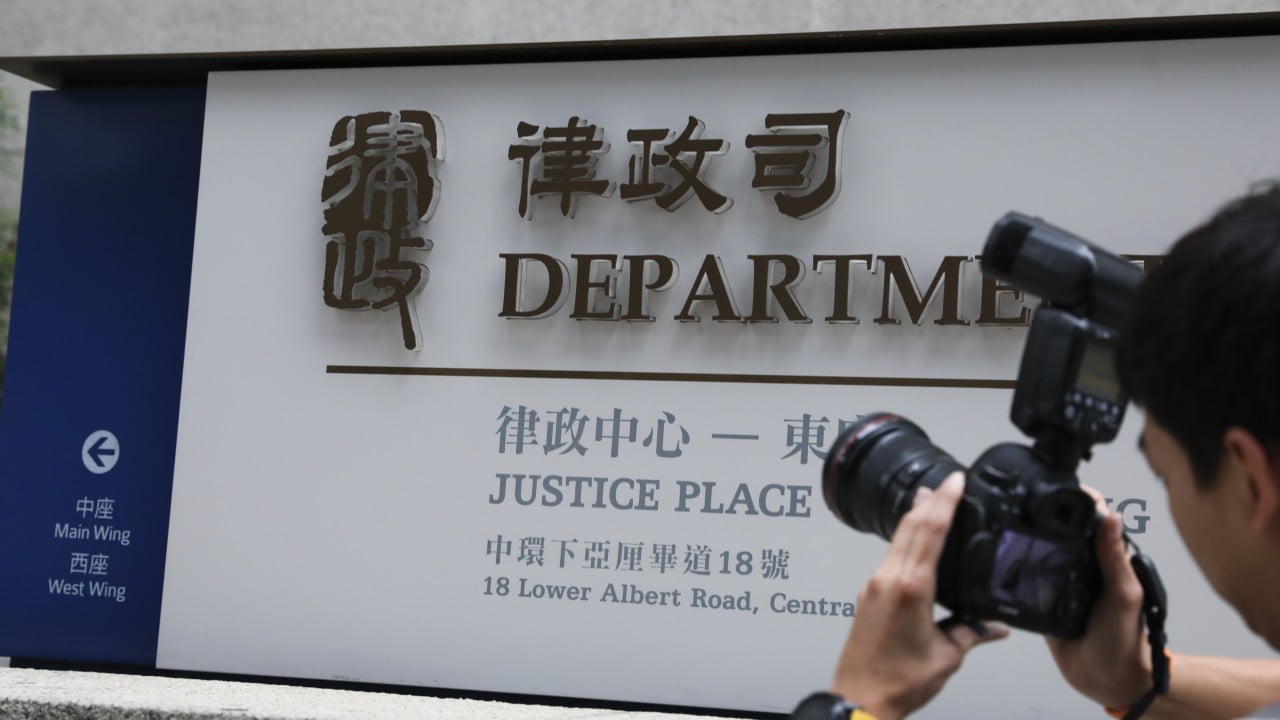
Recently, a tremor went through the highest echelons of Hong Kong’s legal establishment. Paul Lam Ting-kwok, the city’s Justice Secretary, stood before a microphone and addressed an anxiety that keeps public officials awake at night. The government was looking into allegations against a specific prosecutor. That was standard. What was not standard was Lam’s palpable fear that the details of this sensitive, internal investigation had already slipped through the floorboards and into the public domain.
This is not a story about a single bureaucrat or a routine HR dispute. It is a story about the fragile nature of institutional trust, the psychology of the whistleblower, and what happens to a legal system when the people inside it stop trusting the walls to keep a secret.
The Anatomy of a Leak
To understand why a potential leak causes panic in a justice department, you have to look past the dense legalese and focus on the human machinery.
A prosecutor’s office functions because of an unwritten pact. When allegations of misconduct arise against one of their own, the investigation must be conducted in absolute, sterile isolation. If the public finds out too early, the prosecutor's career is ruined before a single piece of evidence is verified. If the public finds out too late, it looks like a cover-up.
Lam’s public admission was a rare glimpse into this high-stakes balancing act. He noted that while the department was actively handling the complaint according to established procedures, the fact that the media was already asking highly specific questions suggested a breach. Someone on the inside had talked. Or someone on the outside had looked through a window they shouldn't have.
Consider what happens next when a leak occurs. The investigation itself changes shape. It ceases to be an objective search for the truth and becomes a race against the news cycle. Investigators who should be looking at facts are suddenly forced to look over their shoulders, wondering if their own notes will appear on a social media feed tomorrow morning.
The institutional response to this fear is almost always a tightening of the knot. Security protocols multiply. Digital access logs are scrutinized. The environment becomes defensive.
The Internal Friction of Justice
Every legal system relies on a paradox. It must be completely transparent to the public to maintain its legitimacy, yet it must be intensely secretive during its internal deliberations to maintain its integrity.
When a Justice Secretary expresses open worry about a leak, they are acknowledging that this paradox is breaking down. It suggests an environment where internal channels are viewed with suspicion. Why does someone leak information? Rarely is it out of pure malice. More often, it is born from frustration, a belief that the system will bury the truth unless the public is watching, or conversely, a calculated move to sabotage a career from the shadows.
In Hong Kong, where the legal landscape has undergone profound shifts over the past several years, the stakes are magnified tenfold. Every internal tremor is viewed through a microscope, both locally and internationally. A rumor of misconduct by a prosecutor is damaging; a rumor that the department cannot control its own data is catastrophic.
The department operates under the principle that justice must not only be done, but must be seen to be done. But what happens when the process of doing justice is exposed to the elements before it is ready?
The immediate casualty is nuance. In the court of public opinion, there are no evidentiary standards. There is no cross-examination. A leaked allegation is often treated as a proven conviction. For a prosecutor—someone whose entire livelihood depends on their perceived fairness and adherence to the law—a premature disclosure is a professional death sentence, regardless of the ultimate verdict of the internal inquiry.
The Cost of the Open Window
We tend to think of leaks as heroic acts of transparency, a concept popularized by cinematic whistleblowers. But the reality inside a functioning justice bureau is far more complicated and gray.
When information bleeds out prematurely, it compromises the witnesses. It alerts the people being investigated, giving them time to align their narratives or delete digital footprints. It creates a chilling effect. Who would report a colleague’s misconduct through official channels if they believed their name, or the details of their complaint, would become tomorrow’s headline?
Lam’s public statements reflected this exact anxiety. He was not just defending a colleague or trying to hide a scandal; he was trying to preserve the integrity of the apparatus that evaluates the scandal. If the apparatus is broken, nothing it produces can be trusted.
The solution is never as simple as finding the person who talked. The harder task is addressing the culture that made them feel leaking was necessary, or fixing the security flaws that allowed it to happen. It requires a painful, introspective look at the digital and human networks that hold the department together.
The files sit on a desk. The servers hum in the basement. Outside, the city moves at a blinding, modern pace, demanding instant answers and total access. Inside, the legal system tries to maintain its deliberate, ancient rhythm, aware that a single loose word can shatter the illusions of stability it has spent decades building.
The investigation into the prosecutor will eventually conclude. The facts will be weighed, and a decision will be made. But the deeper anxiety that Lam voiced will linger long after this specific case is forgotten. It is the realization that the walls are thinner than they used to be, and the room where secrets live is no longer entirely private.