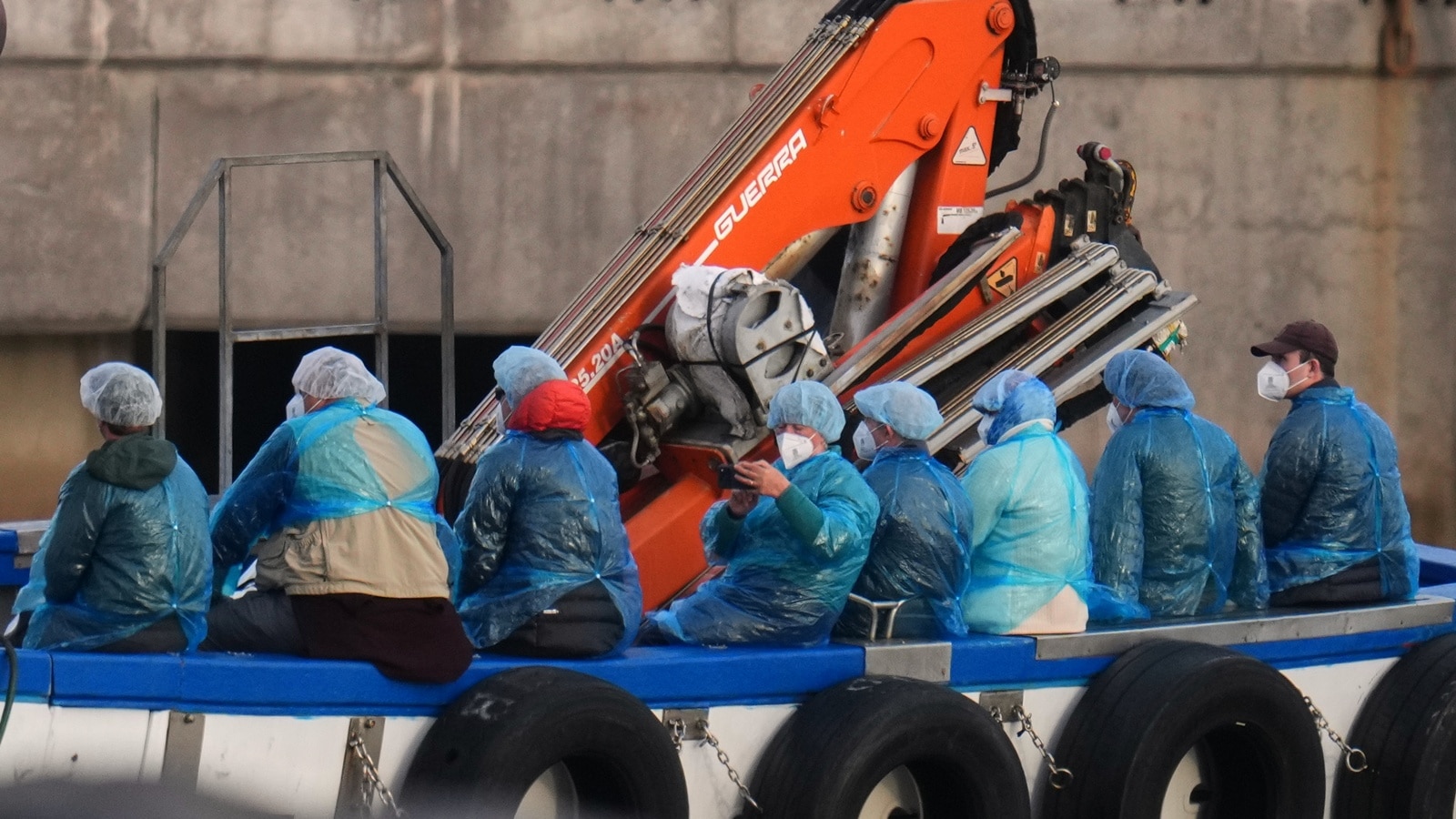
Two confirmed cases of hantavirus among cruise ship passengers, with a third individual currently exhibiting telltale respiratory distress, have sent ripples through an industry that thought it only had to worry about norovirus and respiratory flu. The emergency evacuation of these individuals marks a rare and troubling intersection between luxury maritime travel and a pathogen typically confined to rural, land-based environments. This is not a standard outbreak of "cruise ship cough." It is a biological anomaly that exposes significant gaps in how the industry monitors shore-side excursions and terminal hygiene.
Hantavirus Pulmonary Syndrome (HPS) is a severe, sometimes fatal, respiratory disease. Humans contract it primarily through contact with the urine, droppings, or saliva of infected rodents—specifically deer mice and cotton rats. Unlike the common cold, it does not spread between humans. This means the infection did not originate in the ship’s buffet or through the ventilation system. These passengers encountered the virus on land, likely during a specific shore excursion, and carried the ticking biological clock back onto the vessel.
The Shore Excursion Liability
When passengers book a cruise, they view the ship as a sterile, controlled environment. They trust that the excursions offered through the cruise line have been vetted for safety. However, the vetting process usually focuses on physical safety—sturdy harnesses for ziplining or life jackets on catamarans—rather than epidemiological risks.
The investigation into these three cases points toward a specific hiking or cabin-based excursion in a region known for rodent activity. Hantavirus thrives in dusty, enclosed spaces where rodent droppings have dried. When a hiker disturbs that dust, the virus becomes airborne. Inhaling those microscopic particles is all it takes. The cruise industry’s current health screening protocols are designed to catch people already showing symptoms. They are fundamentally useless against a virus with an incubation period that can stretch from one to eight weeks.
The passengers in question likely felt perfectly fine when they re-boarded the ship. They probably enjoyed dinner, watched a show, and slept in their cabins while the virus was silently replicating in their lungs. By the time the "flu-like" symptoms appeared, they were already in the early stages of a condition that can lead to lungs filling with fluid, a state known as non-cardiogenic pulmonary edema.
Infrastructure and the Rodent Problem
We have to look at the ports. Cruise terminals are massive industrial hubs, often located in areas where urban sprawl meets undeveloped land. These are prime breeding grounds for rodents. While ships themselves maintain rigorous pest control to meet maritime health standards, the transition zones—the gangways, the luggage holding areas, and the transport buses—are often overlooked.
It is a common mistake to assume that luxury implies immunity. A high-end terminal in a tropical or semi-arid climate is just as susceptible to infestation as a grain silo if the cleaning protocols are not specifically targeting rodent exclusion. If a passenger sets their carry-on bag down in a terminal storage area where a mouse has scurried, that bag becomes a vehicle for dried viral matter.
The Reality of Medical Evacuation at Sea
Evacuating a passenger for a suspected hantavirus infection is a logistical nightmare. Shipboard infirmaries are equipped for minor trauma and stabilizing heart attacks, but they are not bio-containment facilities. When the medical staff on this vessel realized they were dealing with something beyond a standard infection, the clock started.
Airbridge evacuations are expensive and risky. In this instance, the ship had to deviate from its course to meet a Coast Guard or private medical transport. This disruption affects thousands of other passengers, yet it is the only viable option when the survival rate for HPS can be as low as 60 percent.
The industry is now forced to reckon with a difficult truth. They cannot control the biology of the destinations they visit. They can, however, control the information provided to the travelers. Most passengers have no idea that kicking up dust in a rural shed or hiking through certain brush areas carries a viral risk. The lack of "predeparture health warnings" for specific land-based pathogens is a glaring hole in the industry’s duty of care.
Rethinking the Pre-Boarding Screen
If you have been on a cruise lately, you know the health questionnaire. It asks if you have had a fever or diarrhea in the last 48 hours. It is a surface-level defense. To truly mitigate the risk of land-to-sea viral transfer, the industry needs to move toward a more sophisticated tracking of passenger activity.
This doesn't mean more paperwork. It means using the data they already have. If a cluster of passengers from the same excursion returns to the ship, medical teams should be briefed on the specific environmental risks of that location. If that location was a dusty trail in a hantavirus-endemic area, the ship’s doctor should be on high alert for any passenger reporting a sudden headache or muscle aches.
The current situation is a warning shot. While norovirus remains the king of cruise ship illnesses due to its highly contagious nature, hantavirus represents a different kind of threat: the random, high-fatality event.
The Economic Shadow of Viral Headlines
The cruise industry is sensitive to perception. A single "plague ship" headline can tank stock prices and lead to a wave of cancellations. This is why the response to these three cases has been so tightly controlled. By framing this as an isolated incident involving "evacuated passengers," the lines attempt to decouple the sickness from the ship itself.
But the ship is the common denominator. It is the vessel that brings high concentrations of susceptible hosts into contact with niche environmental pathogens. As cruise lines push further into "adventure travel" and remote "expedition" locations, the frequency of these encounters will only increase. You cannot send 2,000 people into the wilderness and expect the wilderness not to hitch a ride back.
Accountability in the Transport Chain
We must examine the third-party contractors. Cruise lines often outsource their land tours to local operators. These operators are experts in the local terrain, but they are rarely experts in public health. Was the cabin where the passengers stayed properly ventilated? Was it cleaned with bleach-based solutions that kill hantavirus, or was it simply swept with a broom—the exact action that puts viral particles into the air?
If the investigation reveals that a specific tour operator neglected basic hygiene standards in a known hantavirus zone, the legal ramifications will be massive. We are looking at a potential shift in how liability is structured for shore-side activities. The "independent contractor" defense used by cruise lines is being stretched thin by the reality of integrated booking systems.
The Path Forward for Travelers
For the person sitting in a cabin right now, the risk remains statistically low. You are far more likely to slip on a wet deck than to contract a rare rodent virus. But the "it won't happen to me" mindset is what leads to late diagnoses.
The three individuals in this case are a wake-up call for symptomatic awareness. Hantavirus starts like many other things. It begins with fatigue, fever, and muscle aches, particularly in the large muscle groups like the thighs, hips, and back. The defining moment comes four to ten days later when the coughing and shortness of breath begin. At that point, the window for effective intervention narrows significantly.
The industry needs to stop treating health as a checkbox and start treating it as a dynamic part of the travel experience. This means real-time updates on local health risks at every port of call. It means training excursion leads to recognize environmental hazards that aren't as obvious as a steep cliff or a fast current. It means admitting that the "safe bubble" of a cruise ship is an illusion that ends the moment the gangway touches the pier.
Travelers should demand transparency regarding the health history of the regions they are visiting. If a port is experiencing an uptick in zoonotic diseases, that information should be as available as the weather forecast. Until then, the burden of safety rests on the individual to avoid the dust, avoid the rodents, and treat every "minor" flu symptom after a hike with the utmost suspicion.