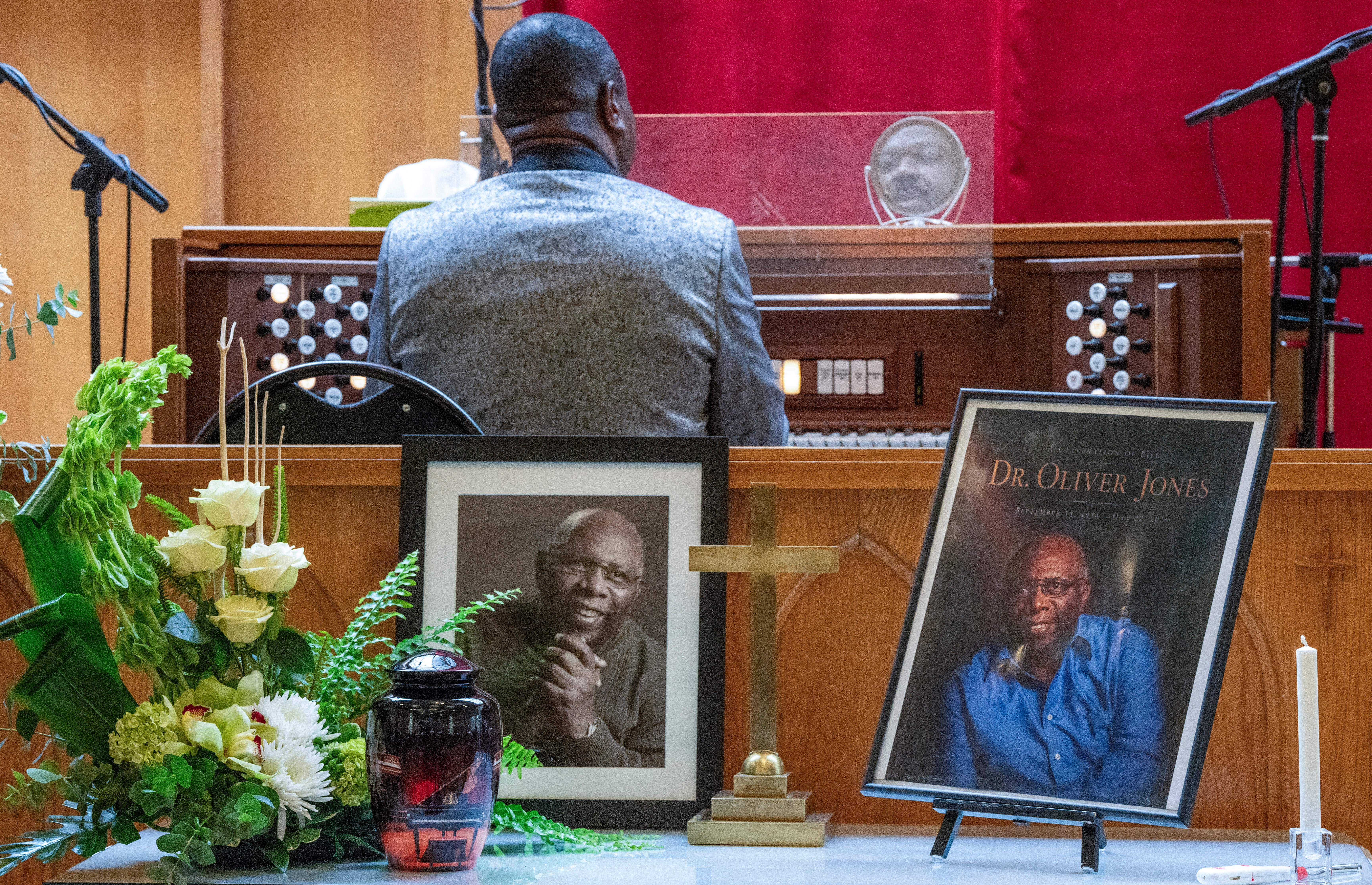
Cultural legacy systems depend on institutional infrastructure just as much as individual talent. When Montreal congregation Union United Church hosted the memorial service for jazz pianist Oliver Jones, the event marked more than a final farewell to a musical icon. It exposed the structural mechanics of how historic urban enclaves preserve, transmit, and monetize intangible cultural assets across generations.
Little Burgundy functions as a primary case study in cultural clustering. Operating alongside contemporaries like Oscar Peterson, Jones emerged from a distinct socioeconomic crucible characterized by systemic marginalization offset by dense community networks. The neighbourhood acted as an informal conservatory where church institutions provided the initial capital equipment, namely pianos and acoustic spaces, for youth development.
The institutional architecture of this transmission relies on three core variables.
The Physical Anchor Variable
Urban geography dictates community continuity. Union United Church, a Black congregation established over a century ago, served as the physical anchor where Jones performed his debut concert at age five and maintained a ninety-year operational relationship. Without localized, stable community spaces, informal jazz education degrades. Commercial venues prioritize high-margin ticket sales and short-term turnover, whereas cultural sanctuaries absorb the capital cost of training unmonetized youth.
The Mentorship Transfer Function
Talent concentration requires explicit knowledge transfer vectors to avoid extinction. Jones functioned as a human node in a multi-generational network. Trained initially under the guidance of Daisy Peterson, he subsequently redirected his output toward underwriting younger artists and anchoring festival lineups. This creates a closed-loop economy of artistic capital. The return on investment for his mentorship is visible in the institutional permanence of events like the Montreal International Jazz Festival, where his multi-decade residency institutionalized local jazz credibility on an international balance sheet.
The Diaspora Valuation Metric
Public mourning rituals quantify the perceived economic and cultural value of an artist outside commercial streaming metrics. When provincial legislators, festival founders, and hundreds of citizens converge on a modest neighbourhood church, they validate the asset value of localized cultural production. The community acts as an underwriter of historical memory, converting individual mastery into collective municipal identity.
Urban planning initiatives must transition from treating historic neighbourhoods as static real estate zones to recognizing them as active production facilities for intangible heritage. Future municipal strategies should allocate direct endowment streams to the religious and civic institutions that historically subsidize community arts education, treating church halls and local community centers as critical civic infrastructure rather than incidental real estate.
Watch Montreal final farewell to Oliver Jones for visual documentation of the memorial service held at Union United Church in Little Burgundy.