Diplomats love a good handshake. They love the polished marble of New Delhi's meeting halls, the choreographed smiles, and the predictable press releases about "deepening historic ties." The recent bilateral meeting between Indian Prime Minister Narendra Modi and Cypriot President Nikos Christodoulides followed this tired script to a letter.
The mainstream press swallowed it whole. The coverage was a predictable parade of platitudes praising shipping agreements, IT talent exchange, and mutual support on geopolitical sovereignty.
It is a comforting narrative. It is also entirely divorced from economic and strategic reality.
As someone who has spent two decades analyzing Mediterranean trade corridors and Brussels-centric lobbying efforts, I find this lazy consensus exhausting. India is treating Cyprus like a major geopolitical hub. Cyprus is treating India like an undifferentiated economic engine. Both sides are playing a 1990s diplomatic game in a 2026 world that has radically shifted.
The truth is uncomfortable: Cyprus is no longer India’s golden gateway to Europe, and treating it as a primary strategic anchor in the Eastern Mediterranean is a severe miscalculation.
The Shell Game of Double Taxation and Dwindling FDI
For decades, the foundation of the India-Cyprus relationship wasn't shared values or grand strategic visions. It was tax avoidance.
Let's call it what it was. The 1994 Double Taxation Avoidance Agreement (DTAA) turned Nicosia into a massive routing station for foreign direct investment (FDI) flowing into India. Mauritian and Cypriot shell companies were the default plumbing for institutional investors looking to bypass Indian capital gains taxes.
Then the music stopped. New Delhi amended the treaty in 2016, shifting to source-based taxation on capital gains. Suddenly, the artificial advantage of routing money through Limassol vanished.
Typical Treaty-Shopping Route (Pre-2016):
[Global Investor] -> [Cypriot Special Purpose Vehicle] -> [Indian Enterprise] = Zero Capital Gains Tax

Current Reality (Post-2016):
[Global Investor] -> [Direct Investment or Alternative Hubs] -> [Indian Enterprise] = Source-Based Indian Taxation
The mainstream financial press still talks about Cyprus as a "top ten investor in India." This is a fundamental misunderstanding of historical data versus current velocity.
- The vast majority of that cumulative FDI is historical legacy data, not fresh capital.
- New inflows have slowed to a trickle because the regulatory loophole is firmly closed.
- International financial centers survive on agility; Nicosia has struggled to reinvent its value proposition for Indian corporations now eyeing Luxembourg, Ireland, or the Netherlands for genuine European market entry.
If you are an Indian founder or enterprise leader listening to politicians boast about "expanding financial cooperation" with Cyprus, you are getting outdated advice. The real action for European market penetration has migrated. Chasing the ghosts of 2000s-era tax planning is a waste of corporate treasury resources.
The European Union Myth: Cyprus Cannot Deliver Brussels
The most common defense of India’s diplomatic over-investment in Cyprus is the "gateway to the EU" argument. The premise sounds logical: Cyprus is an EU member state; therefore, a strong relationship with Nicosia smooths India's path to Brussels, particularly regarding the elusive India-EU Free Trade Agreement (FTA).
This premise is deeply flawed. It fundamentally misunderstands the internal power dynamics of the European Council.
Cyprus has a population of roughly 1.2 million people. In the qualified majority voting system of the EU, and within the halls of the European Commission where trade policy is actually drafted, the gravity sits firmly in Paris, Berlin, and The Hague.
I have watched emerging market governments spend millions lobbying smaller EU member states, expecting them to act as proxies in Brussels. It almost never works. When push comes to shove on massive trade pacts—like agricultural tariffs, data privacy standards, or carbon border adjustment mechanisms (CBAM)—small member states cannot move the needle against French agrarian protectionism or German industrial anxieties.
If New Delhi wants a true European gateway, it needs to stop looking for shortcuts through the Mediterranean periphery. The path to an EU trade deal runs directly through the core economies. Cultivating Nicosia to influence Brussels is like courting a regional branch manager to change global corporate policy at a Fortune 500 company. It feels productive on the ground, but the decision-makers in the home office barely notice.
The Geopolitical Illusion: Ankara, Athens, and the Middle Corridor
The recent bilateral rhetoric heavily emphasized mutual respect for territorial integrity—a thinly veiled nod to Cyprus’s ongoing division and India’s challenges with its own neighbors.
The conventional wisdom suggests that India can build an anti-Turkey axis by aligning closely with Greece and Cyprus. Turkey’s consistent rhetorical support for Pakistan on the international stage has annoyed New Delhi for years, making a partnership with Nicosia seem like a natural, retaliatory diplomatic maneuver.
This is emotional diplomacy, not realpolitik.
Regional Power Dynamics:
[Turkey] <--- High Friction ---> [Cyprus / Greece]
   ^                                   ^
   | (Economic Reality)                | (Diplomatic Rhetoric)
   v                                   v
[India] ------------------------------->
The Eastern Mediterranean is undergoing a massive structural shift. The India-Middle East-Europe Economic Corridor (IMEC), despite recent regional volatility, remains the long-term blueprint for bypassing northern Eurasian trade routes.
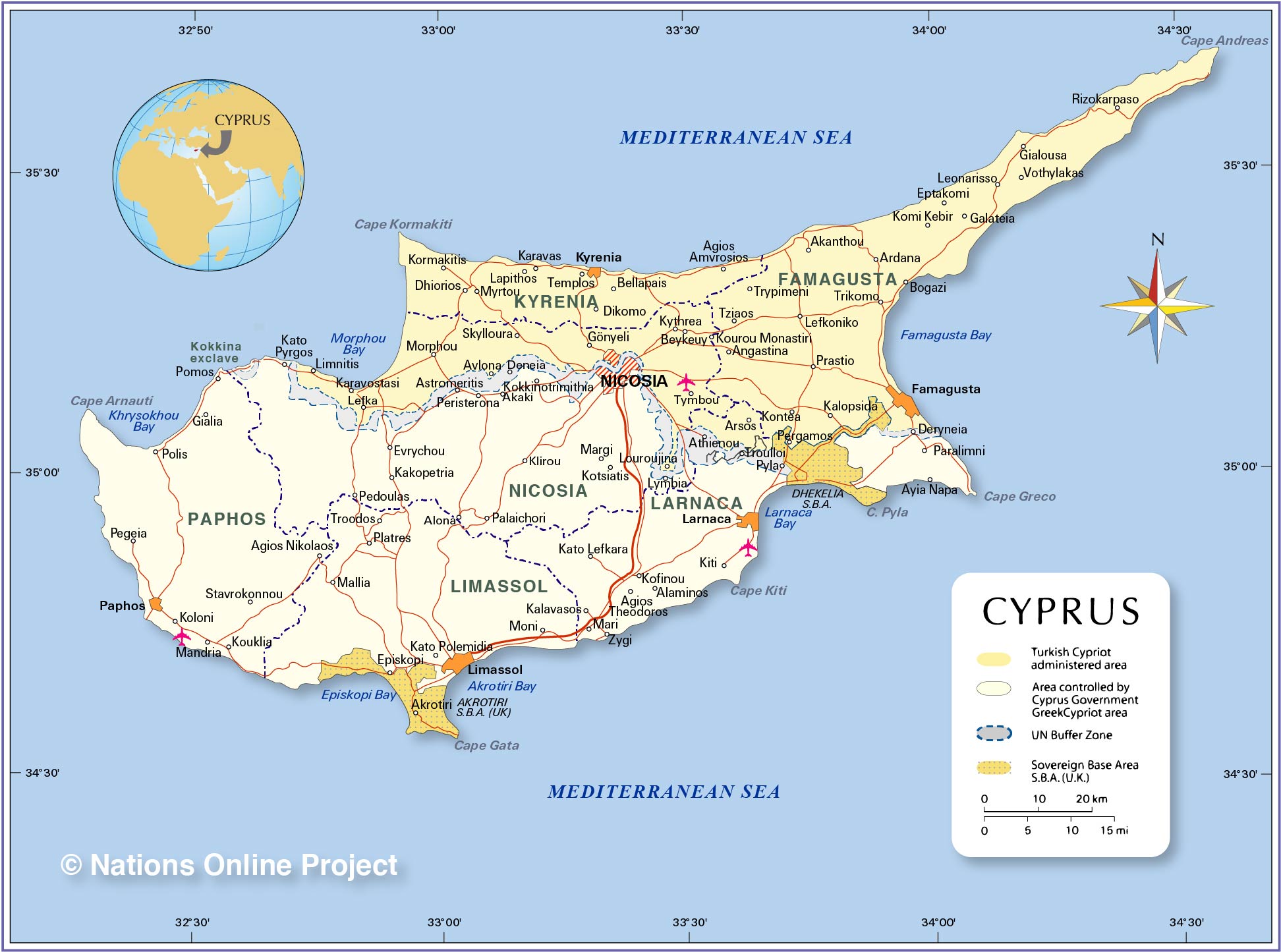
Look at a map. You cannot build a durable economic corridor to Europe while actively alienating major regional maritime powers. Turkey controls the Bosphorus and possesses the largest industrial base in the immediate vicinity. While Greece provides the logical maritime terminus via the Port of Piraeus, over-indexing on Cyprus as a geopolitical stick to poke Ankara yields zero tangible benefits for Indian exporters.
It is a distraction from the real prize. India's primary focus in the region must be the stabilization of logistics hubs through the United Arab Emirates, Saudi Arabia, and Israel, terminating in mainland Europe. Engaging in the decades-old, intractable diplomatic mudslinging of the Levant does not secure supply chains. It entangles them.
The Talent Exchange Trap: Shipping and Tech Realities
During the bilateral meetings, a significant emphasis was placed on the shipping industry and information technology. Cyprus boasts the third-largest merchant fleet in the EU, and India provides a massive percentage of the world's seafarers. On paper, it is a perfect match.
In practice, the talent pipeline is facing a severe structural bottleneck that politicians refuse to address publicly.
Cyprus is desperately trying to position itself as a Mediterranean tech hub, offering attractive visa schemes for Indian software engineers and tech startups. But the implementation has been plagued by bureaucratic inertia.
- Indian tech professionals face lengthy visa processing times and rigid banking compliance hurdles in Cyprus, driven by stringent EU anti-money laundering regulations aimed at clearing out old Russian capital.
- The maritime sector is rapidly automating, and the demand is shifting from raw seafaring labor to high-end maritime tech, an area where Cyprus itself relies on foreign imports.
I have seen Indian tech firms attempt to set up European headquarters in Limassol, lured by the low corporate tax rate of 12.5%. Within eighteen months, many realize that the local talent pool is too shallow for rapid scaling, and the logistical friction of operating from an island detached from mainland Europe outweighs the tax advantages.
If you are an Indian tech executive, do not buy into the bilateral hype. If you need a European base, go where the ecosystem is mature, the venture capital is concentrated, and the infrastructure is connected to the continent.
Dismantling the "People Also Ask" Consensus
To understand how deeply embedded these misconceptions are, look at what the broader market constantly asks about this relationship. The premises of these inquiries are fundamentally broken.
Is Cyprus a safe haven for Indian corporate expansion?
The very phrase "safe haven" is an anachronism. If by safe haven you mean a place to shield profits from the Indian tax authorities, those days are dead. The implementation of the Common Reporting Standard (CRS) and Automatic Exchange of Information (AEOI) means total transparency.
Furthermore, Cyprus's banking sector has undergone severe contractions since the 2013 haircut crisis. While it has stabilized, it remains highly conservative and risk-averse regarding non-EU citizens. It is not a friction-free environment for scaling a business.
How does Cyprus support India on the global stage?
Through statements. Through communiqués. Through voting in favor of resolutions that have no binding power.
This is the currency of weak states. While Nicosia's moral support at the United Nations is polite, it does not alter the balance of power in South Asia, nor does it provide India with leverage in the UN Security Council where veto power resides with the permanent five. Relying on the diplomatic capital of a nation that itself requires UN peacekeepers to maintain its internal borders is a flawed strategy for a rising global superpower.
The Actionable Pivot for Indian Enterprise
Stop looking at the Mediterranean through the lens of traditional diplomacy. If you are managing capital, supply chains, or corporate strategy, the "historic ties" celebrated in bilateral meetings are irrelevant noise.
- Ditch the Mediterranean Shells: If your financial advisors are still suggesting Cyprus or Malta as primary entry points for European operations based on old tax optimization models, fire them. Look toward Germany’s fintech hubs or the Netherlands’ holding structures, which offer robust, long-term regulatory certainty and direct access to the European single market.
- Focus on Mainland Termini: For logistics and export-driven businesses, the critical node in the Mediterranean is mainland Greece (specifically the development of rail infrastructure from Aegean ports into Central Europe), not the island of Cyprus.
- Demand Operational Reciprocity: If Indian industry groups are going to support Cypriot maritime interests, demand immediate, fast-tracked, bureaucratic-free immigration pathways for Indian tech talent. No more promises; demand structural policy changes in Nicosia before committing capital.
The era of soft, feel-good diplomacy is over. India is a multi-trillion-dollar economy that commands global leverage. It needs to stop acting like a developing nation grateful for the attention of small European republics.
The next time you see a press release featuring smiling leaders shaking hands in New Delhi, ignore the adjectives. Look at the balance sheet. Look at the trade volume. Look at the structural reality.
The bilateral meeting wasn't a strategic breakthrough. It was a corporate retreat masquerading as statecraft. Treat it accordingly.


