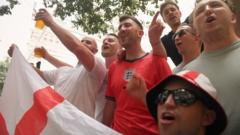
Thousands of England fans are pouring into Dallas for the match against Croatia. Mainstream sports media is running the predictable narrative. They are painting pictures of a global soccer melting pot, praising the local economy, and celebrating the "unprecedented fusion" of European supporter culture and Texas hospitality.
It is a comforting story. It is also entirely wrong.
The sports press is looking at the raw numbers of ticket sales and airport arrivals and mistaking logistical success for a cultural triumph. I have spent fifteen years embedded in European football structures and sports tourism. I have watched corporate suits try to package and ship organic fan culture across oceans. It fails every single time.
You cannot simply drop fifty thousand chanting, hyper-tribal English supporters into a car-dependent, sprawling metroplex and expect a genuine football atmosphere. What you get instead is a sterilized, corporate simulation of fandom. It is a theme park version of the beautiful game, and the fans are paying thousands of dollars for the privilege of being the props.
The Geography of Fandom: Why AT&T Stadium Kills the Matchday Experience
The fundamental flaw in the "fans arrive in Dallas" narrative is a failure to understand the spatial mechanics of football culture.
In Europe, the matchday is a linear, pedestrian journey. It is a progression from the local pub, through tight urban streets, directly into a stadium integrated into the community fabric. It is tight. It is loud. It is claustrophobic.
Dallas is built on a completely different philosophy.
The Arlington Isolation Ward
The game isn't even in Dallas proper. It is in Arlington. This is an entertainment zone surrounded by a sea of asphalt parking lots.
- The Car Dependency Trap: European fans are used to public transit networks that dump them at the turnstiles. In Texas, they are forced into rideshare surges or renting cars they do not want to drive.
- The Death of the Organic March: You cannot have a traditional fan march to the stadium when walking involves crossing an eight-lane highway in 90-degree heat next to a strip mall.
- The Tailgate Disconnect: Texas tailgating is an elite art form. It is stationary, food-centric, and relaxed. English fan culture is kinetic, fluid, and vocal. The two do not mix; they merely tolerate each other in the same parking lot.
When you strip away the urban density that feeds football animosity and passion, you change the psychology of the crowd. The chants become echoey. The energy dissipates into the vast Texas sky long before it reaches the stadium gates.
The Economic Myth of the Traveling Supporter
Local news outlets are salivating over the projected economic impact of these arriving fans. They look at hotel bookings and pub takeovers in Deep Ellum and declare it a windfall.
Let's look at the actual numbers. The average traveling English tournament fan does not spend money the way a corporate convention attendee does. They spend it almost exclusively on cheap beer and supermarkets.
"The economic injection from international football tournaments is frequently overstated because it replaces regular domestic tourism and concentrates spending within a microscopic radius of corporate partners." — Professor Stefan Szymanski, author of Soccernomics.
The money isn't flowing into the local Dallas economy. It is flowing into international hotel chains, major airlines, and FIFA-vetted concessionaires inside the stadium. The local bar owner who stocked up on extra kegs might see a weekend spike, but when you factor in the city's infrastructure strain, policing costs, and the displacement of regular weekend commerce, the net benefit is practically a wash.
Deconstructing the PAA: "How will England fans handle the Dallas heat?"
People are asking the wrong question. They worry about the physical toll of the Texas climate on Northern European fans.
The heat isn't the problem. Air conditioning is the problem.
The match will be played under the retractable roof of AT&T Stadium, shielded from the elements. But this climate-controlled environment introduces a sterile acoustic dynamic. The stadium is massive, designed for the booming bass of American football production, not the sustained, polyphonic singing of European crowds. The sound gets swallowed by the cavernous roof structure. The fans will be sweating less from the heat and more from the sheer frustration of trying to get a chant going in a building that behaves acoustically like an aircraft hangar.
Stop Trying to Americanize the Crowd Experience
The organizer's biggest mistake is trying to manage the atmosphere. They treat a World Cup fixture like an NBA game.
They blast pop music through the PA system until the exact second of kickoff. They deploy t-shirt cannons. They put artificial prompts on the jumbotron telling the crowd to "Get Loud."
This is an insult to the intelligence of the fans arriving from London, Manchester, and Leeds. European football culture is entirely self-regulated. The crowd dictates the narrative of the match, not a stadium DJ. By attempting to curate the entertainment, the venue operators are actively suppressing the very atmosphere they promised to deliver.
The downside of my critique is obvious: people want to have fun, and many will enjoy the spectacle regardless. But we must stop pretending this is the authentic pinnacle of the sport.
If you are one of the fans who just landed at DFW, stop trying to recreate Wembley in North Texas. It will not work. Don't look for traditional pubs; they are pale imitations. Instead, lean into the absurdity of the venue. Buy the brisket. Rent the oversized truck. Accept that you are inside a high-dollar corporate experiment, and pray that the football on the pitch compensates for the plastic reality on the concourse.
Get in your Uber. Pay the surge pricing. Sit in the traffic on I-30. Just don't call it football.