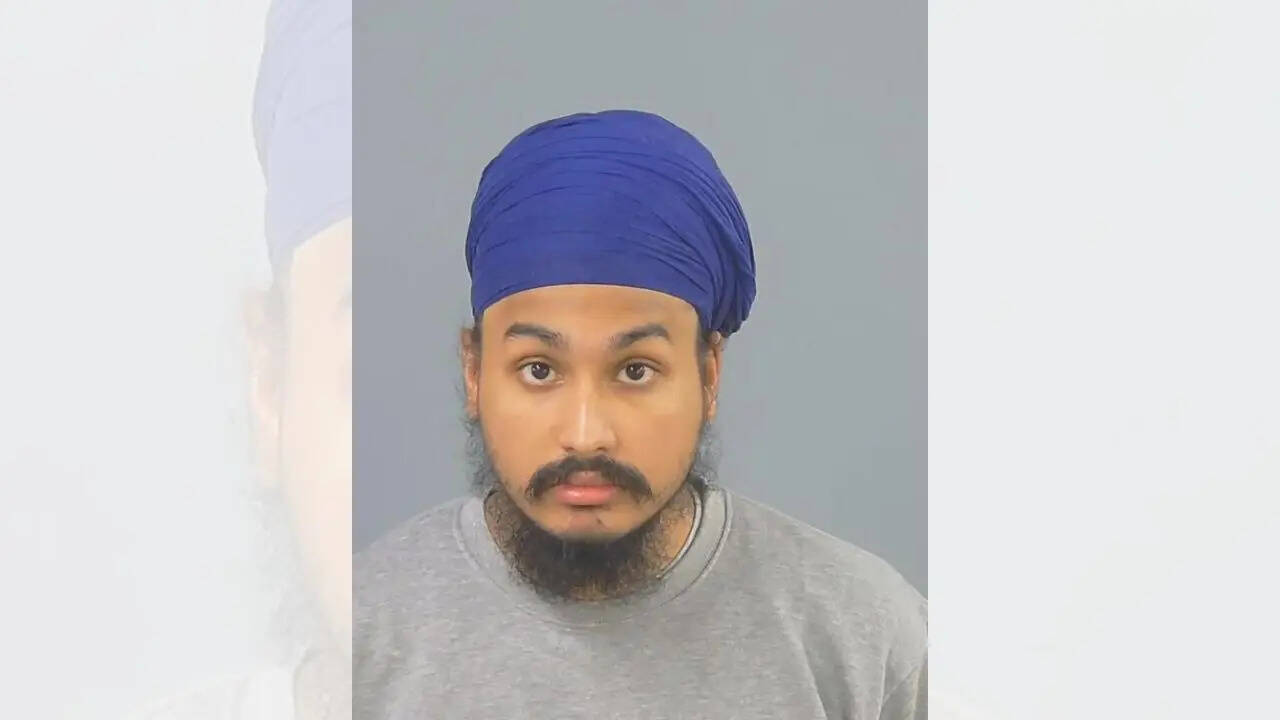
The public is being sold a lie about how justice works. Following the conviction of Vickrum Digwa for the murder of Henry Nowak, the predictable outrage machine immediately spun into gear. A 21-year minimum term was handed down. Within days, the Attorney General’s office referred the sentence to the Court of Appeal under the Unduly Lenient Sentence (ULS) scheme. The media commentary followed a tired, copy-paste script: the judge was too soft, the system failed the victim, and true justice demands a higher number on a piece of paper.
This reactionary reflex misses the mechanics of criminal jurisprudence entirely. For an alternative perspective, read: this related article.
Demanding that appellate courts ratify emotional vengeance under the guise of correcting legal error is a systemic trap. The ULS scheme was designed as a safety valve for manifest judicial failures, not a tool to pacify public anger or rewrite the delicate calculus of sentencing guidelines. Looking closely at the legal framework reveals that raising the baseline for minimum terms does not deter violent crime, does not fix systemic judicial delays, and actively breaks the integrity of the judiciary.
The Mirage of Deterrence Through Numbers
The core argument for extending Vickrum Digwa’s sentence rests on a flawed premise: that a longer minimum term somehow satisfies the public interest or deters future offenders. It does neither. Further coverage on this trend has been published by Al Jazeera.
Sentencing in murder cases is governed strictly by the Criminal Justice Act 2003. For an adult offender where the weapon was not brought to the scene, the starting point for a life sentence minimum term is 15 years. When a knife or weapon is taken to the scene with intent, it starts at 25 years. The trial judge weighed the aggravating and mitigating factors to arrive at 21 years. That is six years above the standard starting point for a non-weapon baseline murder.
To call this "unduly lenient" is a distortion of English law. The Court of Appeal has established a extraordinarily high bar for what qualifies as unduly lenient. In the landmark case of R v Attorney General’s Reference (No 4 of 1989), the court made it clear that a sentence is not unduly lenient simply because it is at the lower end of the judge's available discretion. It must fall completely outside the range of sentences that any judge, reasonably seized of the facts, could have passed.
The public confuses a "minimum term" with the actual time served. Digwa received a life sentence. He will never be released unless the Parole Board deems him safe—a process that often takes years, sometimes decades, beyond the tariff expiration date. Even if released, he remains on license for the rest of his life, subject to immediate recall for the slightest infraction. A 21-year tariff is a massive chunk of human existence, not a slap on the wrist.
Why the Attorney General is Playing Politics
The ULS scheme is increasingly being hijacked as a public relations shield for politicians. When a high-profile case triggers a localized media storm, the Attorney General faces immense pressure to intervene. Referring a case to the Court of Appeal costs the government very little capital, but it buys temporary reprieve from tabloid headlines.
This political posturing creates a dangerous feedback loop:
- It undermines judicial independence: Trial judges spend weeks listening to live evidence, observing witness demeanor, and absorbing the micro-nuances of a case. The Attorney General reviews a paper file and reacts to public sentiment.
- It creates false hope for grieving families: Relatives are led to believe that the Court of Appeal will routinely tack on an extra decade. In reality, the appellate court rejects the vast majority of ULS references because trial judges rarely make fundamental legal errors.
- It distorts the sentencing landscape: If the Court of Appeal constantly ratchets up sentences to appease the political climate of the day, the statutory starting points established by Parliament become completely meaningless.
Consider the reality of the Crown Court ecosystem. Having spent years tracking how these decisions play out behind closed doors, it is evident that the appellate courts are highly resistant to second-guessing the trial judge's instinct. The system is designed to defer to the person who sat in the room, not the politicians looking at a computer screen.
Dismantling the Public Expectation
People also ask: Why do some murderers get 15 years while others get 30?
The answer lies in the strict statutory grid, not judicial whim. The law separates murders into distinct tiers based on premeditation, terrorism, child victims, and sexual motivation. When the public screams for a 30-year minimum for a domestic or spontaneous murder, they are demanding that the law treat a heat-of-the-moment crime the same way it treats an organized contract killing.
If you flatten the hierarchy of sentencing, you remove any incentive for an offender to stop mid-act. If the legal penalty for a single, tragic escalation is identical to a prolonged, calculated torture-murder, the law loses its internal logic and its ability to proportion punishment to culpability.
The hard truth nobody wants to admit is that lengthening sentences does absolutely nothing to fix the broken machinery of the justice system. The Crown Court backlog sits at an all-time high. Victims wait years just to see a trial begin. Prisons are overflowing to the point of collapse, forcing the early release of non-violent offenders just to keep the lights on. Spending state resources and appellate court time fighting over whether a tariff should be 21 years or 25 years is rearranging deckchairs on a sinking ship.
The Cost of the Disruption
Admitting the flaws in the ULS panic requires accepting an uncomfortable reality: justice is not an emotional ledger that can be perfectly balanced by adding more time to a prison sentence.
The downside of defending a 21-year sentence is obvious. It looks cold. It sounds like a defense of an individual who committed a horrific act of violence. It offers zero comfort to the family of Henry Nowak, who have suffered an unimaginable loss. But the alternative is far worse. If we allow public outrage and political opportunism to dictate the length of life sentences, we abandon the rule of law in favor of the rule of the crowd.
The trial judge in the Digwa case followed the law, applied the guidelines, and delivered a punishing, multi-decade sentence. The referral to the Court of Appeal is not an act of legal correction; it is an act of political theater.
Stop demanding that the courts fix societal fractures with longer prison tariffs. The system didn't break because Vickrum Digwa got 21 years. The system breaks when we pretend that changing that number to 24 satisfies anything other than a fleeting headline.