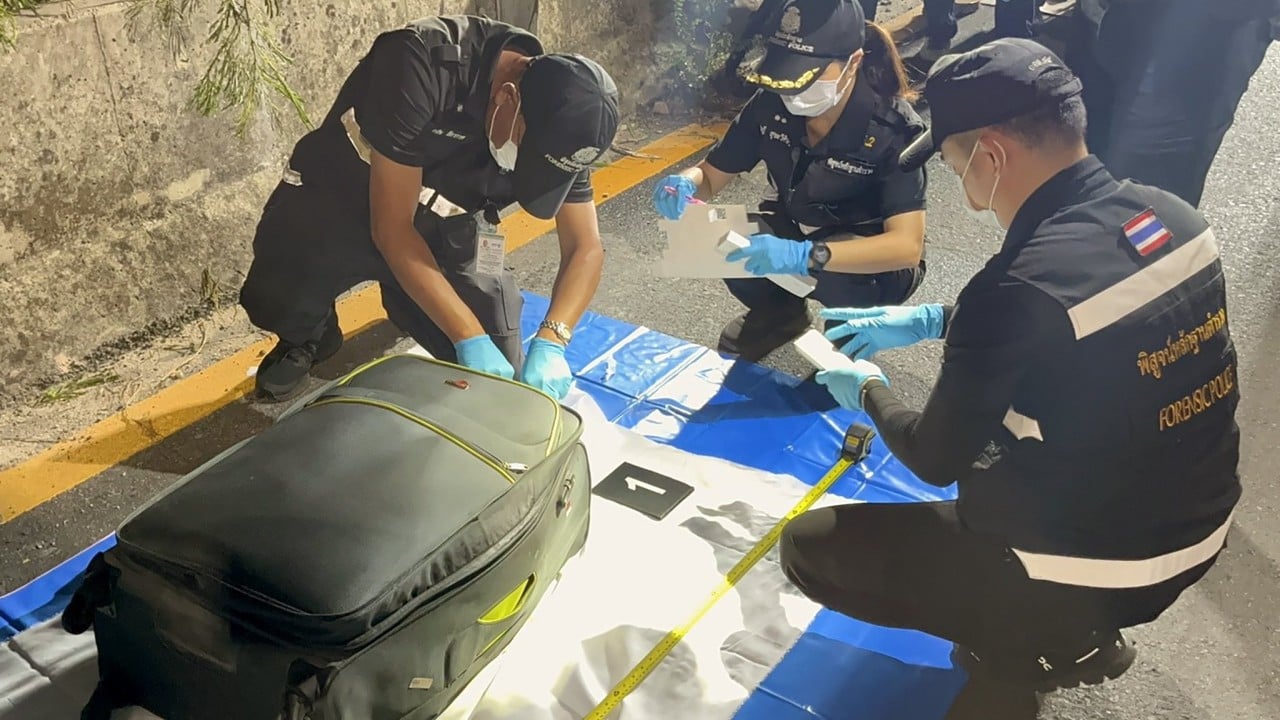
The brutal murder of 17-year-old Thunchanok "Cake" Donhomla, whose naked body was discovered stuffed inside a suitcase near a Pattaya railway track, has exposed a deep structural crisis within Thailand's mass tourism model. Beyond the immediate tragedy, the arrest of 45-year-old Australian national Simon Peter Carman at Bangkok’s Suvarnabhumi Airport reveals a systemic breakdown in safety, visa vetting, and local law enforcement. While the world views Pattaya as a glittering seaside escape, a look beneath the surface shows how recent aggressive visa-relaxation policies intended to boost economic growth have inadvertently compromised the quality and safety of foreign arrivals.
The Tragic Mechanics of an Avoidable Catastrophe
The final hours of Thunchanok Donhomla outline a chilling sequence that highlights severe vulnerability. Having arrived from her home province of Kalasin in northeastern Thailand just a week prior, she met Carman on Jomtien Beach. CCTV footage later captured them holding hands in a condominium lobby early Thursday morning. It was the last time she was seen alive. Her final text message to a friend read, "Don't worry I already arrived in the room. It's messy."
Hours later, the same surveillance systems recorded Carman leaving the building alone, struggling to transport a large, dark-colored suitcase on the back of a motorcycle. He rode to a deserted, grassy area near a railway line, dumped the cargo, and attempted to flee the country on a flight to Australia before police intervened.
What transforms this tragic event from an isolated criminal act into a broader institutional failure is what the investigation has uncovered since. Pattaya City Police Station Superintendent, Police Colonel Anek Srathongyoo, confirmed that investigators are now cross-checking Carman’s background against two unsolved cold cases from the past two years.
In both historical instances, women connected to the region's nightlife economy were found dead, stripped naked, and packed into suitcases dumped in the neighboring districts of Huay Yai and Ban Chang. The striking similarity in the crime scenes suggests a terrifying possibility. A predatory actor may have operated undetected within the tourist zone for an extended period, moving through the loopholes of local surveillance.
The Loophole in the Border Control Strategy
The core of the problem lies in the ongoing conflict between Thailand's economic dependence on tourism and its border security infrastructure. In an effort to recover from global economic slowdowns, Thai authorities slashed barriers to entry, offering extended visa-free stays and simplified extension processes. Carman had entered the kingdom on a standard tourist visa in December and comfortably extended his stay, settling into a one-year condominium lease in Jomtien Beach.
This low barrier to entry has altered the demographics of the region's long-stay expatriates. Local business operators and long-term residents are noticing a distinct shift. Nattakamol Chartmontri, a beachfront massage therapist with two decades of experience in Pattaya, observed that the rapid expansion of easy visa schemes and digital tracking loopholes has fundamentally lowered the quality of foreign arrivals, resulting in a noticeable rise in petty crime, public brawls, and serious violence.
The current screening system lacks real-time, cross-border digital integration. A foreigner can easily enter the country on a tourist visa without a thorough background check or verification of criminal history in their home country, provided they do not trigger a red flag on an Interpol database. When local police searched Carman's rented apartment after his arrest, they found little more than a copy of an old passport and a basic rental contract. The lack of centralized documentation on short-term foreign renters makes it highly difficult for local law enforcement to track high-risk individuals before a major incident occurs.
Law Enforcement’s Reactive Posture
While Pattaya police moved quickly once a missing person report was officially filed by the victim’s friend, the structural environment remains entirely reactive. The local nightlife and beach economies run on informal arrangements, where vulnerable minors from impoverished rural provinces like Kalasin are frequently exposed to high-risk environments without adequate state protection.
Tourist Arrival Vetting Loophole:
[Inbound Foreign Traveler]
     │
     ▼
[Basic Passport Scan (No Deep Criminal Background Check)]
     │
     ▼
[Unregulated Short-Term Condo Rental / Informal Economy Accommodation]
     │
     ▼
[Zero Local Law Enforcement Monitoring Until a Incident Occurs]
The underlying reality of Pattaya’s tourism ecosystem is that it thrives on a lack of regulation. Condominium buildings feature strict private security gates that keep out local police, yet they frequently allow unmonitored short-term sub-letters and foreign guests to come and go with minimal scrutiny. In this instance, a friend of the victim actually managed to enter Carman's room to look for her before police secured the scene, finding the mattress stripped of its bedding and clothing piled on the floor. The fact that an independent civilian could access a crime scene before formal forensics highlights the critical gaps in how these tourist zones operate.
The Path to Structural Reform
Addressing this issue requires looking beyond individual tragedies and implementing deep institutional changes. True reform requires a total overhaul of how the state manages foreign visitors.
- Mandatory Digital Registration: Implementing a strict, immediate digital registration link between landlords, property management systems, and local immigration offices for all foreign nationals leasing properties, regardless of stay duration.
- Biometric Integration: Connecting entry checkpoints directly with expanded international criminal databases to flag individuals with histories of violent offenses before visas are approved or extended.
- Targeted Social Support: Deploying dedicated municipal youth protection units along tourist corridors to intervene in high-risk zones, keeping minors out of unregulated nightlife areas.
Relying on reactive policing and public mourning will not prevent future tragedies. Until Thailand balances its drive for high tourist numbers with strict border enforcement and proactive local regulation, the human cost of unmonitored tourism will continue to fall on its most vulnerable citizens.