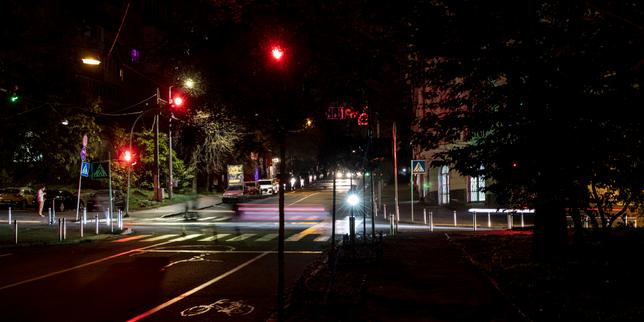
The lights across Kyiv flickered, then died, plunging millions into an artificial midnight as heavy Russian missile and drone barrages systematically dismantled what remained of the capital's shattered transformer substations.
This is the grim backdrop against which the latest round of high-stakes diplomacy unfolds. While Ukrainian civilians navigate another winter of freezing apartments and rolling blackouts, political operatives and special envoys move between Washington, Moscow, and European capitals to shape a peace framework that grows more contentious by the day. You might also find this related story interesting: Why Student Loans Need Minimum Entry Standards Now.
The juxtaposition is stark. On one side of the ledger lies the raw, grinding attrition of infrastructure warfare, where energy grids serve as primary coercive instruments. On the other side sits a frantic diplomatic track driven by United States intermediaries seeking to force a breakthrough before geopolitical realities shift beneath their feet.
Understanding why these parallel tracks—escalating blackouts and fast-tracked negotiations—are happening simultaneously requires looking past the public rhetoric of solidarity and examining the cold mechanics of leverage. As highlighted in recent reports by The New York Times, the effects are widespread.
The Strategy of Sub-Zero Coercion
Moscow's targeting of Ukrainian energy assets is not random operational destruction. It is a calculated methodology designed to break civic endurance ahead of diplomatic pressure points. When generation capacity collapses and heating systems fail, the psychological and economic drag on the state multiplies exponentially.
Military analysts note that every transformer destroyed shifts the domestic calculus in Kyiv. It forces the government to weigh the immediate survival of its civilian population against long-term territorial integrity.
By intensifying missile assaults precisely when U.S.-led diplomatic initiatives gather momentum, the Kremlin signals its core proposition: concessions must be wrung from exhaustion. The blackouts are not separate from the negotiations; they are an active clause in Moscow's unwritten opening bid.
Yet, treating this winter offensive merely as an indicator of impending Ukrainian collapse misses the resilience built into emergency repair teams and decentralized micro-grids over years of conflict. The lights go out, but they are patched back together within days, creating a grueling cycle of destruction and restoration that defines daily existence for millions.
The Envoys and the Exclusion Zone
As the grid flickered out, diplomatic engines whirred behind closed doors. U.S. presidential envoys, operating outside traditional diplomatic channels, have crisscrossed the globe to pitch new security architectures and reconstruction blueprints.
Yet these talks are fraught with structural tension. European capitals have watched with growing alarm as major framework ideas are floated, debated, and modified in bilateral or trilateral formats that frequently sideline Brussels.
The core friction point involves sovereignty versus security guarantees. Washington's intermediaries push for frameworks that attempt to reconcile incompatible demands: Russian insistence on non-bloc status and territorial adjustments, versus Kyiv's refusal to sign away land or accept permanent vulnerability.
European Union leadership has balked at arrangements negotiated over their heads, pointing out a fundamental contradiction. Sanctions relief and long-term economic reconstruction require European buy-in and European capital. A security architecture designed without the direct, foundational consent of the continent it affects is built on shifting sand.
The Illusion of Quick Resolution
The narrative that a swift diplomatic intervention can freeze the conflict ignores the deeply entrenched military objectives of both belligerents.
Russia's leadership continues to press for structural limits on Ukraine's armed forces and international recognition of annexed regions, goals that Kyiv views as an existential surrender. Meanwhile, Ukraine's allies face shifting domestic political landscapes, including legislative changes in Washington that could alter the calculus of foreign assistance.
Diplomatic theater often outpaces battlefield reality. While negotiators pose for cameras in neutral hubs and brief reporters on tentative humanitarian agreements—such as prisoner exchanges—the actual terms for a lasting peace remain miles apart.
The Cost of Ambiguity
The danger of accelerated, opaque diplomacy lies in the creation of false dawns. When high-level meetings are announced with immense fanfare against a backdrop of collapsing power grids, public expectations rise and crash with every missile strike.
A sustainable end to the war cannot be hammered out solely through hurried shuttle diplomacy that treats territory and security guarantees as abstract variables on a spreadsheet. Without enforceable, ironclad mechanisms that prevent future aggression, any paper agreement signed in the shadow of a blackout will merely serve as an intermission.
The generators hum in the courtyards of Kyiv apartment blocks, casting flickering yellow light against the concrete as another sub-zero night settles over the city. Inside, families check schedules for the next scheduled outage. Outside, the envoys board their flights for the next capital, leaving the heavy silence of an unresolved war hanging in the freezing air.
US Envoy Says 'Progress Made' In Peace Talks With Russia
This video provides an overview of the ongoing diplomatic efforts and statements by U.S. envoys following high-level discussions regarding the conflict in Ukraine.


