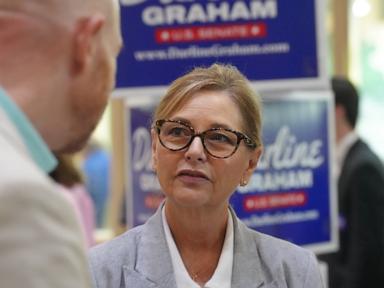
Politics moves fast in South Carolina. Senator Darline Graham just found herself thrust from public administration straight onto the national stage.
Appointed to fill the remainder of her late brother Lindsey Graham's Senate term, she isn't wasting any time. During her political debut before hundreds of Republican voters in Lexington, she made her priorities crystal clear. She wants to champion Donald Trump's policy platform. Learn more on a related topic: this related article.
If you are wondering how a relative political newcomer plans to survive a crowded special primary election, look no further than her alignment with the White House and the Trump wing of the party.
Stepping Into the Spotlight
Most people don't expect to inherit a United States Senate seat. Graham spent years heading the South Carolina Commission for the Blind, far away from legislative drafting rooms and televised floor debates. But following her brother's sudden passing, Governor Henry McMaster appointed her to the interim seat, and President Trump quickly urged her to run for the full term. Additional journalism by NBC News delves into comparable perspectives on the subject.
Standing at the podium during her weekend stump speech, she admitted she never planned on a career in elected office.
"I've never had any desire to be a politician," Graham told the crowd. "I'm here today because I'm answering President Trump's call to serve. I want to stand up for South Carolina, and I want to fight for President Trump's agenda."
That message plays well in conservative strongholds, but she faces an uphill battle against seasoned politicians who have spent decades building name recognition across the state.
Navigating a Packed Special Primary Field
The primary clock is ticking down rapidly. With the special Republican primary scheduled for August 11, 2026, Graham has mere days to convince skeptical voters that she belongs in Washington long-term.
She is competing against a heavy-hitting roster of GOP figures, including U.S. Representatives Ralph Norman and Russell Fry, former Governor Mark Sanford, and businessman Mark Lynch. Each challenger brings a distinct flavor of conservatism to the table. Sanford is hammering home the dangers of deficit spending, while Norman and Fry are pushing hard for legislative items like the SAVE America Act.
Despite her lack of legislative experience, Graham managed to eke out a win in an informal straw poll following the Lexington candidate event. Voters are clearly curious, but many are also grappling with a compressed timeline that makes heavy demands on their decision-making process.
Betting Everything on Presidential Backing
In modern Republican primaries, an endorsement from Donald Trump carries immense weight. Graham's entire strategy leans heavily into this dynamic. By framing herself as the direct vessel for Trump's policy goals—ranging from stricter election integrity measures to aggressive fiscal oversight—she hopes to bypass her lack of a traditional political résumé.
Voters like Charles Brentnell noted that alignment with Trump's demand to keep the Senate working through planned recesses to pass vital bills is a major selling point. Graham has readily echoed those demands, positioning herself as a relentless worker ready to lock horns with institutional delays.
Whether grassroots conservatives will prioritize her personal connection to her brother's legacy and Trump's backing over candidates with years of voting records remains to be seen. The upcoming weeks will test whether raw loyalty and an outsider perspective can outweigh decades of machine politics in South Carolina. Keep a close eye on the August 11 ballot box to see how the gamble pays off.