Silence.
In Seoul, on the third Thursday of every November, the air itself seems to hold its breath while half a million teenagers decide the rest of their lives with a wooden pencil and a scantron sheet. Construction sites shut down their jackhammers. Planes are grounded at Incheon and Gimpo during the thirty-five-minute English listening section so jet engines do not drown out a single syllable from a classroom speaker. Police cruisers sit idling at subway exits with their blue lights flashing, ready to ferry panicked, oversleeping eighteen-year-olds through morning gridlock at ninety miles an hour. You might also find this related article interesting: The Manchester Concert Evacuation Exposed a Dangerous Flaw in Modern Crowd Control.
Imagine, for a moment, a hypothetical student named Min-jun sitting in the third row of a fluorescent-lit classroom in Gangnam. His hands are slick with sweat, though the radiator beneath the window is cold. He has spent twelve years preparing for this single eight-hour marathon—the Suneung, South Korea’s College Scholastic Ability Test. For three years of high school, he has slept four hours a night, eaten convenience-store triangle kimbap between afternoon classes and late-night cram schools, and watched his parents drain their savings on private tutors. Every expectation of his family, every metric of his self-worth, has been compressed into the next four hundred and eighty minutes.
Now imagine a proctor walking down the aisle, stopping beside Min-jun’s desk, and raising a handheld metal detector to his chest. Beep. As reported in detailed articles by The Guardian, the implications are notable.
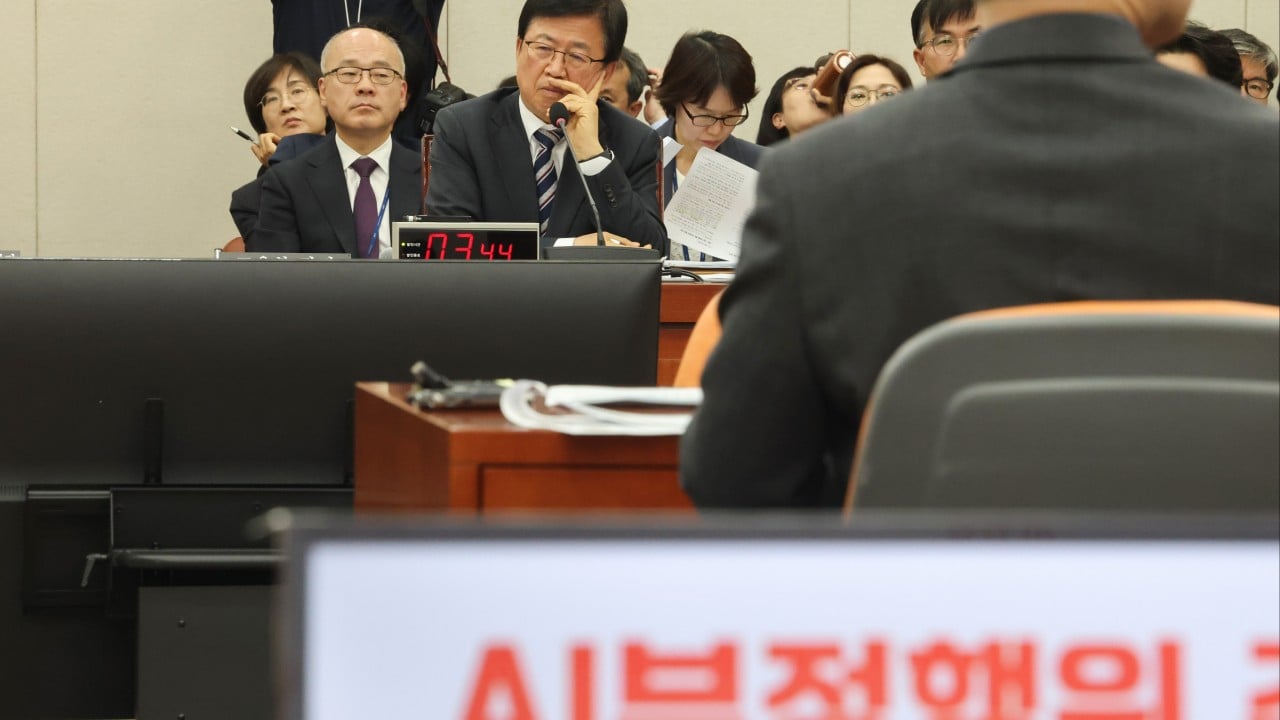
When news broke that South Korea’s education minister had stepped down amid a firestorm over invasive anti-cheating exam checks, the international headlines treated it like a bureaucratic footnote. A minister resigned. A policy backfired. Another political career ended in Seoul.
That sterile summary misses the entire earthquake. You cannot understand why a cabinet minister lost their job over a security wand until you understand what happens when a society turns a standardized test into a religion—and then treats its most devout believers like criminals.
The Architecture of High-Stakes Paranoia
To grasp the fury that erupted across South Korea, you have to understand the sheer weight of the Suneung. In the United States or Europe, a college entrance exam is a data point—important, stressful, certainly, but surrounded by essays, extracurriculars, letters of recommendation, and second chances. In South Korea, the Suneung is the bottleneck through which the entire nation’s social mobility is forced. A few points separate a spot at Seoul National University—and a fast track to a conglomerate career at Samsung or Hyundai—from a second-tier provincial college and a lifetime of fighting for precarious contract work.
When the reward is total and the penalty is permanent, the temptation to cheat becomes an existential threat to the state.
For decades, South Korea’s Ministry of Education has waged an escalating technological cold war against exam fraud. The turning point came in 2004, when police uncovered a sprawling, organized cheating ring in Gwangju involving hundreds of students, brokered answers, and smuggled mobile phones. Since that scandal, the rules governing the Suneung have grown steadily more draconian. Analog watches were banned, then digital watches, then mechanical watches—leaving students to stare at a single wall clock at the front of the room. Erasers must be unwrapped. Mechanical pencils are confiscated at the door and replaced with uniform, government-issued writing instruments. Even bathroom breaks require a proctor to escort the student down the hall and sweep the stall with a metal detector before they enter.
As someone who has spent years covering education systems across East Asia, I have watched the atmosphere inside these test centers shift from solemnity to suspicion. I still remember standing outside a high school gate in Seoul before dawn on exam day, watching mothers press warm packs into their children’s hands while tears froze on their cheeks, and thinking how strange it was that the buildings awaiting those teenagers looked less like schools and more like maximum-security facilities.
The ministry thought it was protecting fairness. In a society obsessed with egalitarian competition, the government believed parents and students would forgive almost any intrusion if it guaranteed that nobody gained an illicit edge.
They were wrong.
When Security Crosses Into Humiliation
The breaking point did not arrive through a grand policy manifesto. It arrived in the intimate, claustrophobic space between a nervous teenager and an overzealous test proctor.
Under tightened anti-cheating protocols championed by the Ministry of Education, exam supervisors were instructed to conduct aggressive physical and electronic checks for concealed devices—micro-earpieces, smart transmitters, hidden receivers sewn into clothing. On paper, it sounded like prudent modernization against shrinking spyware. In practice, inside thousands of classrooms across the country, it became an exercise in public humiliation.
Consider what happens next when you hand thousands of anxious teachers and civil servants handheld security wands and tell them their careers depend on preventing a cheating scandal.
Reports began flooding online forums and parent associations within hours of the exam’s conclusion. Female students described being pulled out of their seats in front of their peers and subjected to invasive pat-downs and prolonged wand sweeps across their chests because the underwire in their bras triggered the metal detectors. Others recounted being forced to remove layers of clothing in chilly hallways, or having proctors hover over their desks for minutes at a time, breaking their concentration during the notoriously brutal Korean language and mathematics sections. One student described the metallic whine of the scanner ringing in her ears while the seconds ticked away on the wall clock, her carefully memorized formulas evaporating in a wave of shame and panic.
Think about the psychology of that moment. A test-taker’s working memory is a fragile glass vessel, filled to the brim after years of rote memorization. Shock, embarrassment, or fear acts like a hammer. Once that glass shatters during a timed exam, you do not get those ten minutes back. A year of your life—or tens of thousands of dollars in repeat-year jaesu cram school tuition—vanishes because a proctor misread a clothing fastener.
Parents who had spent years deferring to the ministry’s authority suddenly saw their children not as competitors in a fair race, but as suspects presumed guilty before they ever picked up a pencil.
The Anatomy of a Political Collapse
In South Korean politics, education is the third rail. You can survive an economic slump or a diplomatic misstep, but if you alienate the parents of high school seniors, your tenure is measured in hours.
At first, the Ministry of Education responded with the classic reflexes of an insulated bureaucracy. Spokespeople cited the necessity of strict anti-cheating exam checks to preserve national fairness. They pointed to isolated incidents of past tech-enabled fraud. They offered dry, procedural apologies for "any inconvenience caused during necessary security procedures."
Inconvenience. That single word acted like gasoline on dry timber.
To a teenager who had thrown up from anxiety that morning, being patted down in front of thirty classmates was not an inconvenience. To a mother who had prayed at a Buddhist temple or a Christian church for a hundred consecutive days leading up to the test, hearing the government minimize her daughter’s distress felt like an unforgivable betrayal.
Within days, the backlash spilled from parent chat rooms onto the front pages of major Seoul dailies and the floor of the National Assembly. Lawmakers from both the opposition and the ruling party realized the toxic arithmetic immediately: nobody wins an election by defending invasive searches of teenagers. Student petitions racked up hundreds of thousands of signatures. Teachers’ unions joined the chorus, pointing out that the ministry had dumped impossible policing duties onto educators without clear boundaries, turning mentors into prison guards and leaving them exposed to legal liability when things went wrong.
I confess that watching the scandal unfold brought a strange mix of vindication and dread. For years, critics had warned that South Korea’s obsession with procedural purity was hollowing out the humanity of its classrooms. Yet even seasoned observers were stunned by the speed with which the outrage metastasized. It was no longer a debate about metal detectors. It became a referendum on whether the state viewed young people as citizens worthy of dignity or merely as biological data-processing units to be sorted, scanned, and ranked.
Cornered by relentless parliamentary questioning, plummeting approval ratings, and growing calls from within the presidential office to contain the damage before it poisoned the broader administration, the education minister had nowhere left to hide.
The resignation letter was brief. The political message was unmistakable.
The Illusion of the Frictionless Meritocracy
Why does this story matter far beyond the Korean peninsula? Because South Korea is simply the highest-resolution mirror of a trap every modern meritocracy is walking into.
Think of the Suneung anti-cheating apparatus as an autoimmune disease. An autoimmune disorder occurs when the body’s defense system becomes so hyper-vigilant, so terrified of foreign invaders, that it begins attacking healthy tissue. South Korea built its modern economy on the promise of a pure, uncorrupted meritocracy—a system where a farmer’s child could rise to the highest court in the land solely through exam scores. To protect that sacred promise, the state built an immune system of rules, cameras, signal jammers, and metal detectors.
Eventually, the immune system forgot what it was protecting. It started attacking the children themselves.
We see quieter versions of this pathology everywhere. In Western universities, remote proctoring software uses eye-tracking algorithms and room-scanning webcams to flag students as potential cheaters if they glance away from their monitors to think, or if a roommate walks behind them in a cramped apartment. In corporate workplaces, keystroke loggers and surveillance tools measure productivity by treating employees like untrustworthy machines. Everywhere, institutions reach for mechanical control whenever trust grows thin.
The South Korean education minister’s downfall exposes the hard limit of that logic. You cannot engineer trust with a metal detector. When a system demands total perfection from young people while offering them zero presumption of innocence, the system eventually cracks under its own hypocrisy.
What Remains After the Resignation
A minister is gone. Another will soon be nominated, sworn in, and handed the same impossible briefcase.
Because here is the uncomfortable truth that no resignation can erase: the metal detectors were only a symptom. The disease is the brutal, winner-take-all architecture of the exam itself. As long as one single test in November determines who gets the good jobs, the good marriages, and the good life in Seoul, the pressure inside those classrooms will remain volcanic.
Next November, the planes will still be grounded over Incheon. The police cars will still idle outside the subway stations with their sirens ready. Half a million eighteen-year-olds will still file into cold classrooms at dawn, carrying their clear plastic bags of approved pencils and unwrapped erasers.
And somewhere in the third row, a teenager will sit down at a wooden desk, take a shallow breath, and pray that nothing in their pocket makes a sound.