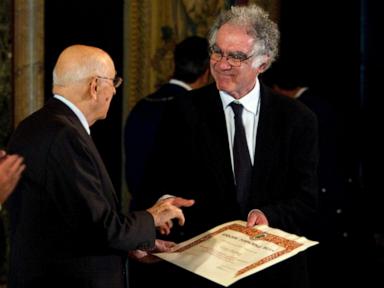
The passing of Carlo Ginzburg at the age of 87 marks more than the end of a brilliant academic career. It exposes a growing, quiet crisis in how modern society preserves, interprets, and values human memory. Ginzburg did not merely study the past; he inverted it. By championing microhistory, he turned the historical lens away from kings, popes, and treaties, focusing instead on the obscure, the eccentric, and the forgotten. His work proved that the margins of history hold the key to understanding the center. Today, as corporate algorithms and big-data analytics increasingly reduce human experience to massive, flattened trends, Ginzburg’s investigative method is becoming an endangered art form.
The mainstream obituaries will routinely praise his most famous book, his academic appointments, and his intellectual pedigree as the son of anti-fascist intellectuals Leone and Natalia Ginzburg. They will frame his life as a neat success story within the secure walls of European academia. That narrative misses the point entirely. Ginzburg was an intellectual insurgent. His methodology was born out of a profound skepticism toward official narratives, a trait forged in the shadows of mid-century Italian totalitarianism. To understand his true legacy, one must look beyond the standard accolades and look directly at how he extracted truth from the very institutions designed to crush it.
The Inquisition as an Unwitting Archive
History is written by the winners, but Ginzburg discovered that the winners are often meticulous bureaucrats who leave behind a paper trail of their victims. His breakthrough came when he realized that the records of the Roman Inquisition could be read against the grain. Instead of viewing these trial transcripts merely as records of institutional power, he treated them as windows into the minds of ordinary people who otherwise left no diaries, letters, or manifestos.
Consider his definitive work on the 16th-century Miller known as Menocchio. Menocchio was not a king or a philosopher. He was an ordinary man in a small village who possessed a fiercely independent mind and an unusual collection of books. When hauled before the inquisitors for heresy, Menocchio did not cower. He explained his unique cosmology, famously declaring that the world emerged out of chaos just as cheese is formed from milk, and that God and the angels simply appeared in this cosmic mix like worms in cheese.
A conventional historian might have dismissed Menocchio as a lone madman or a minor footnote. Ginzburg saw something else entirely. He recognized that Menocchio’s bizarre theology was a complex mixture of popular oral traditions and a highly literal reading of the few vernacular books he could find. By analyzing the transcripts with the intensity of a detective, Ginzburg demonstrated how a working-class individual in the early modern era filtered elite culture through the lens of traditional agrarian life.
This approach required a specific kind of archival patience. It meant spending months deciphering difficult handwriting, comparing minor linguistic variations, and identifying the subtle ways an accused heretic tried to outmaneuver his interrogators. Ginzburg showed that the inquisitorial files were not just records of repression. They were transcripts of a forced cultural dialogue. The inquisitors asked questions based on elite, dogmatic theology, while the accused answered using the grammar of popular culture. The friction between those two worlds is where true history resides.
The Clue Method and the Hunter's Instinct
To appreciate Ginzburg’s impact, one must look at his distinct approach to historical evidence, which he famously compared to the methods of Sherlock Holmes, Sigmund Freud, and the art critic Giovanni Morelli. This was the science of the small. He argued that true insight often comes from observing the marginal details, the minor errors, and the involuntary gestures that an individual or an institution forgets to conceal.
The Anatomy of an Anomaly
Traditional sociology and quantitative history rely on the rule. Ginzburg relied on the exception. His work was based on the premise that a society's deepest tensions are not revealed by its standard, compliant citizens, but by its anomalies.
- The standard approach: Aggregating thousands of data points to find an average behavior pattern.
- The Ginzburg approach: Isolating a single, highly unusual case study to reveal the structural boundaries of what was possible in a given culture.
This was not a rejection of rigorous science; it was an expansion of it. Ginzburg noted that before humanity learned to write, early hunters read the world through clues. A broken twig, a scrap of fur, or a footprint in the mud told a complete story to an experienced tracker. The hunter did not need a statistical average of animal behavior to catch his prey; he needed to understand the specific path of the specific animal he was trailing. Ginzburg brought this hunter’s instinct back into the archives.
This method provided a vital counter-argument to the sweeping, deterministic historical theories of the mid-20th century. While structuralists and orthodox Marxists viewed individuals as mere vectors of economic forces or linguistic systems, Ginzburg restored agency to the individual. He proved that even within the tight grip of an absolute monarchy or a terrifying religious court, human beings retained an astonishing capacity for original thought and resistance.
The Modern Betrayal of Historical Truth
The loss of Ginzburg arrives at a moment when the historical discipline is facing a double-edged sword. On one hand, digitization has made millions of historical documents accessible at the click of a button. On the other hand, the corporate academy has grown obsessed with quantifiable data, predictive modeling, and macro-trends. The individual voice is once again being systematically erased, this time by spreadsheets rather than inquisitors.
We see this clearly in the rise of digital humanities, where algorithms scan thousands of texts to map semantic shifts over centuries. While this macro-view has its uses, it lacks the psychological depth that Ginzburg achieved. An algorithm can tell you how often a word was used in 1580, but it cannot tell you the tone of voice a miller used when he used that word to defend his life. It cannot detect the hesitation of a scribe who pauses before writing down a blasphemous statement.
Furthermore, Ginzburg’s passing highlights a political drift in how the history of the marginalized is written. Today, much of the discourse surrounding historical victimization is abstract and institutional. It treats marginalized groups as monolithic blocks, flattening their internal contradictions and individual eccentricities. Ginzburg did the opposite. He showed that the poor, the illiterate, and the persecuted were not a uniform mass. They were as intellectually complex, fragmented, and stubborn as the elites who ruled over them.
The Peril of Assuming Perfect Knowledge
There is a dangerous tendency among modern analysts to believe that because we have access to more information than ever before, we understand our world better. This is an illusion. Ginzburg’s entire body of work serves as a warning against intellectual arrogance. He constantly reminded his students and readers that history is full of gaps, silences, and deliberate erasures.
In his studies of witchcraft, particularly his investigation of the Benandanti—a group of agrarian visionaries in northern Italy who believed they fought nocturnal battles against witches to protect the crops—Ginzburg showed how elite preconceptions can completely distort reality. The Benandanti did not view themselves as witches. They viewed themselves as defenders of Christ. However, because the inquisitors had a fixed, pre-existing concept of what witchcraft looked like, they spent decades badgering, threatening, and molding the testimonies of the Benandanti until the peasants themselves began to believe they were part of a satanic cult.
This dynamic is not unique to the 16th century. It happens whenever a powerful institution forces a complex human reality into a rigid ideological framework. When we look at contemporary media, corporate structures, or state intelligence operations, we see the same mechanism at play. Powerful entities construct a narrative template and then force individual testimonies to fit within its borders. Ginzburg’s work equips us with the critical tools needed to dismantle these artificial constructs.
Intellectual Courage Over Academic Comfort
Ginzburg was never a comfortable thinker. He consistently picked fights with his peers when he felt that intellectual integrity was at stake. In the late 20th century, when postmodernism swept through humanities departments asserting that truth was entirely relative and history was nothing more than a form of fiction, Ginzburg stood his ground. He rejected the simplistic notion that because historical sources are biased, objective truth is unattainable.
He argued that the job of the historian is to seek proof. A trial transcript might be biased, a witness might be lying, and a document might be forged, but those lies and forgeries are themselves historical facts that require explanation. The historian's task is not to throw up their hands in skeptical despair, but to work harder, dig deeper, and verify relentlessly. He maintained that there is a hard reality to the past that cannot be wished away by literary theory.
| Historical Methodology | Core Focus | Primary Danger |
|---|---|---|
| Traditional Macrohistory | States, leaders, and systemic economic transformations. | Erases the lived experience of ordinary citizens. |
| Postmodern Skepticism | Textual analysis and the relativity of language. | Despairs of finding actual, objective truth. |
| Ginzburg’s Microhistory | The individual anomaly and clue-based archival analysis. | Requires immense time and rare archival depth. |
This dedication to empirical proof combined with imaginative empathy is what separated Ginzburg from the ideological theorists of his generation. He understood that without a fierce commitment to truth, history becomes nothing more than a weapon used by the powerful to justify the status quo.
The true way to honor Carlo Ginzburg is not to build a monument to his memory or write polite, formulaic obituaries that relegate his methods to the past. The way to honor him is to adopt his radical skepticism, his obsessive attention to detail, and his unyielding commitment to the forgotten figures of human history. We must look at our own age of mass surveillance, algorithmic profiling, and cultural polarization, and ask ourselves who are the modern millers whose voices are being drowned out by the noise of the powerful. The archives of our era are being generated every second, and it will take a new generation of historical detectives, possessed of Ginzburg’s relentless hunter’s instinct, to rescue the individual human soul from the digital ash heap.