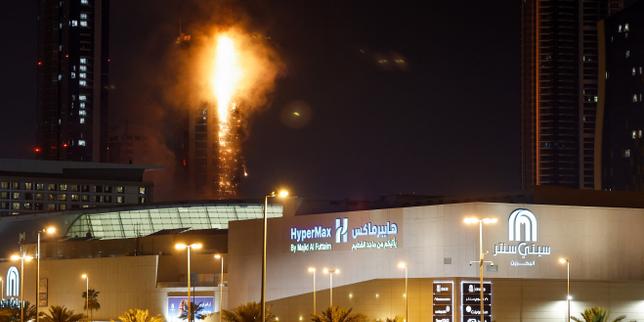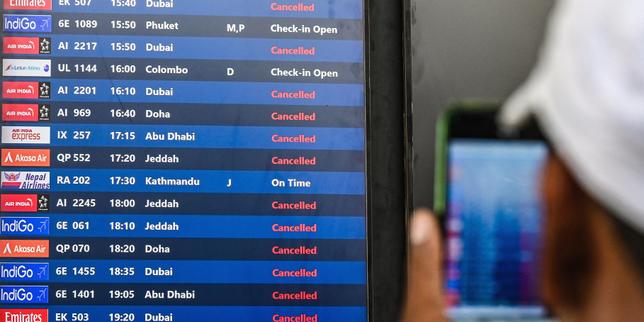
The pre-dawn light over Tehran on February 28, 2026, did more than illuminate the wreckage of the Imam Khomeini International Airport and the smoldering remains of the Natanz enrichment complex. It signaled the formal expiration of the post-WWII legal order. When the United States and Israel launched Operation Epic Fury, they didn't just target the Islamic Republic’s nuclear infrastructure and leadership; they bypassed the United Nations Security Council with a definitive finality that leaves international law in a state of terminal irrelevance.
For decades, the global community operated under the assumption that the use of force required a high bar of "imminent threat" or a collective mandate. By striking Iran while active diplomatic negotiations were purportedly making headway in Geneva, the Trump administration and the Netanyahu government have essentially declared that "preventive war"—striking to stop a future capability rather than an actual attack—is the new standard. This is a radical departure from the established Caroline Doctrine, which requires a threat to be "instant, overwhelming, leaving no choice of means, and no moment for deliberation."
The legal gymnastics used to justify the assassination of Supreme Leader Ali Khamenei and the "obliteration" of nuclear sites rely on a highly elastic interpretation of Article 51 of the UN Charter. The U.S. and Israel argue they are engaged in "anticipatory self-defense," yet their own intelligence assessments as recently as March 2025 suggested Iran was years away from a weaponized nuclear device. We are no longer debating the nuances of law; we are witnessing the raw exercise of power where the rules are written by the victor after the smoke clears.
The Myth of Imminence
The core of the legal controversy rests on the word "imminent." In the world of high-stakes diplomacy, "imminent" used to mean a missile was fueled on the launchpad. Today, the definition has been stretched to include the "potential to develop the potential" to strike. This isn't just a semantic shift. It is a fundamental rewriting of the jus ad bellum—the right to go to war.
Critics and international law scholars, including those at the Global Governance and Security Centre, point out that neither the U.S. nor Israel were under an active armed attack from Iran when the strikes commenced. The justification that this is a "continuation of existing hostilities" dating back to October 7, 2023, is a legal bridge too far for many. In a world where the primary mechanism for collective security, the UN Security Council, is paralyzed by the veto power of the very states initiating the conflict, the law is no longer a shield. It is a post-facto footnote.
Domestic Legal Disarray
While the international community cries foul, the domestic legal front in Washington is equally fractious. President Trump’s decision to authorize a "massive and ongoing" campaign without explicit Congressional approval has reignited a dormant constitutional crisis. The War Powers Resolution of 1973 was designed specifically to prevent this kind of executive overreach, yet the White House's reported "last-minute alert" to the Gang of Eight—the key national security experts in Congress—barely met the spirit, let alone the letter, of the law.
Senators like Tim Kaine have already labeled the strikes a "colossal mistake" and are demanding a vote to block further hostilities. The irony is that the Republican-controlled Senate, while broadly supportive of the "America First" doctrine, is now forced to reconcile that rhetoric with a military campaign that looks strikingly like the "forever wars" Trump once campaigned against.
- Executive Unilateralism: The use of presidential authority to bypass the Article I powers of Congress to declare war.
- Preventive Doctrine: Striking a sovereign state to disrupt a future technological capability rather than an active military threat.
- Regime Change Redux: The explicit call for the Iranian people to "overthrow the regime" echoes the failed policies of 2003, now revived with a more aggressive 2026 playbook.
The Regional Realignment
The legal vacuum created by the strikes is being filled by a new, more dangerous regional reality. Unlike previous exchanges, Iran’s retaliation has not been surgical. It has been a broad, indiscriminate lashing out across the Gulf. By targeting civilian infrastructure in Dubai, Bahrain, and Kuwait, Tehran is signaling that if the Islamic Republic falls, it will take the entire regional economy down with it.
The strategic miscalculation here is that instead of driving a wedge between the Gulf states and the West, the strikes on Gulf airports and oil hubs have galvanized a unified regional response. Saudi Arabia’s approval of the attacks on Iran marks a historic pivot from the tentative détente of 2023. The Gulf Cooperation Council (GCC) is no longer a mediator; it is an active participant in a conflict that is rewriting the security architecture of the Middle East.
The Erosion of Accountability
The most chilling aspect of the 2026 Iran strikes is the precedent they set for other global actors. If the U.S. and Israel can dismantle the leadership and infrastructure of a sovereign state based on the perceived "threat" of a future capability, what prevents other powers from doing the same? The argument that the "global policeman" is simply enforcing its own idiosyncratic version of the Responsibility to Protect (R2P)—punishing a regime for its internal human rights abuses while simultaneously bombing its cities—is a legal contradiction that few outside of Washington and Tel Aviv accept.
International law is only as strong as the consensus to follow it. When the world's most powerful nations treat the UN Charter as an optional guideline, the system collapses. We are moving toward a world where the only "law" is the capability of your missile defense system and the reach of your precision-guided munitions.
The question is no longer whether the strikes were legal—the consensus among global jurists is a resounding "no." The question is whether legality even matters in an age where the rules are rewritten by those with the most to lose and the weapons to win. The 2026 campaign against Iran has effectively buried the 20th-century ideal of a rules-based order. What emerges in its place will be defined not by treaties, but by the raw, unmediated exercise of military force.