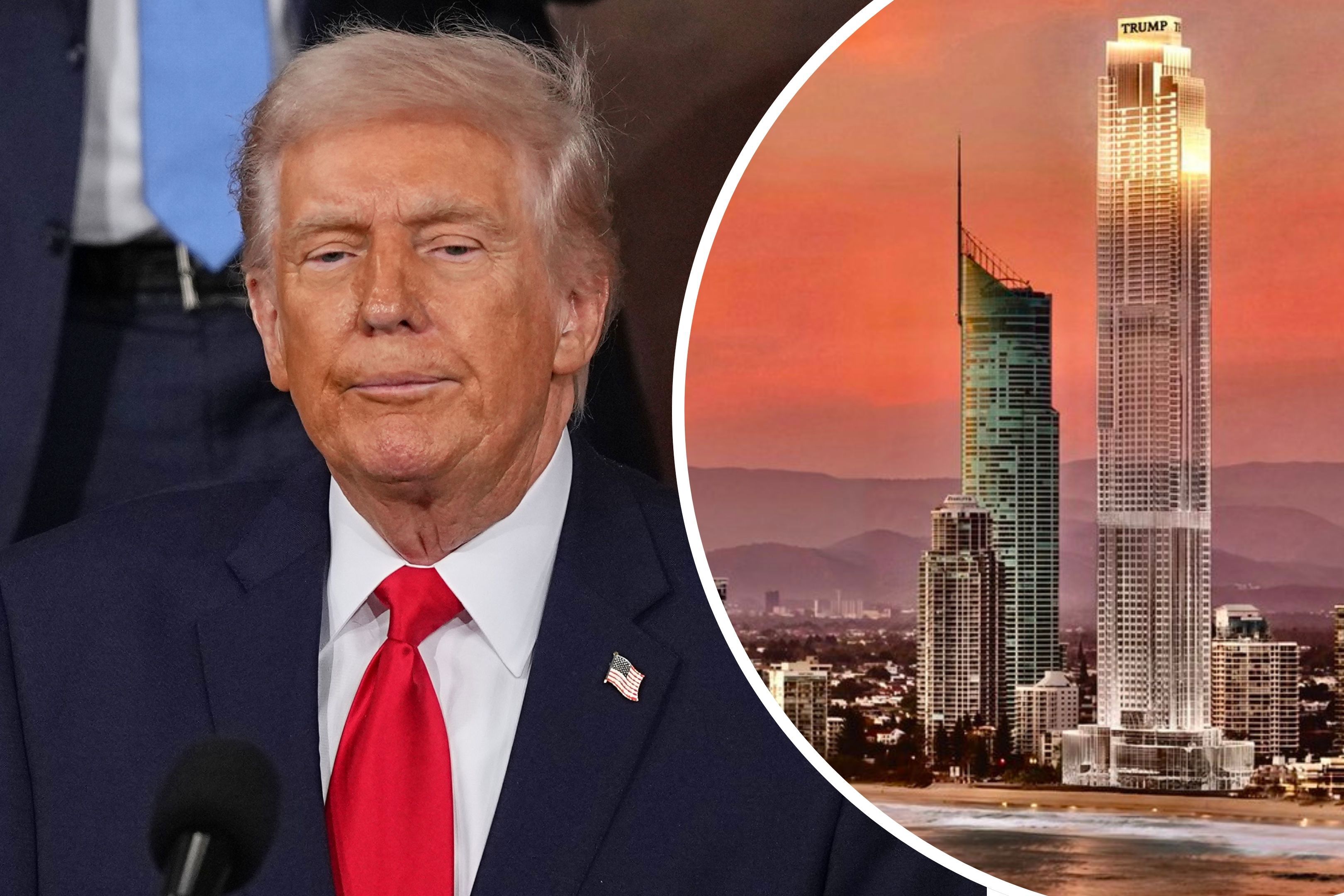
The ambitious dream of a gold-plated skyscraper piercing the Surfers Paradise skyline has collapsed in a flurry of mutual recriminations and finger-pointing. Within just three months of its high-profile announcement, the $1.5 billion Trump International Hotel & Tower Gold Coast project has been unceremoniously scrapped, marking a spectacular failure for the Trump Organization’s first official foray into the Australian market.
While the official narrative from the Trump camp blames a local partner's "failed financial obligations," the reality on the ground in Queensland suggests a far more complex collision of geopolitical fallout, brand toxicity, and the harsh arithmetic of luxury real estate.
Anatomy of a Short Lived Alliance
In February 2026, David Young, CEO of Altus Property Group, stood alongside Eric Trump to announce a 91-storey behemoth that promised to be Australia’s tallest building. It was a project two decades in the making, sparked by a cold call Young made to Ivanka Trump back in 2007. The vision was pure opulence: 270 luxury apartments, a six-star hotel, and a beach club designed to lure the global elite to the "glitter strip."
By May, the honeymoon was over.
The Trump Organization issued a scathing statement, claiming Altus Property Group was unable to meet "the most basic financial obligation" required upon signing. They characterized the partnership as a series of "empty promises." In the world of high-stakes licensing, these are fighting words. Typically, brand licensing deals require significant upfront fees and proof of capital—stumbling blocks that Altus apparently could not clear.
The Toxicity Factor
David Young’s rebuttal shifts the blame from the ledger to the logo. He contends that the Trump brand has become "toxic" in Australia, specifically citing the geopolitical climate and the escalating conflict in Iran as catalysts for a shift in public sentiment. It is a rare moment of candor from a developer who spent twenty years chasing a name only to realize that, in the current market, that name might be a liability rather than an asset.
Public resistance was not merely anecdotal. An online petition against the tower garnered over 140,000 signatures, a staggering number for a local zoning issue. For many Australians, the tower represented more than just luxury real estate; it was a lightning rod for the polarized politics of the United States. In a country where the "Tall Poppy Syndrome" remains a cultural touchstone, a 340-meter monument to a controversial foreign leader was always going to be a hard sell to the local community.
Behind the Financial Curtain
Gold Coast Mayor Tom Tate, a man who once dined at Mar-a-Lago and initially championed the project, provided a more pragmatic post-mortem. According to Tate, the Trump Organization’s demands—high licensing fees and a significant cut of the profits without putting up the lion's share of the risk—created a lopsided equation.
In these "asset-light" business models, the Trump Organization provides the name and the management expertise while the local partner shoulders the construction costs and interest rates. When the brand equity begins to dip, the math no longer makes sense for the developer. If the "Trump premium" on apartment sales doesn't materialize because buyers are wary of the name, the developer is left holding a massive debt for a project that the locals hate and the international market is cooling on.
The Future of 3 Trickett Street
Despite the divorce, David Young insists the project will proceed. The site at 3 Trickett Street remains one of the most valuable patches of dirt in Queensland. Altus is reportedly in talks with other "top-tier global brands" to replace the Trump name.
However, the path forward is fraught. The "Trump specs" were designed for a specific type of buyer. Pivoting to a different luxury brand requires more than just changing the sign on the construction fence; it requires a complete rethink of the interior design, marketing strategy, and perhaps even the architectural footprint.
The collapse of this deal serves as a cautionary tale for the luxury property sector. It proves that even in the world of ultra-high-net-worth individuals, politics and profit are inextricably linked. A brand that commands a premium in one decade can become a discount-driver in the next, especially when that brand is synonymous with a singular, polarizing figure.
The Gold Coast skyline will likely still see a 91-storey tower rise in the coming years. It just won't have gold letters on the front.
The Gold Coast Property Market
This video provides a brief look into the immediate local reaction and the specific details regarding the cancellation of the Trump Tower project in Surfers Paradise.