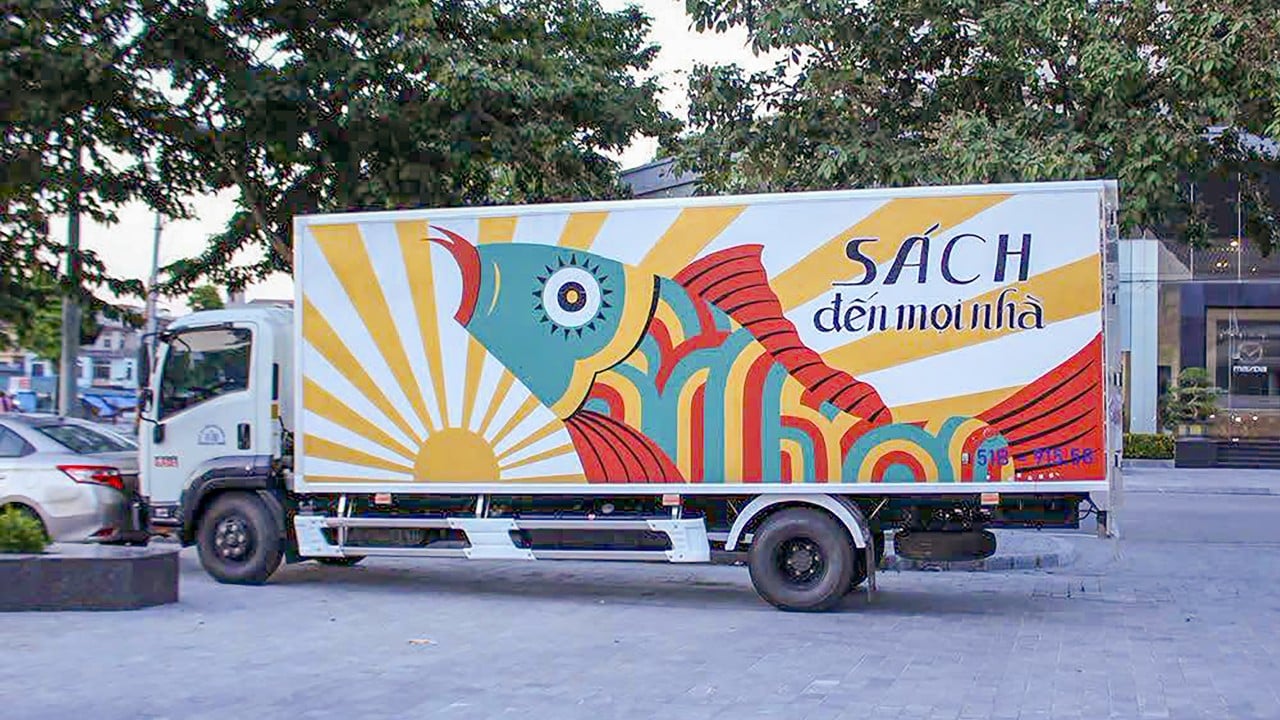
National literacy campaigns across Southeast Asia are abandoning static brick-and-mortar library construction in favor of mobile, decentralized distribution networks. In Thailand and Vietnam, state agencies, non-governmental organizations, and private civic groups have deployed converted buses, boats, and motorcycles to deliver physical books directly into underserved rural districts and congested urban transit corridors. This operational pivot solves a fundamental supply-chain failure in public education: fixed infrastructure requires the end-user to absorb the transportation and opportunity costs of access, whereas mobile units invert the logistics model by absorbing the last-mile delivery cost on behalf of the reader.
To understand why mobile reading drives in Bangkok, Hanoi, and their surrounding provinces are gaining traction, one must examine the unit economics of physical media distribution in developing economies. Traditional library expansion requires massive upfront capital expenditure (CapEx) for land acquisition, construction, and permanent staffing, followed by rigid operating expenditures (OpEx) regardless of daily foot traffic. When populations are geographically dispersed across mountainous terrain—such as northern Vietnam—or fragmented by water networks—such as Thailand’s central plains—a stationary building suffers from steep distance-decay effects. Usage drops precipitously for every kilometer a potential reader lives from the facility. Mobile libraries bypass real estate bottlenecks entirely, converting fixed infrastructure costs into variable routing expenses that can be dynamically adjusted based on seasonal demand, school calendars, and demographic shifts.
The Three Pillars of Mobile Literacy Logistics
Executing a viable mobile reading initiative requires synchronizing vehicle engineering, inventory curation, and community scheduling. Without tight coordination across these three operational pillars, mobile units degrade into expensive public relations stunts with negligible impact on long-term reading comprehension.
1. Last-Mile Fleet Adaptation
Standard municipal buses fail in regions with unpaved roads, seasonal flooding, or narrow alleyways. Effective programs in Thailand and Vietnam match the vehicle chassis to the specific topography of the target zone:
- Heavy-Duty Retrofitted Buses: Deployed in peri-urban zones and provincial towns with paved road access. These units function as climate-controlled micro-branches, carrying between 1,500 and 3,000 volumes alongside folding chairs and awnings to expand the physical footprint upon parking.
- Motorbike and Tuk-Tuk Units: Utilized in dense urban slums or steep highland villages where four-wheeled vehicles cannot navigate. Carrying 150 to 300 books in weather-sealed panniers, these agile units maximize stop frequency over cargo capacity.
- Amphibious and Riverine Vessels: Essential in the Mekong Delta and Thailand's canal networks, where waterways serve as the primary transit arteries. Boat libraries align their schedules with floating markets, capturing audiences already gathered for commercial trade.
2. High-Velocity Inventory Curation
A mobile library cannot carry a comprehensive reference collection; its severe payload constraints demand high inventory turnover. Program managers apply principles similar to fast-moving consumer goods (FMCG) retail. Books are selected based on immediate visual appeal, durability, and reading-level accessibility rather than archival value. Picture books, illustrated science primers, agricultural manuals, and short-form fiction dominate the shelves. Laminated covers and reinforced bindings are mandatory to survive high humidity, dust, and frequent handling. Crucially, inventory is rotated across different routes every four to six weeks to prevent catalog stagnation, ensuring repeat visitors encounter fresh material without requiring the program to purchase new stock.
3. Temporal Anchoring and Community Integration
A mobile library that arrives unannounced generates curiosity, not reading habits. Successful deployments anchor their routes to existing institutional schedules. In rural Vietnam, mobile units coordinate directly with commune schools, arriving during afternoon dismissal or weekend community markets when parents and children are already assembled. In Thailand, initiatives led by municipal authorities and foundations park outside temples, factories, and transit hubs during shift changes. By piggybacking on established foot traffic, these programs eliminate the marketing cost required to build an audience from scratch.
Divergent Operational Models in Thailand and Vietnam
While both nations share the goal of elevating national reading rates, their execution reflects distinct administrative structures and socioeconomic realities.
In Thailand, literacy drives frequently operate as public-private partnerships or foundation-led civic initiatives. The Bangkok Metropolitan Administration and entities like the Mirror Foundation utilize mobile units to bridge the gap between affluent urban centers and marginalized migrant communities or remote hill tribes. Thai mobile libraries often integrate non-book educational tools—such as board games, art supplies, and digital tablets pre-loaded with offline educational software—turning the vehicle's arrival into a structured, facilitated learning event. The emphasis is heavily skewed toward early childhood cognitive development and recreational reading to counter the high screen-time penetration among Thai youth.
In Vietnam, the model leans heavily on state-backed institutional networks, including the Ministry of Culture, Sports and Tourism, provincial library systems, and the Ho Chi Minh Communist Youth Union. Vietnamese mobile library trucks are engineered as standardized, self-contained multimedia hubs. Many units deployed across provinces like Son La, Lai Chau, and the Central Highlands are equipped with satellite internet connections, laptops, and solar power arrays alongside traditional print collections. This dual-format approach addresses two deficits simultaneously: it supplies physical books to ethnic minority populations whose native languages may have limited digital representation, while introducing basic digital literacy to students who lack home internet access.
The Behavioral Economics of Friction Reduction
The underlying mechanism driving the success of these road-based campaigns is the systematic removal of behavioral friction. In behavioral economics, even minor barriers—such as filling out a registration form, paying a nominal deposit, or walking fifteen minutes in tropical heat—create severe attrition between the intention to read and the act of reading.
Fixed libraries enforce strict gatekeeping: library cards, late fees, and quiet-zone etiquette intimidate low-income families or adults with limited formal education. Mobile reading drives dismantle these psychological and logistical barriers through three deliberate design choices:
- Zero-Barrier Borrowing: Many programs waive formal ID requirements, relying on honor-system lending or simple name-and-phone-number logs managed by local village leaders. The cost of occasional book shrinkage is calculated as an acceptable operational expense rather than a reason to restrict access.
- Open-Air Informality: By setting up mats, stools, and pop-up tents outside the vehicle, librarians transform reading from a solitary, silent academic exercise into a communal social activity. Children observe peers reading, triggering social proof mechanisms that normalize literacy as a leisure activity.
- Parent-Child Co-Engagement: When mobile units visit agricultural communities, they stock practical guides on crop management, animal husbandry, and public health alongside children's literature. Adults drawn to the vehicle for economic utility inadvertently model reading behavior for their children.
Structural Limitations and Operational Vulnerabilities
Despite their agility, mobile reading drives are not a replacement for permanent educational infrastructure. Relying exclusively on mobile distribution introduces distinct operational vulnerabilities that can undermine long-term literacy outcomes if left unaddressed.
First, weather and mechanical downtime create brittle schedules. Monsoon flooding in Southeast Asia routinely renders rural roads impassable for months, severing access precisely when school holidays leave children without structured learning environments. Furthermore, specialized vehicles operating on rough terrain suffer accelerated wear on suspension and drivetrain components. When a single mobile unit breaks down in a provincial fleet, an entire district loses service until parts are sourced and repaired.
Second, exposure frequency limits deep comprehension. A mobile library visiting a village once every two weeks provides intermittent stimulation, not daily immersion. Learning to read fluently requires consistent, daily practice. If a community lacks a permanent book repository—even a single shelf in a local community center—the cognitive gains achieved during a mobile unit's visit decay rapidly between stops.
Third, operational costs scale linearly with reach. While mobile units avoid real estate CapEx, their OpEx per user served can exceed that of an urban library due to fuel consumption, vehicle maintenance, driver salaries, and the necessity of deploying trained facilitators on every trip. Without sustained budgetary allocation from municipal governments or long-term corporate sponsorships, mobile fleets risk grounding once initial grant funding expires.
Integrating Mobile Fleets with Micro-Repositories
To convert temporary mobile visits into permanent literacy gains, program directors in Thailand and Vietnam must transition from pure delivery models to hub-and-spoke seeding strategies. Rather than treating the vehicle as the sole point of access, every mobile route should establish static "book-drop" micro-repositories at each stop—utilizing waterproof lockers, school cupboards, or shopkeeper shelves.
Under this hybrid architecture, the mobile unit functions as a logistics and replenishment engine rather than a temporary storefront. Drivers and librarians drop off curated crates of 100 to 200 books managed by a designated local steward—a teacher, monk, or village health volunteer—and swap the entire crate on the subsequent monthly cycle. This eliminates the two-week access gap, insulates rural readers from monsoon-related transit disruptions, and dramatically lowers the cost per reading hour. By decoupling daily book availability from vehicle transit schedules, Southeast Asian literacy initiatives can achieve the permanence of fixed infrastructure at the unit cost of mobile distribution.