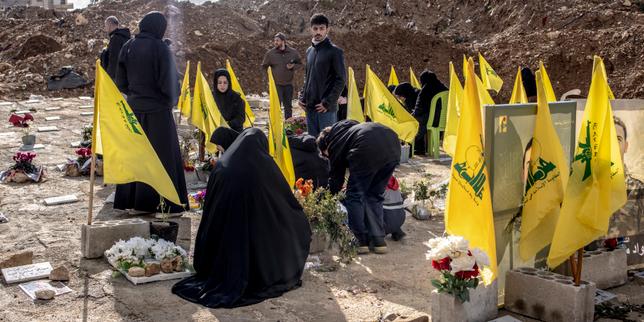
Hezbollah is currently facing a systemic dismantling of its military hierarchy that has no historical precedent. This is not merely a series of tactical setbacks or the loss of frontline personnel. It is the surgical extraction of a generation of leadership that spent four decades building a "state within a state" and a military machine designed to challenge national armies. The organization’s fundamental doctrine of deterrence, which relied on the threat of massive, coordinated retaliation, has been effectively neutralized by a relentless intelligence penetration that has turned their internal communications into a roadmap for their own destruction.
For years, the group relied on a specific brand of shadow warfare. They were the masters of the asymmetric. But the current conflict has revealed a catastrophic failure in their operational security that goes far deeper than a few compromised devices. When an organization loses its entire top-tier command structure—individuals like Ibrahim Aqil or Fuad Shukr—within a matter of weeks, it isn't just bad luck. It is evidence of a compromise so total that the group can no longer trust its own shadows.
The Intelligence Breach Beyond the Pager Explosions
The spectacular nature of the exploding telecommunications equipment in late 2024 served as a loud, violent signal of a much quieter reality. While the physical damage to thousands of mid-level operatives was significant, the psychological and organizational damage was absolute. By forcing the group to abandon electronic communications, the adversary effectively pushed Hezbollah back into a pre-digital age of messengers and face-to-face meetings.
This move back to physical proximity played directly into the hands of a superior air and surveillance power. When leaders are forced to meet in person because they cannot trust a radio or a phone, they become high-value targets in concentrated locations. The strike on a subterranean meeting in Beirut’s southern suburbs, which eliminated the Radwan Force leadership, happened because those leaders were forced into a single room to discuss how to handle the lack of secure comms.
It is a classic intelligence trap. You disable the target's ability to communicate remotely, wait for them to gather to fix the problem, and then strike the gathering. The cycle of losses has created a vacuum that cannot be filled by simply promoting the next man in line. Command in an irregular militia isn't just about rank; it’s about personal relationships, long-term trust, and specialized knowledge of hidden stockpiles and tunnel networks. Those secrets died with the veterans.
The Myth of the Radical Resilience
Western analysts often talk about Hezbollah as a hydra. Cut off one head, and two more grow back. This is a comforting thought for those who believe in the inevitability of grassroots movements, but it ignores the reality of modern high-tech warfare. A highly trained missile commander or a logistics expert who has spent thirty years perfecting the art of smuggling through the Syrian desert is not an easily replaceable asset.
Promotion in Hezbollah is now a death sentence. The group is finding that its middle management is hesitant to step into the light, knowing that their predecessors lasted only days after taking on new responsibilities. This hesitation causes a breakdown in the "chain of kill." If the guy at the top can’t give the order, and the guy at the bottom is waiting for a signal that never comes, the thousands of rockets in the hills of Southern Lebanon are nothing more than expensive lawn ornaments.
The Iranian patrons are also in a bind. Tehran spends roughly $700 million a year to maintain this proxy. That investment is currently being incinerated. If Iran sends in its own IRGC officers to fill the leadership gaps, they risk being targeted themselves and drawing the Islamic Republic into a direct kinetic conflict they clearly want to avoid. The "ring of fire" strategy—surrounding their regional rival with armed proxies—only works if the proxies can actually fight. Currently, the ring is brittle and breaking.
Logistics and the Syrian Corridor
The attrition isn't just happening in the suburbs of Beirut. It is happening in the valleys of the Bekaa and along the porous border with Syria. For a decade, Hezbollah used the Syrian Civil War as a training ground, turning its guerillas into a conventional army. But that deployment also made them visible. They had to use regular supply lines, move in large convoys, and utilize established bases.
The current air campaign has systematically targeted these transit points. By hitting the bridges, tunnels, and warehouses that link Damascus to Lebanon, the adversary is starving the remaining Hezbollah units of advanced weaponry. Precision-guided munitions require specialized components. You cannot build a long-range ballistic missile in a basement in Tyre; you have to ship it in.
The Breakdown of the Social Contract
Hezbollah’s power was never just about guns. It was about a social contract with the Shia population of Lebanon. They provided hospitals, schools, and a sense of security that the Lebanese state could not. That contract is currently being shredded under the weight of thousands of displaced families and the destruction of the infrastructure in their strongholds.
When the group can no longer protect its own heartland, its political legitimacy begins to erode. We are seeing the first cracks in the wall of silence that usually surrounds the organization’s support base. People are asking why they are being sacrificed for a "unity of fronts" that seems to only bring them ruin while their allies in other regions provide little more than rhetorical support.
The Tactical Superiority of Real-Time Data
The speed of the strikes suggests a massive leap in target acquisition. This is likely the result of a "sensor-to-shooter" loop that has been compressed to seconds. In previous wars, intelligence would be gathered, analyzed, and a mission planned over days. Now, the integration of AI-driven signals intelligence and 24/7 drone surveillance means that as soon as a launcher is uncovered or a commander makes a move, the strike is already inbound.
Hezbollah is fighting a 20th-century war of attrition against a 21st-century digital predator. They are waiting for a ground invasion—a fight they know how to handle—while being picked apart from the sky. They want the mud and the close-quarters combat of 2006, but the enemy is refusing to give it to them, preferring to deconstruct the organization from the top down.
The Strategic Displacement of the Radwan Force
The Radwan Force was supposed to be the spearhead that would "conquer the Galilee." They were the elite, the boogeymen of the northern border. Today, their command structure is effectively non-existent. Without centralized command, these units operate as isolated cells. While an isolated cell can still fire a rocket or set an ambush, it cannot conduct a coordinated offensive.
The displacement of these fighters away from the border has created a buffer zone that was achieved without a permanent ground occupation. This is a significant shift in regional military strategy. The goal is no longer to hold territory, but to make that territory unusable for the enemy.
The current state of Hezbollah is one of deep, internal paralysis. Every time they attempt to reorganize, a new strike lands. Every time they try to communicate, they reveal their location. They are caught in a loop of visibility and vulnerability that is stripping away their "prestige" faster than they can manufacture propaganda videos.
The reality on the ground is that the group's "red lines" have been crossed so many times they no longer exist. The threat of a "total war" was their greatest weapon, but once that war began and the results were so lopsided, the threat lost its power. You cannot deter an enemy who has already proven they can reach into your most secure bunker and eliminate your highest-ranking general while you are still trying to figure out if your pager is safe to carry.
The heavy losses are not just numbers on a page; they represent the evaporation of a multi-decade strategic project. The group is now fighting for its survival, not for a cause or a territory, but to simply remain a functional entity. The transition from a regional power broker to a fractured, hunted insurgency is almost complete, and there is no indication that the pressure will let up long enough for them to catch their breath.
Move away from the idea that this is a temporary setback. The infrastructure of the resistance has been compromised at the molecular level. Rebuilding it would require a total purge of their own ranks and a complete overhaul of their technological backbone—a task that is impossible while the bombs are still falling. The era of Hezbollah’s untouchable status in the Levant is over, replaced by a brutal cycle of attrition that they are currently losing on every single front.