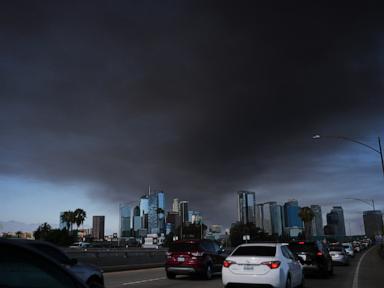
Politicians love a crisis. It gives them a podium, a somber expression, and the chance to sign an executive decree that makes them look like a savior. When Los Angeles Mayor Karen Bass declared a local state of emergency to secure resources for a massive warehouse fire, the media dutifully repeated the narrative. They framed it as a decisive leader mobilizing the apparatus of the state to protect the public.
They got it completely wrong. If you enjoyed this piece, you should read: this related article.
Declaring an emergency for a localized industrial fire isn't a sign of strong leadership. It is an open admission that the standard operating systems of municipal governance have already failed. When an administration must bypass its own bureaucracy to move basic resources, the bureaucracy itself is the hazard.
For decades, urban planners and emergency management experts have watched municipal leaders treat structural failures as sudden, unpredictable Acts of God. They are not. Industrial blazes in major logistics hubs are entirely predictable outcomes of systemic regulatory neglect, outdated zoning laws, and a broken procurement process. For another angle on this story, check out the recent coverage from USA Today.
The Illusion of "Securing Resources"
The standard media narrative suggests that an emergency declaration magically summons elite equipment and personnel that were previously locked away. Let’s dismantle that myth.
The assets required to fight a commercial warehouse fire—heavy apparatus, specialized foam, hazardous material teams, and air monitoring equipment—already exist within the municipal budget or through existing mutual aid agreements. If a city of nearly four million people cannot redeploy its own public safety assets without a mayoral signature on an emergency declaration, its operational command structure is fundamentally broken.
"If emergency powers are required to manage an incident contained within a single industrial zone, the baseline operational capacity of the municipality is deficient."
What the declaration actually does is suspend competitive bidding laws. It allows the city to cut checks to private contractors without oversight. I have spent years analyzing municipal budgets and corporate logistics infrastructure. Every time an emergency is declared for a localized event, it signals a massive transfer of public funds to private entities under the guise of urgency, bypassing the transparency measures meant to protect taxpayers.
The Cost of Regulatory Reactive Management
We are asking the wrong questions. The media asks: "How fast did the city respond?"
The correct question is: "Why did the city allow a tinderbox to exist in the first place?"
Large-scale warehouses do not combust spontaneously. They burn because municipal code enforcement is treated as a secondary priority until a disaster occurs. Code enforcement agencies are chronically understaffed, underfunded, and politically pressured to clear backlogs rather than enforce strict compliance.
Consider the mechanics of modern logistics infrastructure. High-cube warehouses store materials packed tightly from floor to ceiling. This creates an incredibly dense fuel load. When municipalities permit these facilities to operate with antiquated fire suppression requirements or fail to audit their hazardous material manifests, they are signing the warrant for the next disaster.
The contrarian truth is simple: An emergency declaration is a retroactive band-aid on a proactive policy failure.
The Broken Premise of Mutual Aid
When a local government claims it needs an emergency declaration to "secure resources" from neighboring jurisdictions, it exposes a fundamental flaw in how regional mutual aid agreements are managed.
Under standard California fire service frameworks like the Master Mutual Aid Agreement, resources are designed to move seamlessly across borders based on operational need, not political theater. If a fire chief must wait for a politician to declare an emergency before neighboring engines roll, bureaucracy is actively endangering firefighters and civilians.
If the response infrastructure is running smoothly, the declaration is redundant. If the response infrastructure is clogged by red tape, the declaration is a desperate attempt to cut through self-inflicted friction. Either way, celebrating the declaration as a triumph of governance is absurd.
The Real Solution: Stop Subsidizing Risk
We cannot fix this by giving mayors more emergency powers. We fix this by shifting the financial burden of industrial risk back onto the entities that create it.
Right now, massive logistics corporations build mega-warehouses, skimp on internal safety infrastructure, and rely on the public sector to pick up the pieces when things go sideways. The public subsidizes the risk while the corporations pocket the profit.
Instead of declaring emergencies, cities must implement three non-negotiable structural changes:
- Mandatory High-Hazard Insurance Bonds: No commercial warehouse should receive an occupancy permit without a private insurance bond scaled directly to the volume and toxicity of the materials stored. Let the private market price the risk. If a facility is a fire trap, the premiums will force it to close.
- Automated Fire Suppression Audits: Shift from manual, easily corrupted inspections to automated, continuous monitoring of water pressure, riser valves, and suppression systems, tied directly to the municipal fire dispatch system.
- Strict Liability for Public Response Costs: If a commercial facility catches fire and requires a multi-agency response, the corporate owner must legally reimburse the municipality for every dollar spent on suppression, environmental cleanup, and overtime. No exceptions. No taxpayer bailouts via emergency funds.
Stop applauding politicians for using emergency declarations to clean up messes they had the power to prevent. Demand structural competence, not executive theater.
Next time you see a leader signing an emergency order in front of a plume of smoke, don't see a savior. See a system that broke down long before the first match was struck.