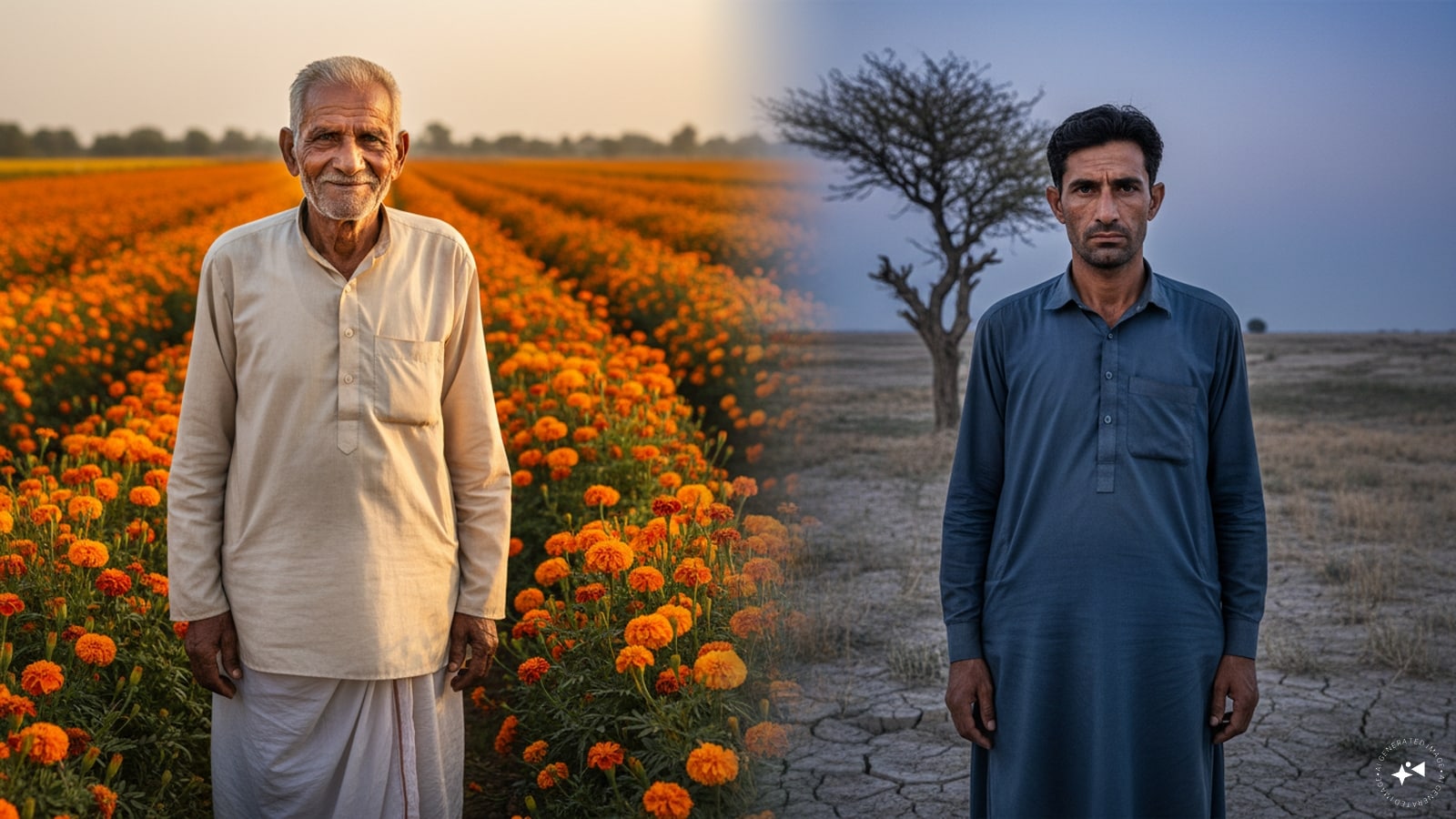
Demographic performance serves as an ultimate audit of public health infrastructure, economic distribution, and institutional capacity. The World Health Organization Global Health Estimates isolate a stark divergence in survivorship trajectories across the South Asian sub-continent. India's life expectancy at birth stands at 71.0 years, outperforming Pakistan at 68.2 years while lagging behind Bangladesh at 72.7 years.
Raw aggregates mask the operational mechanisms driving these variances. A comparative evaluation of life expectancy requires deconstructing three distinct variables: the velocity of post-pandemic epidemiological recovery, the structural burden of non-communicable pathologies, and the widening delta between gross life span and functional health span.
The Post-Pandemic Elasticity Deficit
Systemic resilience is measured by recovery velocity following exogenous shocks. The coronavirus pandemic induced a sharp contraction in South Asian survivorship metrics. India's life expectancy dropped from 70.5 years in 2019 to 68.1 years in 2021, before staging a aggressive rebound to 71.0 years by 2023. This recovery velocity—recapturing 2.9 years of expected lifespan within a 24-month window—demonstrates structural elasticity in emergency healthcare delivery, vaccine deployment architecture, and maternal survival protocols.
Pakistan’s baseline trajectory reveals a more sluggish systemic response function. The structural friction limiting Pakistan's recovery involves fragmented primary healthcare distribution, lower fiscal allocations to public health infrastructure, and vulnerabilities in maternal-neonatal care networks. While neonatal and infant mortality exert a heavy downward drag on Pakistan's aggregate life expectancy at birth, systemic delays in emergency clinical interventions compound the deficit across older cohorts.
The Epidemiological Transition and Pathology Shift
The primary driver of mortality has shifted from exogenous pathogens to endogenous metabolic decay. In both India and Pakistan, the disease burden has undergone a fundamental inversion. In early baseline periods, communicable vectors such as tuberculosis and diarrheal diseases dominated mortality tables. Contemporary metrics demonstrate that non-communicable diseases account for roughly 75 percent of the combined death rate from top-tier causes.
Ischemic heart disease, chronic obstructive pulmonary disease, stroke, and diabetes constitute the primary engines of terminal morbidity. Ischemic heart disease alone registers mortality rates exceeding 138 per 100,000 population in the region. This cardiovascular saturation is driven by a convergence of genetic predisposition to visceral adiposity, high-carbohydrate dietary staples, and escalating urban particulate exposure.
The divergence in life expectancy between India and Pakistan is therefore mediated by how effectively national healthcare systems manage chronic disease surveillance and secondary prevention. India's expanding network of primary health access points, subsidized pharmaceutical interventions, and scaled digital health registries have marginally improved chronic disease management protocols compared to Pakistan's more decentralized and underfunded clinical apparatus.
The Health Span Paradox
A longer lifespan does not equate to a proportional expansion of functional wellness. The WHO dataset highlights a critical divergence between total life expectancy and healthy life expectancy, the latter metric defining the number of years lived free from serious disability or chronic morbidity.
India's healthy life expectancy rests at 60.6 years, leaving a decade-long terminal lag characterized by chronic physical decline. While older Indians reaching age 60 can expect an additional 18.8 years of life, only 13.7 of those years are projected to be lived in full health. This dynamic creates a heavy economic dependency ratio and places severe strain on household caregivers and ambulatory care structures.
The persistence of this morbidity gap exposes the limitations of treating longevity as a singular policy objective. When public health expenditure prioritizes acute life-extension interventions over preventative lifestyle management and geriatric care infrastructure, populations survive longer with accumulated organ damage.
Strategic Forecast
The demographic trajectory of South Asia over the next decade will be determined by resource allocation toward preventative health infrastructure. Nations that successfully transition from reactive emergency medicine to predictive, community-level metabolic screening will compress their morbidity curves. The strategic imperative for health ministries involves decoupling life expectancy gains from chronic functional impairment by targeting urban air quality, regulating processed nutritional inputs, and decentralizing cardiovascular and oncological diagnostics to primary care touchpoints.