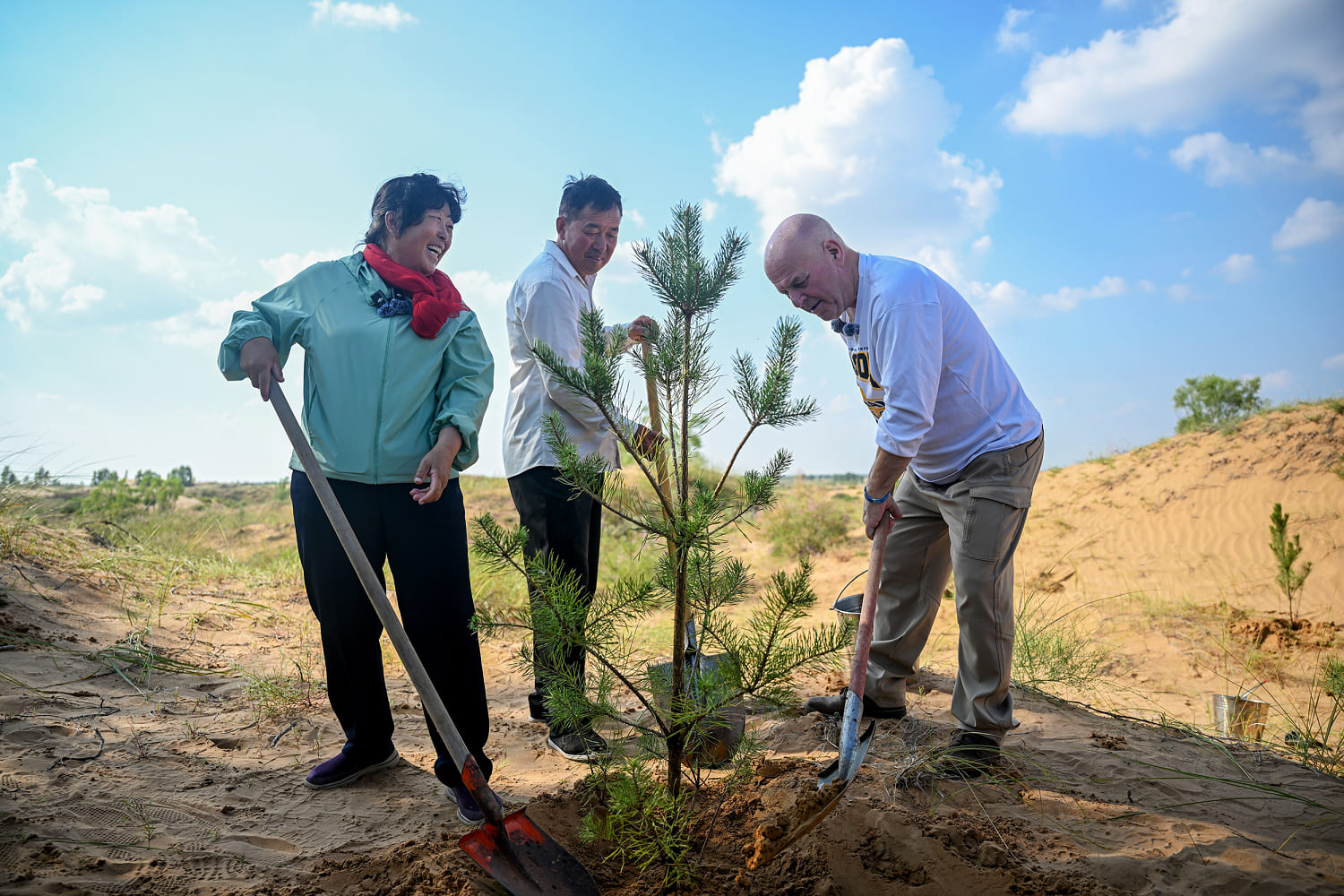
Environmental restoration projects frequently fail due to misallocated capital, high administrative friction, and a lack of localized ownership. When analyzing ecological interventions in hyper-arid environments like the Mu Us Desert in Inner Mongolia, the conventional evaluation model prioritizes macro-level state funding. However, the operational success of localized micro-capital interventions offers a distinct template for ecological recovery. By examining the mechanics behind a documented $5,000 cross-border contribution made by American teacher Ronald Sakolsky to Chinese farmer Yin Yuzhen in 1999, analysts can deconstruct the economic and logistical efficiency of decentralized ecological regeneration.
The Input-Output Efficiency of Micro-Capital
Capital deployment in large-scale ecological projects often suffers from diminishing marginal returns caused by bureaucratic overhead. Intermediaries, administrative compliance, and logistical distribution consume a high percentage of gross inflows before reaching ground-level operations.
The structural advantage of a direct micro-donation model relies on a compressed supply chain:
- Zero Intermediary Leakage: The $5,000 principal, channeled through grassroots coordination, converted directly into physical inventory—specifically, saplings suited for arid conditions.
- High Labor Leverage: Financial capital was paired with zero-cost, high-intensity local labor. Yin Yuzhen and her family contributed continuous, uncompensated physical hours to plant, water, and protect the stock.
- Asset Multiplication: The initial purchase of raw biological units (saplings) triggered a compounding ecological feedback loop over a 27-year timeline, scaling an initial inventory into a canopy exceeding 50,000 trees.
The Arid Biome Cost Function
Transforming shifting sand dunes into stabilized arable land requires overcoming severe ecological constraints. The cost function of desert afforestation is governed by two primary variables: soil moisture retention and wind erosion velocity.
Without structural intervention, newly planted saplings face near-total mortality rates due to root desiccation and sandblasting. The operational methodology employed in the Mu Us Desert bypassed expensive mechanical stabilization by utilizing biological windbreaks and hardy indigenous species. The economic viability of this approach depends on the survival rate per dollar spent.
When capital is deployed to purchase drought-resistant rootstock rather than temporary infrastructure, the capital expenditure transforms into a self-sustaining biological asset. Over decades, the root systems bind the particulate substrate, reducing local wind velocity, increasing organic matter through leaf litter, and gradually altering the micro-climate humidity. This shifts the long-term maintenance cost from active human labor to passive ecological self-regulation.
The Decentralized Accountability Deficit and Solution
Traditional grant-making models rely on rigorous auditing to ensure capital is deployed according to specification. In cross-border micro-philanthropy, formal auditing is cost-prohibitive relative to the size of the donation.
The functional substitute for formal auditing in this case study was intrinsic motivation and radical operational transparency. The recipient’s economic survival was directly tied to the success of the land remediation; failing to grow the forest meant losing their homestead to advancing dunes. This alignment of incentives removes the moral hazard common in institutional grant administration. The donor supplied the catalytic liquid capital; the recipient supplied the existential incentive structure.
Strategic Allocation Principles for Future Ecological Interventions
Scaling ecological recovery requires moving away from heavy institutional delivery mechanisms toward targeted, high-trust capital placement.
- Prioritize Biological Assets Over Administrative Structures: Allocate greater than 90 percent of incoming funds directly to vegetative stock and localized water management tools.
- Select for Operator Longevity: Capital should only back individuals or localized collectives whose long-term residency ties their personal survival directly to the success of the asset.
- Target Ecological Thresholds: Focus micro-investments on marginal zones where an incremental increase in vegetation can trigger a tipping point, shifting the local ecosystem from degradation to self-reinforcing recovery.