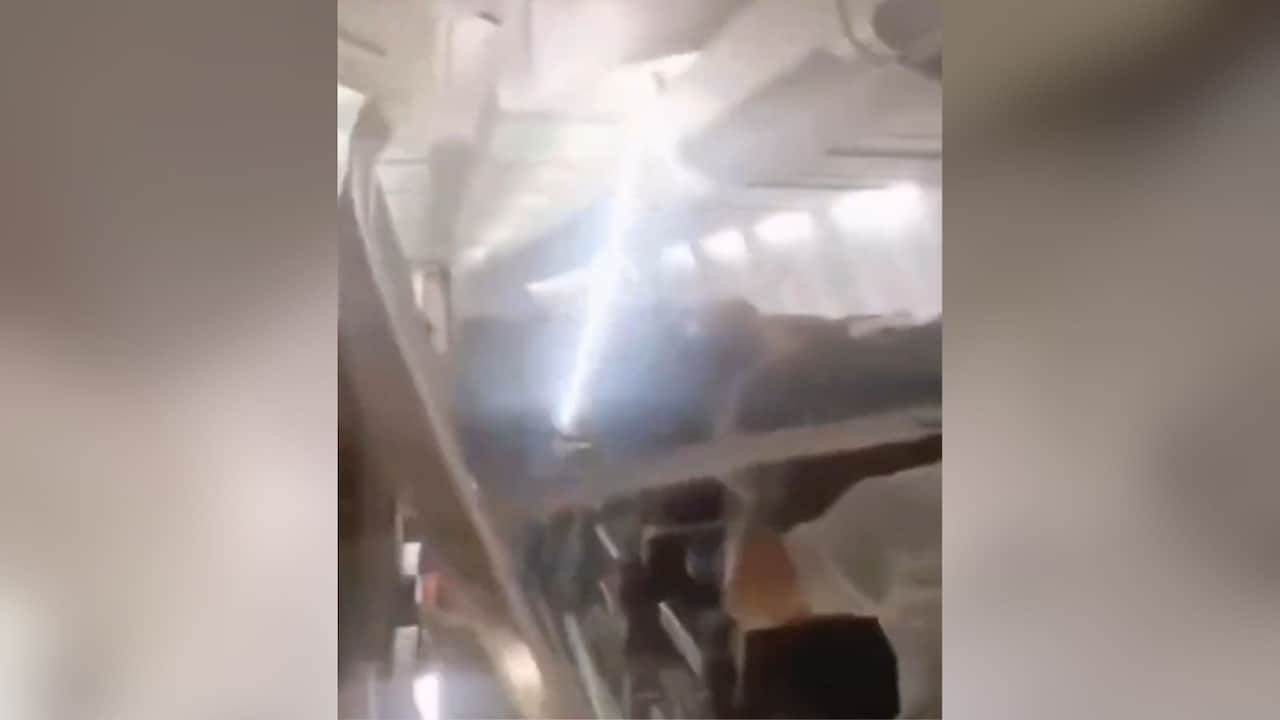
Every aviation panic cycle starts the exact same way. A video hits feeds showing dangling plastic panels, a crowd of passengers shrieking in a pressurized tin can, and headline writers hyperventilating about a plane's roof falling apart mid-flight. When a Sepehran Airlines Boeing 737 experienced an engine-vibration incident following a tire issue out of Mashhad, the internet immediately lost its collective mind over the cabin interior coming unzipped.
The lazy consensus across every news aggregation site is that passengers narrowly cheated death because the airplane was literally tearing itself open from the ceiling down. Meanwhile, you can find similar events here: The Return of the Ghosts Who Walked Away.
It is time to dismantle that amateur narrative.
What you are looking at in these viral clips is not structural failure. It is interior trim detaching due to high-frequency harmonic vibration. There is a massive, life-or-death engineering chasm between the pressure hull failing and a few pounds of fiberglass-reinforced plastic and decorative drop-ceiling panels shaking loose from their plastic fasteners. To see the bigger picture, check out the recent analysis by NPR.
The Physics of Interior Trim Versus Pressure Hulls
Let us define terms immediately because aviation journalism loves to blur the lines between structural integrity and cosmetic dressing.
The airplane cabin roof liner is not a load-bearing structural component. It is a shroud. It hides the insulation blankets, wiring bundles, oxygen drop-down lines, and environmental control ducting. It is hung from the underside of the actual aluminum or composite airframe ribs using lightweight clips, quick-release fasteners, and small attachment rails designed to absorb minor flexing.
When an engine loses a blade, suffers massive imbalance, or endures severe shock from debris during a rejected takeoff or high-vibration event, the resulting kinetic frequency travels straight through the stringers.
Imagine a massive industrial subwoofer playing a low bass note so loud that picture frames fall off your living room wall. The drywall is not collapsing; the fasteners simply cannot handle the oscillation.
That is precisely what happens when an older airframe experiences extreme resonant shaking. The interior panels act like cantilevered membranes. They flex, the plastic retainers shear or pop out of their tracks, and gravity takes over. It looks terrifying because humans associate ceilings falling down with structural collapse. But structurally, the aircraft can lose every single piece of plastic trim from nose to tail and still fly home completely within its flight envelope, provided the primary pressure vessel and spars remain untouched.
The Real Crisis Is Sanctions Induced Maintenance Bottlenecks
While the viral outrage fixates on the cosmetic spectacle of a drooping ceiling, it completely misses the systemic crisis hiding in plain sight.
Sepehran Airlines operates legacy hardware—specifically older Boeing 737 Classics. Due to long-term international trade restrictions and sweeping sanctions against Iran's aviation sector, obtaining OEM replacement parts, authorized interior attachment overhauls, and standardized fasteners is an uphill logistical battle.
When airlines are cut off from direct supply chains, maintenance cycles rely on ingenuity, local machining, or extending the service life of aging components well past their intended wear thresholds.
Vibration-induced panel detachment is rarely a random act of God. It is often the cumulative result of aged dampening mounts, worn-out rubber isolators in the environmental control system ducting, and brittle composite trim that has baked under decades of high-altitude UV exposure and thermal cycling.
If you want to point fingers at a hazard, do not blame the ceiling panels for doing what loose plastic does under severe G-forces. Blame the geopolitical strangulation that forces regional carriers to squeeze decades of extra labor out of airframes without uninterrupted access to factory-fresh modernization kits and tier-one vendor support.
Stop Confusing Aesthetics With Airworthiness
The public obsession with cabin aesthetics creates a dangerous feedback loop for safety reporting. Passengers assume that if a cabin looks pristine, the plane is safe; if a cabin looks ragged or sheds interior skin during an emergency landing, the aircraft is falling apart.
This is backward.
Airlines with immaculate, brand-new leather seats and pristine mood lighting can experience catastrophic maintenance shortcuts in avionics or hydraulic systems hidden beneath the floorboards. Conversely, an ugly, thirty-year-old workhorse with scuffed sidewalls and a missing roof liner can possess a completely sound titanium-and-aluminum spar structure that will outlast its critics.
Panic sells clicks. A video of people screaming under dangling fiberglass generates millions of impressions because it triggers primal claustrophobia. But aviation safety is governed by redundancy, fracture mechanics, and load paths—none of which give a single damn about whether the overhead reading-light console is still clipped into place.
The next time an interior panel pops loose and the internet starts screaming about a roofless plane, look past the aesthetic shock value. Understand the vibration mechanics, respect the structural shell that actually keeps you alive, and direct your critique toward the systemic supply chain realities starving aging fleets of proper hardware updates. The ceiling liner is just window dressing. Keep your eyes on the frame.