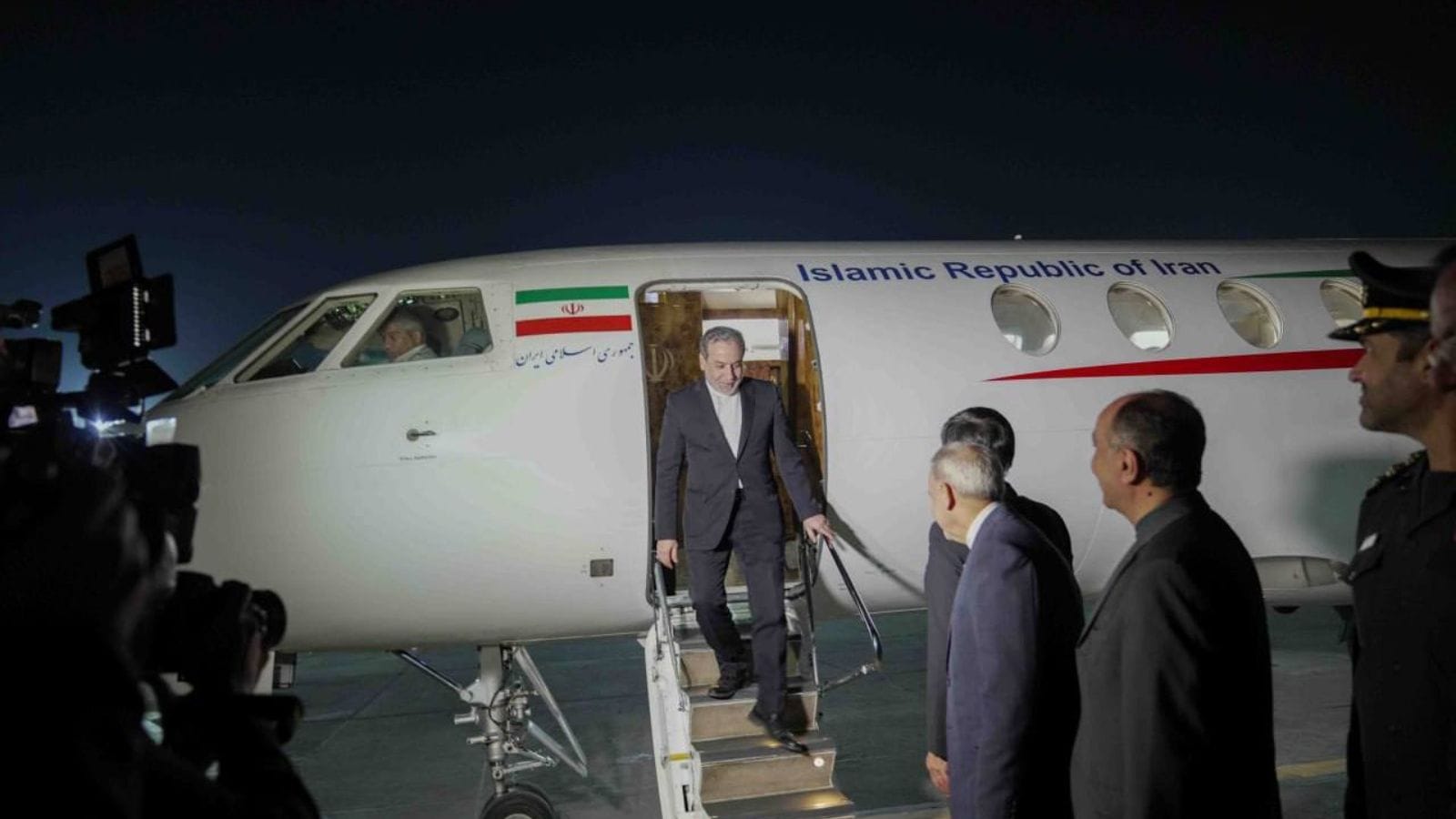
Media outlets are currently vibrating with the frantic energy of "breaking news" regarding Abbas Araghchi and the latest Iranian "reservations" on US proposals. They treat these negotiations like a chess match where the next move determines the fate of the Middle East. They are wrong. This isn't chess. It’s professional wrestling. The script was written decades ago, and both sides are simply hitting their marks for the cameras while the real business happens in the shadows.
The lazy consensus suggests that we are one "successful" meeting away from a grand bargain or one "failed" demand away from a regional conflagration. This binary thinking is the hallmark of analysts who have never set foot in a bazaar, let alone a high-stakes sanctions-evasion meeting. The reality is that the friction itself is the product.
The Myth of the Rational Demand
Mainstream reporting focuses on Araghchi’s "reservations" as if they are technical hurdles. They aren't. In the world of high-stakes diplomacy, a demand is rarely about getting what you asked for. It is about maintaining the status quo of "perpetual negotiation."
Iran’s leadership knows that a finalized, peaceful resolution with the United States is their greatest existential threat. The moment the "Great Satan" is no longer an active antagonist, the internal justification for the Islamic Revolutionary Guard Corps (IRGC) to control 30% of the Iranian economy evaporates. Conversely, for certain factions in Washington, a boogeyman in Tehran justifies massive defense outlays and regional troop presence.
We are watching a dance where neither partner actually wants the music to stop.
Why Sanctions are a Business Model
I have watched entities navigate "maximum pressure" campaigns for years. The dirty secret of the sanctions world? Sanctions create massive profit margins for those clever enough to bypass them.
- The Middleman Premium: When Iran can’t sell oil on the open market, it sells it through "ghost fleets" at a discount.
- The Arbitrage: Domestic elites in Tehran control the import licenses for sanctioned goods, selling them at a 400% markup to a captive population.
- The Political Capital: In Washington, "being tough on Iran" is a currency that never devalues.
When Araghchi conveys "reservations," he is protecting these revenue streams. A clean lift of sanctions would introduce actual competition into the Iranian market. The incumbents—the very people Araghchi represents—would be slaughtered by global conglomerates. They don't want a deal; they want the process of a deal.
Dismantling the Fear of a US-Iran War
The headlines scream about "US Iran War News" as if the 101st Airborne is 24 hours away from jumping into Tehran. This is a fundamental misunderstanding of modern warfare and the specific geography of the Iranian plateau.
- The Geography Trap: Iran is a mountain fortress. It is roughly the size of Alaska, with a population of 88 million. To anyone who thinks a conventional ground war is "on the table," I invite you to look at a topographical map. It makes the occupation of Iraq look like a weekend retreat.
- The Proxy Buffer: Iran does not fight wars; it exports them. Between the Houthis in Yemen, Hezbollah in Lebanon, and various militias in Iraq, Tehran has created a "defense in depth" strategy that ensures any kinetic action against them happens hundreds of miles from their borders.
- The Economic Suicide: A hot war in the Strait of Hormuz would send oil to $200 a barrel overnight. No US President survives that. Not in an election year. Not in a post-inflationary economy.
The "Live Updates" you see are meant to keep you in a state of low-level anxiety. Anxiety sells ads. It doesn't, however, reflect the strategic reality that neither side can afford the bill for a real conflict.
The Nuclear Program as a Permanent Lever
Every time Araghchi mentions uranium enrichment or "demands" regarding the IAEA, the West flinches. But consider this: If Iran truly wanted a bomb, they would have built one by now. They have the technical capacity.
The nuclear program is more valuable as a capability than a weapon. As a capability, it is a permanent seat at the table. It is the "Get Out of Jail Free" card they play every time domestic unrest threatens the regime. Once you build the bomb, the leverage is gone. You’re just another North Korea—isolated and ignored until you test another missile. As long as you are almost building a bomb, the whole world has to talk to you.
The Misunderstood Role of Abbas Araghchi
Araghchi is often portrayed as a "moderate" or a "pragmatist" struggling against hardliners. This is a classic good cop/bad cop routine that Western diplomats fall for every single time.
I’ve seen this play out in corporate mergers. One side sends a "reasonable" negotiator who claims their board of directors is "difficult." It’s a tactic to make you concede more to "help" the moderate stay in power. In reality, the moderate and the hardliner are eating from the same plate. Araghchi isn't fighting the IRGC; he is their most effective salesperson.
Thought Experiment: The Day the Deal Happens
Imagine a scenario where the US accepts every single one of Araghchi’s demands. Every sanction is lifted. Every frozen asset is returned. Full diplomatic normalization.
What happens the next day?
- The Iranian rial stabilizes, and the IRGC-linked currency speculators lose billions.
- Western tech giants flood the Iranian market, ending the monopoly of state-backed firms.
- The "external threat" narrative dies, and the Gen Z protesters in Tehran no longer face "foreign agitator" charges.
The Iranian regime would collapse within eighteen months under the weight of its own irrelevance. This is why the "demands" are always just slightly out of reach. They are designed to be rejected.
Stop Asking if there will be Peace
The question isn't whether we are heading toward war or peace. The question is: Who is profiting from this state of "No War, No Peace"?
- Defense Contractors: Maintaining a carrier strike group in the region isn't cheap.
- Energy Speculators: Volatility is a feature, not a bug.
- Political Operatives: Both in Tehran and D.C., the "Iran Threat" is a reliable fundraising tool.
The "Live Updates" you are reading are the noise. The signal is the bank accounts of the people managing the crisis.
The Real Power Shift
While Araghchi and the US State Department exchange politely worded threats, the real shift is happening in the East. Iran is pivoting to the BRICS bloc. They are integrating into Chinese and Russian financial systems that don't care about US proposals.
The US is negotiating for a seat at a table that Iran is already leaving. Araghchi’s "reservations" are a stalling tactic to buy time for the completion of the "North-South Transport Corridor." Once that infrastructure is fully operational, the US proposals will be as relevant as a Blockbuster membership card.
The Brutal Truth for Investors and Policy Wonks
If you are waiting for a "breakthrough" to signal a change in regional stability, you are going to be waiting a long time. The breakthrough is the stalemate itself.
- Hedge for Volatility, Not Resolution: There is no "grand bargain" coming. Position your assets for a decade of localized proxy skirmishes and persistent sanctions.
- Ignore the "Moderate" Label: Treat every Iranian negotiator as a unified front for the security establishment.
- Watch the Oil, Not the Headlines: If the tankers are moving, the status quo is safe. Everything else is theater.
The media wants you to believe we are on the precipice of history. We aren't. We are in a loop. Abbas Araghchi didn't convey demands; he delivered a script to ensure the loop continues.
The most revolutionary thing you can do is stop paying attention to the "breaking news" and start looking at who benefits from the stalemate. Diplomacy is often just the art of saying "no" until the check clears.
Don't buy the hype of the impending crisis. The crisis is the business model.