The air in Western Washington smells of cedar, wet asphalt, and the sharp, undeniable bite of approaching rain. It is five-thirty in the morning. Most people are asleep, wrapped in down comforters, dreaming of upward mobility through spreadsheets, stock options, and software code.
Two friends are standing in a suburban backyard in Snohomish County. They are holding plastic long-handled scoops and heavy-duty commercial trash bins.
Their bank account balance a year prior had hovered dangerously close to zero. Their total startup capital sat at a modest one thousand dollars—spent almost entirely on five-gallon buckets, thick trash bags, magnetic truck signs, and a secondhand push mower they barely knew how to fix.
They did not invent an algorithm. They did not raise venture capital from men in sleek glass towers in downtown Seattle. They simply looked at a universal, deeply unpleasant household chore that every dog owner hates, and decided to do it for them.
Today, that modest operation is called Swoop Scoop.
And it clears over two hundred thousand dollars every single month.
We worship the shiny things. We glorify the teenager who codes an app in a dorm room or the silicon-valley wunderkind burning through millions in search of market disruption. We forget about the earth beneath our feet. We forget that the most durable fortunes are often built on the problems polite society refuses to look at.
Consider what happens in a typical American neighborhood every single day. Millions of dogs bound across manicured lawns. They chase tennis balls, dig holes, and leave behind organic landmines. To a homeowner, cleaning up after a pet is a chore charged with minor irritation. It is the Sunday afternoon ritual nobody wants. It is the chore that starts arguments between spouses about whose turn it is.
Multiply that irritation by tens of thousands of households across the Pacific Northwest. Then, look at what happens when two people decide to treat that irritation not as a gross inconvenience, but as a recurring subscription service.
The beginning was not glamorous. It smelled like wet grass and ammonia.
In the early months, the founders drove a dented sedan from yard to yard. They walked pastures in the freezing drizzle, bent double, eyes scanning the turf. Their backs ached. Their friends asked when they were going to get "real jobs." At family dinners, people changed the subject when the topic of work came up. There is a strange social stigma attached to manual labor, a lingering cultural lie that honest, physical work is somehow a sign of stalled ambition.
They ignored the noise. Because while their critics were busy climbing corporate ladders for incremental three percent raises, the math of the backyard was telling a very different story.
A dog does not stop eating because the stock market drops. A dog does not care about inflation or interest rates. The biological output of a golden retriever or a german shepherd is entirely recession-proof.
This is the hidden geometry of local service businesses. When you solve a recurring, visceral pain point for a consumer, you are no longer selling a product. You are selling time. You are selling peace of mind. You are selling the luxury of walking barefoot across your own grass without scanning the horizon.
Once you understand that psychological truth, scaling becomes a matter of pure execution.
The turning point for Swoop Scoop did not arrive with a viral marketing campaign or a glossy magazine profile. It arrived the day they stopped viewing themselves as guys with scoops and started viewing themselves as logistics managers.
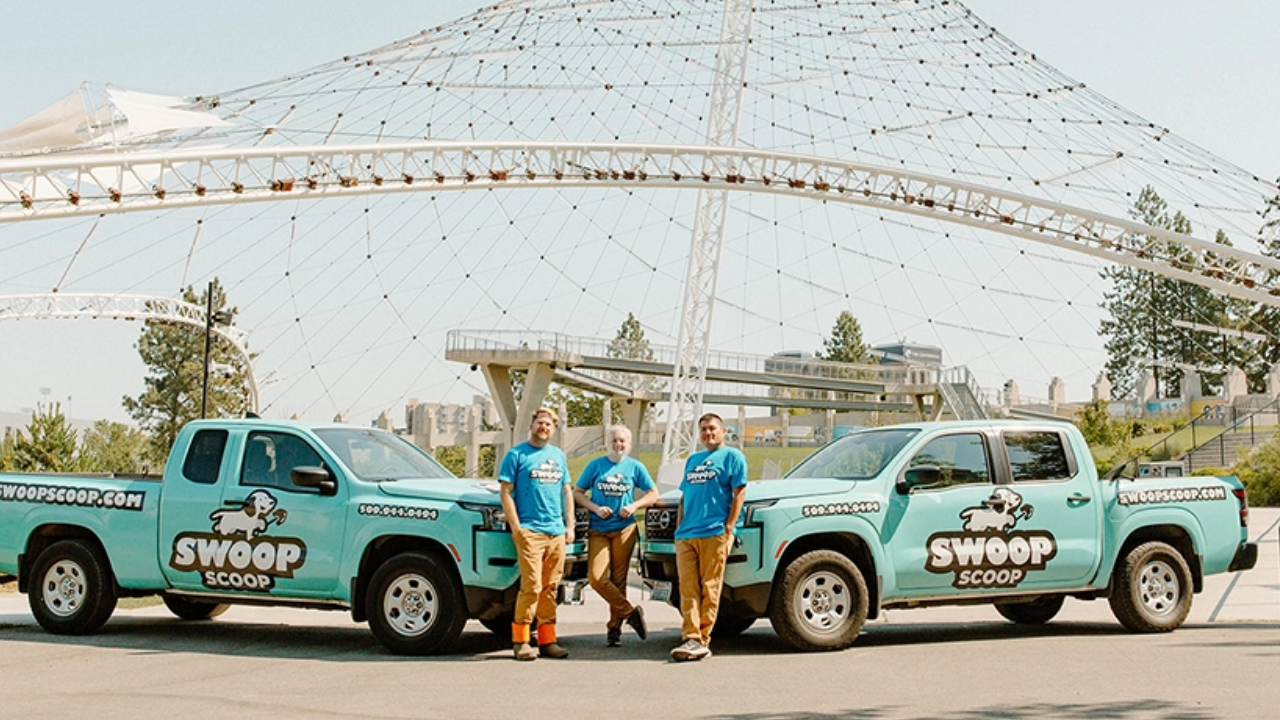
They mapped out routes using software. They optimized drive times between subdivisions. They replaced the dented sedan with wrapped trucks that turned heads at stoplights. They introduced a simple, transparent pricing tier: weekly visits, bi-weekly cleanups, flat rates charged automatically to credit cards on the first of the month.
Subscription revenue transformed the business. Suddenly, income was predictable. Cash flow stopped being a monthly panic attack and turned into a predictable engine. They hired their first employee—then their tenth. They built training manuals for yard navigation, gate security, and dog psychology.
By the time other local operators realized what was happening, Swoop Scoop was an institution.
People ask how a business built on canine waste can possibly generate tech-startup revenue. The answer lies in the sheer power of customer retention. In software, churn is an eternal bleeding wound; customers cancel subscriptions at the slightest provocation. But pet owners? Once they find a reliable, polite, thoroughly professional crew that keeps their yard spotless week after week, they never leave. They become lifelong subscribers. They refer their neighbors over backyard fences.
The founders realized that dignity is not inherent in the task; dignity is created by the execution. When you show up on time, in uniform, with a smile in the pouring rain, and you leave a yard cleaner than you found it, you command respect. You change the perception of an entire industry.
Today, the trucks roll out before dawn across multiple counties. The founders no longer spend their mornings in the grass with a bucket. Their days are spent analyzing route density, managing teams, and looking at expansion maps.
Yet the core of the business remains wonderfully simple. It is still about showing up. It is still about the dirty work that everyone else avoids.
We spend so much of our lives waiting for the grand revelation, the earth-shattering invention, the billion-dollar tech breakthrough that will rescue us from mediocrity. We overlook the mundane truths hiding in plain sight. We ignore the yards right outside our windows.
Success is rarely found in the clouds. Sometimes, it is found right in the dirt.