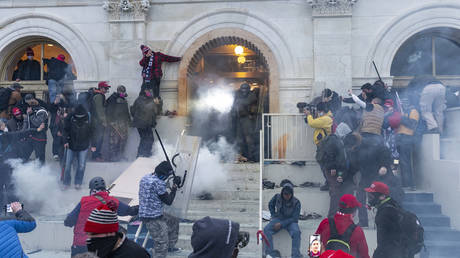
The Department of Justice is currently engaged in a massive, quiet retreat. After years of aggressive prosecution, federal lawyers are filing motions to vacate convictions and dismiss charges against hundreds of individuals involved in the January 6 Capitol riot. This is not a sudden change of heart or a political pivot from the executive branch. It is a forced surrender. The Supreme Court’s ruling in Snyder v. United States has effectively gutted the primary legal tool used by prosecutors to punish those who disrupted the certification of the 2020 election.
At the center of this legal earthquake is 18 U.S.C. § 1512(c)(2). This statute was originally part of the Sarbanes-Oxley Act, passed in 2002 to prevent corporate executives from shredding documents during fraud investigations. For three years, the DOJ used it as a catch-all felony to charge rioters with "obstructing an official proceeding." It carried a 20-year maximum sentence, making it the most potent weapon in the government’s arsenal for non-violent offenders who simply entered the building. Now, that weapon has misfired. For an alternative view, check out: this related article.
The High Court ruled that the law only applies when a defendant impairs the availability or integrity of physical evidence, such as records or documents. Simply being in the room and shouting isn't enough to trigger a 20-year felony.
The Fallout of Overreach
Federal prosecutors are now scrambling to review over 350 cases. The immediate impact is a logistical nightmare for the D.C. District Court. Judges who once handed down multi-year sentences based on the obstruction charge are being asked to redo their work. For many defendants, the obstruction felony was the only serious charge on their sheet. Without it, they are left with simple trespassing or disorderly conduct—misdemeanors that rarely carry jail time. Similar analysis regarding this has been shared by NPR.
The government’s strategy was always high-stakes. By applying a white-collar crime statute to a street-level riot, they sought to create a deterrent. They wanted the world to see that interfering with the transfer of power carried a heavy price. But in their haste to secure maximum sentences, they ignored the plain language of the law.
Critics of the DOJ have long argued that the use of § 1512(c)(2) was a "novel" interpretation. In plain English, that means they were making it up as they went along. Defense attorneys warned for years that the statute required a "nexus" to physical evidence. The DOJ ignored those warnings, betting that the gravity of the events at the Capitol would convince judges to look the other way. They lost that bet.
The Domino Effect in the D.C. Circuit
The reversal doesn't just affect those currently in prison. It opens the door for a wave of civil litigation. Individuals who have already served time for a crime that the Supreme Court says doesn't exist are now looking for restitution. While the government generally enjoys immunity, the stain on the DOJ's record is permanent.
Take the case of Joseph Fischer, the defendant whose name is now synonymous with this reversal. Fischer was a police officer who joined the crowd. Under the old DOJ interpretation, he faced decades behind bars. Under the new reality, his most serious charge has evaporated. His legal team argued that the government was trying to turn a protest into a document-shredding case. The Court agreed.
This creates a massive disparity in how justice is being served. People who took plea deals early on—out of fear of the 20-year obstruction charge—are now realizing they were coerced by a legal phantom. They admitted to a felony that wasn't a felony. The process of withdrawing those pleas is legally complex and expensive, creating a two-tiered system where only those with the best lawyers can claw back their records.
Rewriting the Narrative of Accountability
The narrative of January 6 has always been a battleground. To the DOJ, it was an insurrection that required the most aggressive legal response in American history. To the defendants, it was a protest that spiraled out of control. By losing the obstruction charge, the DOJ has lost the ability to legally label many of these acts as "corrupt" in the eyes of the law.
When you remove the obstruction felony, the severity of the day changes in the eyes of the court records. We are left with a massive collection of "Parading, Demonstrating, or Picketing in a Capitol Building" charges. That is a Class B misdemeanor. It’s the same charge someone would get for holding a sign in the wrong hallway during a budget hearing.
The DOJ is trying to save face by doubling down on other charges. They are looking for ways to emphasize "assaulting a police officer" or "civil disorder." But those charges require specific evidence of physical violence. For the hundreds of "walk-through" defendants—those who entered through open doors and stayed for minutes—the government no longer has a felony hook.
The Problem of Precedent
The danger here isn't just about January 6. It’s about how the DOJ uses its power. If the government can take a law meant for Enron executives and use it against political protesters, nobody is safe. Today it’s the far-right; tomorrow it could be environmental activists or labor unions.
The Supreme Court’s intervention was a mechanical check on executive power. Justice Roberts, writing for the majority, made it clear that the government cannot simply "stretch" laws to fit their desired outcome. Law is not a piece of elastic. It has boundaries.
The DOJ’s current "overturning" of these convictions is an admission of failure. It is a quiet retreat from a position that was legally indefensible from the start. They are filing "notices of supplemental authority" and "motions to dismiss" in batches, hoping the public doesn't notice the scale of the collapse.
The Cost to the Taxpayer
Every one of these vacated convictions represents thousands of hours of work by FBI agents, federal prosecutors, and court staff. Millions of taxpayer dollars were spent building cases on a foundation of sand. Now, millions more will be spent dismantling them.
The D.C. jail, which has housed many of these defendants pre-trial, is seeing a revolving door of releases. Men who were told they were looking at ten years are walking out after eighteen months. This creates a sense of chaos and inconsistency. If the goal of the justice system is to provide a predictable, fair outcome, then the January 6 prosecutions have been a spectacular failure.
It’s worth looking at the numbers:
- 350+ defendants charged with the 1512(c)(2) felony.
- 100+ already sentenced using that specific charge.
- 0 remaining legal pathways to keep those specific sentences intact.
The DOJ has tried to argue that even without the obstruction charge, the "intent" of the defendants justifies the original sentences. Judges are largely rejecting this. You cannot sentence someone for the vibe of a crime; you must sentence them for the crime itself.
A Systemic Breakdown
This wasn't an accidental error. The DOJ’s top brass approved this legal strategy. They were aware of the risks. They chose to proceed because it served a specific political and optics-driven goal. By framing the events as a massive, coordinated obstruction of an official proceeding, they could justify a massive expansion of surveillance and prosecution.
Now that the legal floor has fallen out, the internal blame game has begun. Younger prosecutors are questioning why they were told to lean so heavily on a single, controversial statute. Meanwhile, the defense bar is emboldened. They are no longer just fighting for their clients; they are fighting against what they see as a systemic abuse of the U.S. Code.
The government is currently attempting to "re-sentence" defendants using other, lesser charges to reach the same original jail time. This is a practice known as "sentencing enhancement." If a defendant is convicted of a misdemeanor, the prosecutor asks the judge to increase the sentence because the misdemeanor was committed in the context of a larger, more serious event. But judges are increasingly skeptical. If the Supreme Court said the "serious event" wasn't a felony obstruction, how can it be used to enhance a misdemeanor?
The Legal Ghost Town
The D.C. federal courthouse is becoming a ghost town of defunct charges. Every Tuesday and Thursday, more names are added to the list of vacated convictions. The DOJ is forced to stand in front of the same judges they once convinced of these "felonies" and admit they no longer have a case.
This is the brutal reality of the American legal system: once the highest court speaks, the executive must obey, even if it means letting people walk free whom they consider a threat to democracy. The rule of law doesn't care about the optics of the defendant's hat or the slogans they shouted. It cares about the definition of words in a statute.
The DOJ’s move to overturn these convictions is a total loss of credibility in the realm of domestic terrorism prosecution. They overshot the mark. By trying to make an example of everyone, they may end up making a precedent that protects everyone from future overreach.
The next phase of this crisis won't be in the courtrooms, but in the records. Expungement motions are coming. Lawsuits for wrongful imprisonment are being drafted. The government is not just losing the convictions; they are losing the narrative.
If the DOJ wants to regain its footing, it has to stop treating the law as a tool for social engineering and return to the strict, often boring, discipline of statutory interpretation. Until then, the list of vacated convictions will continue to grow, a silent monument to a legal strategy that was too clever for its own good. Every dismissal filed is a reminder that in a constitutional republic, the government’s power to punish is limited by the very words it uses to define crime. Without the physical destruction of evidence, there is no obstruction. Without a felony, there is no deterrent. The DOJ is now learning that lesson the hard way, one vacated sentence at most.