American politics usually works like a predictable script. One side wants to tax corporations into oblivion, and the other wants to deregulate them until they can do whatever they want. But right now, a bizarre consensus is forming around artificial intelligence.
Donald Trump, Bernie Sanders, and OpenAI CEO Sam Altman are all actively discussing the same radical idea. They want the United States government to own a direct financial stake in artificial intelligence companies.
Think about that. The self-described democratic socialist, the billionaire populist president, and the tech executive worth billions are staring at the same math and reaching a similar conclusion. The economic disruption coming down the pike is so massive that traditional taxes and regulations won't cut it.
If you are trying to understand where the economy is heading over the next few years, forget the standard partisan bickering. The real story is how the federal government is positioning itself to become a part-owner of the tech sector to handle the massive wealth shift AI will create.
The Secret Meetings in Washington
This isn't some abstract policy paper concept. It's happening in real time.
Sam Altman recently spent days in Washington holding private meetings on Capitol Hill and at the White House. He sat down with Bernie Sanders, met with House Speaker Mike Johnson, and has been in ongoing talks with the Trump administration.
The core of these meetings centers on a wild proposal: OpenAI might literally donate a portion of its corporate equity directly to the U.S. government.
This isn't a hostile takeover. Altman actually pitched the idea to Donald Trump. Why would a tech CEO want to give away a chunk of his company to Uncle Sam? Because Altman knows what his technology is about to do to the labor market. If AI replaces tens of millions of jobs, the backlash will be catastrophic for tech firms unless the public feels like they are winning, too.
By giving the government a stake, OpenAI seeds a state-backed investment vehicle. When the company wins, the treasury wins, and theoretically, the American citizen wins. Speaking to reporters aboard Air Force One, Trump confirmed the talks. He noted that there are concepts where pieces of these companies could be given to the public, essentially making the American people partners in AI growth.
Bernie Sanders Wants Fifty Percent
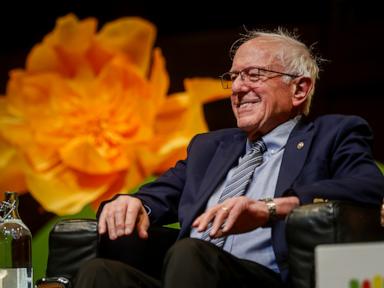
While Trump and Altman are talking about voluntary equity donations, Bernie Sanders wants to go much further. He just introduced the American A.I. Sovereign Wealth Fund Act.
Sanders isn't asking for a polite donation. His bill calls for a one-time, 50% tax on the stock of the country’s largest AI firms, including OpenAI, Anthropic, and Elon Musk’s xAI.
The logic behind Sanders' aggressive stance is simple. Generative AI wasn't created in a vacuum out of thin air. These models only exist because they scraped generations of human intelligence. They ingested our books, our artwork, our scientific research, and our daily conversations.
"When a public resource generates wealth, the public should share in that wealth," Sanders argued.
To him, human culture is a public resource, just like oil under the ground in Alaska. Alaska uses oil revenues to fund its Permanent Fund, paying out yearly cash dividends to every resident. Sanders wants to do the exact same thing with artificial intelligence.
If the government owns 50% of the voting shares, it wouldn't just collect dividends. It would also occupy half the seats on the boards of directors. That means the public could actively block corporate decisions that eliminate jobs too quickly or threaten national security.
The Math Driving the Fear
To understand why everyone is suddenly panicked enough to consider state-backed ownership, you have to look at the financial tightrope these tech companies are walking.
OpenAI is currently valued at more than $850 billion as it prepares for a potential initial public offering. Its first-quarter revenue reached a staggering $5.7 billion. But look closer at the spreadsheet and you'll see a massive problem: their operating margins were negative 122%.
Right now, OpenAI spends roughly $2.22 for every single dollar it brings in. To justify its massive valuation, data from PitchBook shows the company needs to generate around $100 billion in free cash flow by 2030. Instead, based on current burn rates, it's on track to lose anywhere between $10 billion and $30 billion that year.
Altman recently admitted at an event that AI computing costs have suddenly exploded into a massive issue for companies. Tech firms need unfathomable amounts of cash to build data centers and secure energy grids. They need government cooperation to build this infrastructure, and the government needs a way to stop a populist revolt if AI destroys the tax base by automating white-collar jobs.
How a Public Wealth Fund Would Actually Work
If this bipartisan alliance gets its way, the economic reality for average Americans will shift dramatically. We aren't talking about standard corporate tax rates here. We are talking about a national sovereign wealth fund.
Instead of cash taxes going into a black hole of federal spending, the equity from AI firms would sit in a diversified, long-term investment fund. As AI automation drives corporate productivity through the roof, the fund's value would balloon.
The returns would be distributed directly to citizens, acting as a cushion against automation. It’s basically a back-door route to Universal Basic Income, funded directly by Silicon Valley equity rather than income taxes.
The Trump administration has already shown it has no philosophical issue with the state taking financial positions in critical tech. During his second term, the government has taken equity stakes and made major financial interventions in companies like Intel, IBM, and various quantum computing and rare earth mineral firms. A sovereign wealth fund fits perfectly into this economic nationalist framework.
Your Next Steps to Prepare for the AI Economy
The fact that Trump, Sanders, and Altman agree on public ownership tells you that the structural shift in our economy is coming faster than most people realize. Don't sit around waiting to see if a government check shows up in your mailbox. You need to insulate your personal finances and career right now.
- Audit your career vulnerability. Look honestly at your daily tasks. If your job relies on synthesizing data, writing basic code, or creating standard administrative documents, it can be automated. Shift your focus toward roles that require physical implementation, complex human negotiation, or managing the AI systems themselves.
- Track the policy details. Watch the progress of the American A.I. Sovereign Wealth Fund Act and the White House's upcoming 60-day deadline for classified AI benchmarks. The rules written over the next two months will determine which tech companies survive and which get crushed by state intervention.
- Diversify your personal investments. If the government plans to take stakes in AI to hedge against job losses, you should do the same. Don't bet everything on a single AI startup. Ensure your portfolio includes energy infrastructure, cybersecurity, and traditional companies that stand to cut costs drastically by adopting these tools.
The era of completely hands-off tech capitalism is over. When the most radical capitalist tech founders and the most aggressive anti-corporate politicians start nodding in agreement, the playbook has officially changed.
Bernie Sanders explains his AI Sovereign Wealth Fund proposal
This video features Senator Bernie Sanders detailing his legislative push for public ownership in AI companies and outlines his conversations regarding wealth distribution with tech leaders.