A Cold Engine in Zhoushan
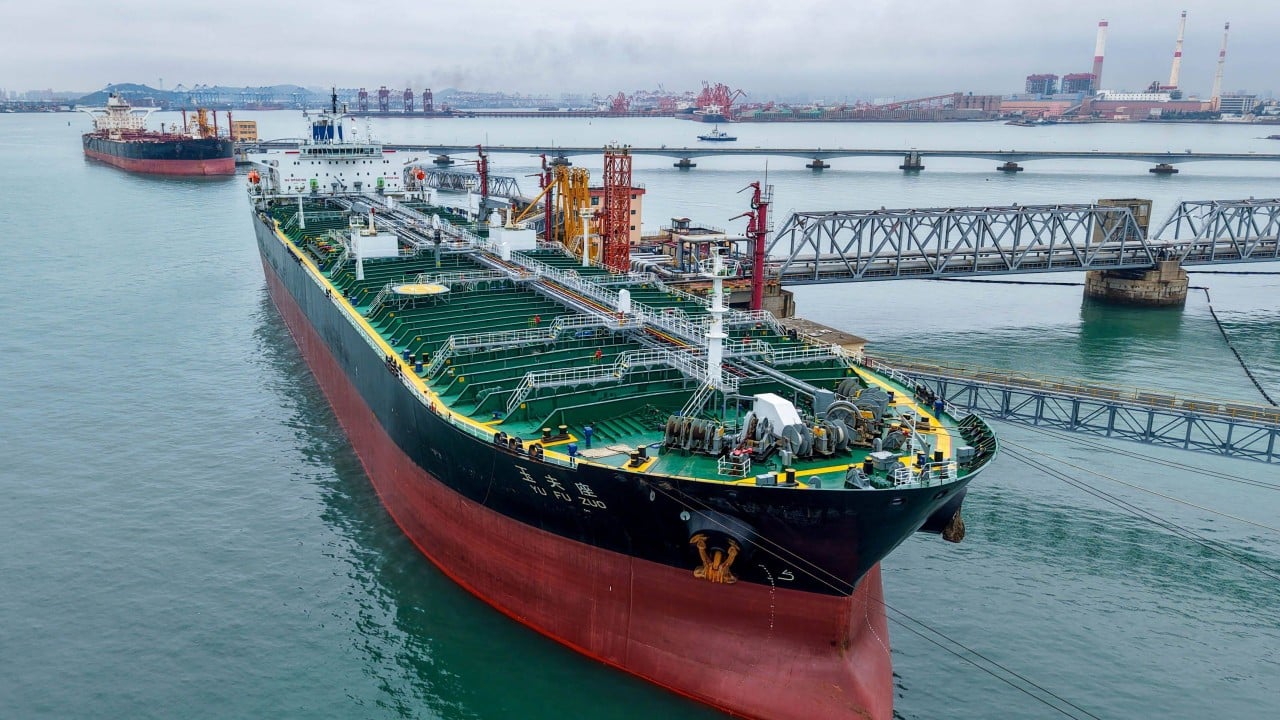
Down on the damp docks of Zhoushan, the air smells of salty brine and heavy sulfur fuel oil. Mammoth crude carriers sit anchored off the east coast of China, their steel hulls riding low in the water. Beneath them lie vast, cavernous strategic reserves—billions of barrels of oil held deep within underground salt caverns and reinforced concrete tanks.
Halfway across the globe, the Persian Gulf is ablaze. War between major powers in the Middle East has sent shockwaves through the global energy grid. Tankers turn back from the Strait of Hormuz. Futures contracts spike wildly overnight. Traders in Singapore, London, and New York stare at flashing red screens, holding their breath for one specific sign. They wait for Beijing to turn the valve. They wait for China to open its massive vault of crude and flood the market to calm the panic.
It never happens.
The valves remain rusted shut. The tanks stay locked. The dragon sits motionless on its gold, watching the rest of the world burn through its savings.
The Illusion of the Buffer
Most people assume that emergency reserves exist for, well, emergencies.
When a crisis hits, you break the glass. That is the implicit contract built into the global economic architecture since the oil shocks of the 1970s. When war erupts in a critical shipping lane, nations tap their strategic stockpiles to cushion the blow for their citizens. It keeps gasoline prices from exploding at the pump. It keeps factory assembly lines running. It softens the economic gut-punch before panic takes full control.
When war threatens Persian Gulf exports, global markets naturally look toward China. After all, Beijing holds one of the largest strategic crude reserves on the planet. A single directive from the central government could inject millions of barrels into the system, smoothing out the violent price spikes that threaten to drag the global economy into stagflation.
Instead, silence.
To understand why, you have to stop looking at oil as a commodity and start looking at it as an insurance policy for national survival. Beijing does not view its reserves as an economic shock absorber meant to protect domestic consumers from high prices. It views them as a war chest meant to survive a total blockade.
Crude in a storage tank in Zhejiang is not there to make sure a commuter in Chengdu pays a reasonable price to fill up his scooter on a Tuesday morning. It is there to guarantee that if the foreign trade lanes go dark tomorrow, the state still functions.
The Math of Stagnation
Consider a hypothetical refinery manager named Chen working in Shandong province.
Chen runs an independent refinery—a "teapot"—that relies almost entirely on imported heavy crude. When global spot prices surge by forty percent in a week, Chen faces a brutal choice. He can buy expensive crude, refine it, and sell it at a loss because domestic fuel prices are strictly regulated by state price caps. Or he can simply idle his distillation towers, send his workers home, and wait for the storm to pass.
If Chen goes dark, local supply tightens. Trucking fleets pay more for diesel. Small factories see their operating margins evaporate. The ripple effects run silently through the supply chain, raising the cost of everything from plastic toys to fresh vegetables transported across provinces.
You might think the central government would step in to rescue Chen, and by extension, the broader market.
They won't.
Releasing strategic reserves to lower domestic prices creates a terrifying precedent for state planners. It burns through finite, hard-won physical security to solve a temporary financial problem. Money can be printed. Losses can be absorbed by state-owned banks. But a barrel of crude stored inside a secure subterranean cavern cannot be easily replaced when the seas are closed and the tankers stop sailing.
Every barrel released today to keep gas cheap is a barrel missing tomorrow if a real maritime blockade freezes trade routes entirely.
The Hard Logic of the Vault
This is where the western perspective and the eastern strategic calculus diverge violently.
In Western capitals, political leaders face immediate election cycles. A sustained spike in gasoline prices is political poison. It drains consumer confidence, drives up inflation metrics, and destroys approval ratings within weeks. The pressure to release barrels from the Strategic Petroleum Reserve during an international crisis is almost irresistible. It is a immediate political lever pulled to fix an immediate political emergency.
Beijing operates on a completely different timeline.
The planners inside the National Development and Reform Commission are not looking at the next quarter. They are looking at the next decade. They watch the geopolitical chessboard with a chillingly pragmatic eye. In their view, global oil shocks caused by Western conflicts in the Middle East are an external tax—one that every nation must pay, but one that China can weather longer than most if it holds its physical resources close to its chest.
Let the market absorb the price shock. Let the private refiners take the hit. Let global consumers feel the pinch.
As long as the state-owned energy giants can secure alternative overland flows—pipeline crude dripping steadily from Russia and Central Asia—the strategic stockpiles remain untouched. They are a weapon of last resort, reserved exclusively for existential threats to the state, not for uncomfortable price hikes.
What Happens When the Vault Stays Closed
The decision to hoard reserves during a crisis sends a clear, unforgiving signal to the rest of the world.
First, global oil prices stay higher for much longer. Without the massive liquidity of China's reserves entering the market to offset Persian Gulf disruptions, the global floor for crude rises rapidly and stays elevated. The financial burden shifts entirely onto consuming nations that lack the deep reserves or the authoritarian discipline to force their domestic markets to swallow the pain.
Second, it forces a ruthless Darwinian restructuring within China's own industrial base. Unprofitable, inefficient independent refiners like Chen's are allowed to fail or get absorbed by massive state-owned conglomerates. The state uses the crisis to clean house, consolidating energy production under direct control while the rest of the world scrambles for spot cargoes.
The world keeps looking for a relief valve. Traders keep checking port data, searching for satellite images of storage tanks draining, waiting for a signal that Beijing is softening its stance.
The satellite images show no change. The floating roofs on those massive tanks remain high. The iron locks remain heavy.
The dragon stays parked on its hoard, perfectly content to let the world learn how to live with the heat.