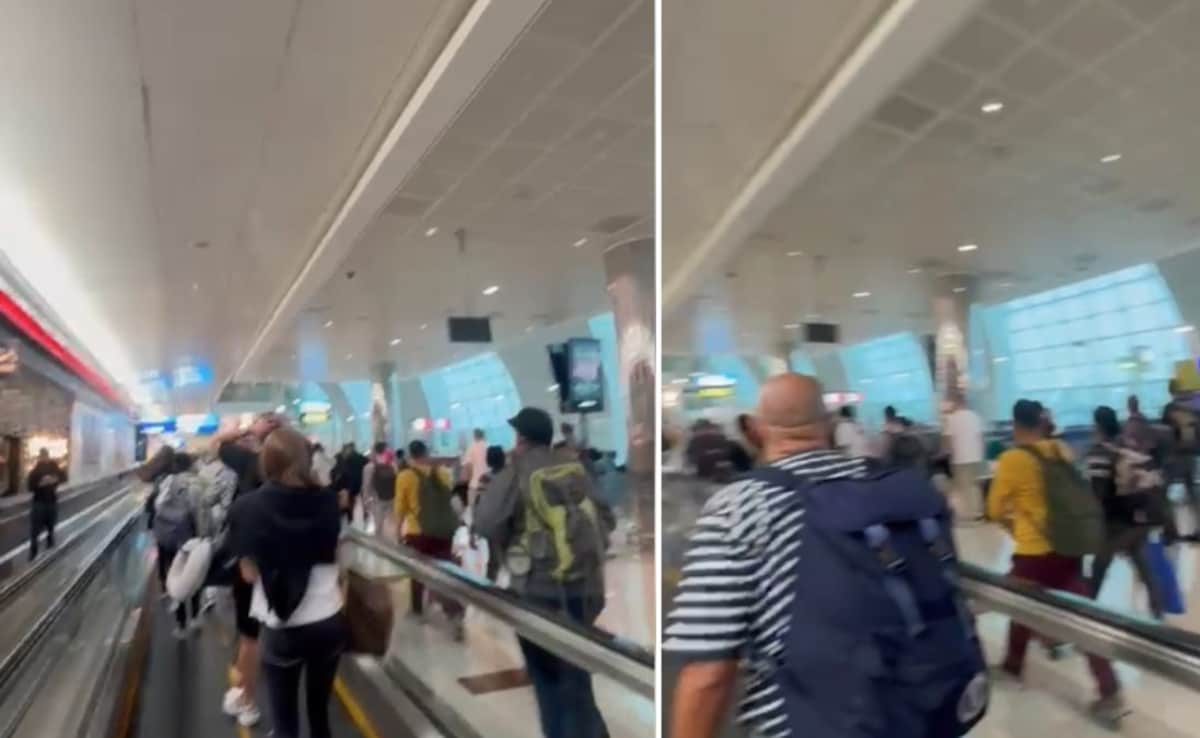
You don't expect to spend your layover in an underground train tunnel, but that’s exactly where thousands of travelers found themselves this week. Dubai International Airport, the crown jewel of global transit, transformed from a luxury shopping mall into a massive bomb shelter in a matter of minutes. As Iranian missiles and drones streaked across the Gulf sky, the illusion of Dubai as a bubble of safety finally popped.
If you're planning a flight through the Middle East right now, you aren't just looking at delays. You're looking at a fundamental shift in how safe it is to sit in a terminal that was once considered untouchable.
The Night The Music Stopped At DXB
Around 3:00 am local time, the high-end boutiques and gold-plated terminals of DXB went dark. Not a power outage, but a full-scale emergency protocol. Security teams didn't just ask people to move; they ushered them into the transit tunnels—the subterranean arteries that usually carry the airport's driverless trains.
It wasn't a drill.
The UAE’s air defense systems were actively engaging ballistic missiles. While the government officially downplayed the damage as "minor," reports and social media footage told a different story. A drone actually made it through, impacting a concourse at Terminal 3. Debris from interceptions rained down on the city, even causing a fire on the facade of the Burj Al Arab. For travelers who chose Dubai for its "sanctuary" status, the reality of being caught in a regional crossfire was a brutal wake-up call.
Why The Rules Of Transit Have Changed
For decades, the Gulf's aviation strategy relied on being the "neutral ground." You could fly from London to Sydney and barely notice the geopolitical fires burning in the neighbors' yards. That's over. Iran's latest strikes didn't just target military bases; they targeted the passenger concourses.
The logic is chillingly simple: if you can't hit the runway, hit the terminal. It’s a way to gatekeep the skies. When you crater a terminal, you don't just stop a flight; you break the global connection point.
- Airspace is Shrinking: Pilots are now dealing with a nightmare map. With Iraq, Syria, Israel, and now parts of the UAE airspace closing or opening at a moment's notice, your "6-hour flight" can easily turn into a 10-hour odyssey of diversions and holding patterns.
- GPS Spoofing: This is the invisible threat nobody talks about. Military electronic warfare is tricking civilian GPS systems. Pilots have reported their navigation systems showing them miles away from their actual position.
- The "Safe" Hub Fallacy: We’ve seen a 310-person repatriation flight from Sharjah have to land in Jordan because Dubai was too hot. If you're transiting, you aren't just "passing through." You're a resident of that airspace for the duration of your stay.
What To Do If You Are Stranded
If you're stuck in the terminal during an alert, don't waste time trying to film the sky through the glass. Shrapnel and glass don't mix.
Move to the center of the building. If staff tells you to go to the tunnels, go. These are reinforced structures designed to withstand significant pressure. Once the immediate threat passes, your battle shifts to logistics.
Don't just wait for an email from Emirates or Etihad. They're processing hundreds of thousands of cancellations. Use the airline's app to rebook yourself immediately. If the airport is grounded, look for land options. Some travelers are already driving to Saudi Arabia or Oman to catch flights out of less congested hubs.
The UAE government has been flexible with visa overstays during this crisis, so don't panic about your paperwork if your flight is scrubbed. They've covered accommodation for over 20,000 passengers so far, but don't count on a five-star suite. Many are sleeping on mattresses in hotel ballrooms.
The Reality Check For Future Travel
Travel insurance is no longer optional. But check the fine print: many policies have "Act of War" exclusions that will leave you high and dry if a missile cancels your trip. You need a policy that specifically covers "Civil Unrest" or "Aviation Disruptions due to Regional Conflict."
If your route passes through the Gulf, have a "Plan B" city. If Dubai shuts down, can you get a flight from Riyadh or Muscat? If you're an expat or a long-term visitor, keep your "go-bag" ready—passport, chargers, essential meds, and some cash.
The days of assuming the Middle East’s luxury hubs are immune to the region's volatility are done. Dubai is still a marvel, but it's a marvel that now sits on the front line. Pack your patience, but pack your survival instincts, too.
Check your flight status through a live tracker like FlightRadar24 before you even leave for the airport. If the map over the Gulf looks empty, stay at your hotel. It’s better to be bored in a lobby than stuck in a tunnel.